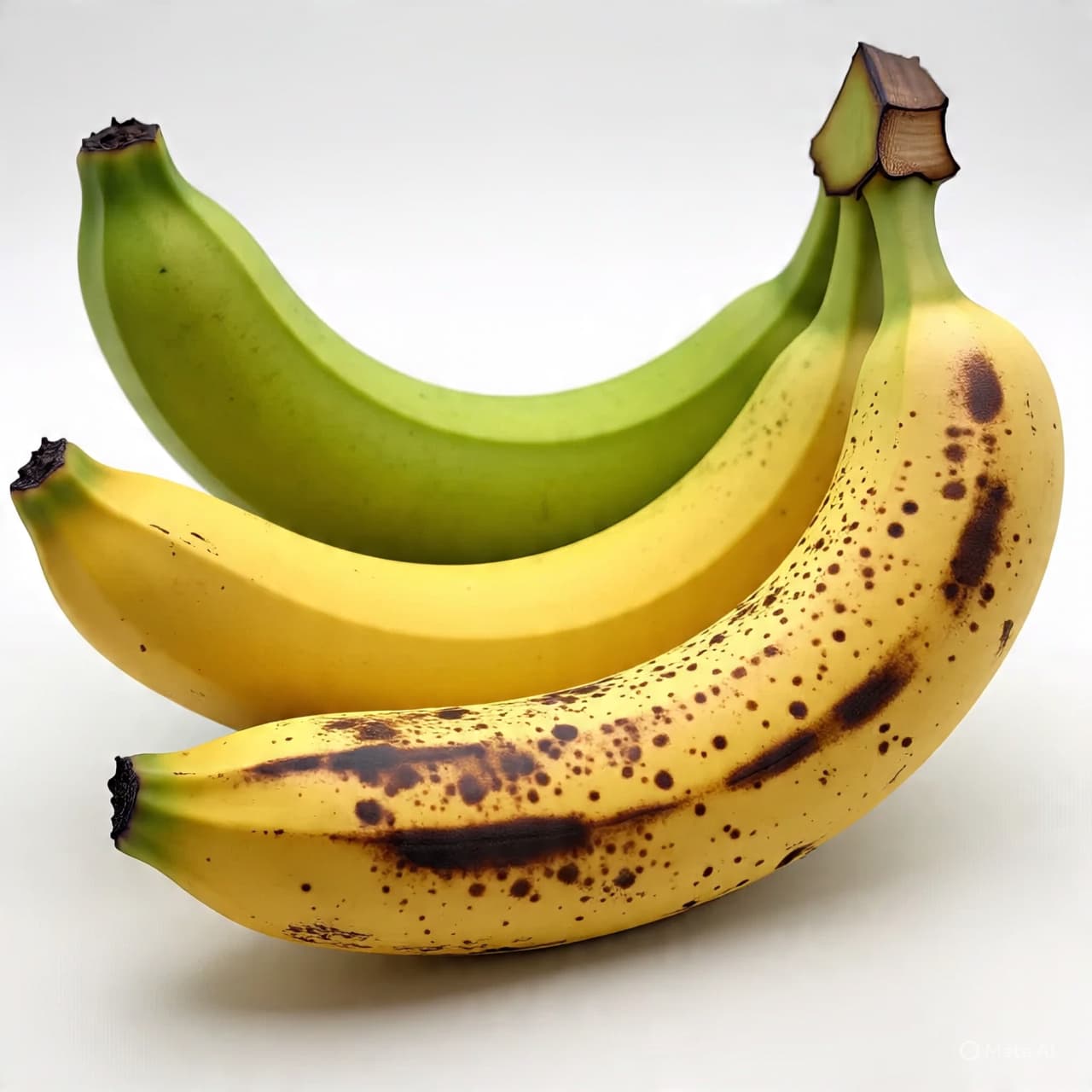
Soft sunlight filters through a kitchen window as you lift a banana from the bowl — its skin smooth and green, or perhaps warm yellow, or edged with gentle brown flecks. That simple color might seem like nothing more than a sign of readiness. Yet beneath that skin lies a silent transformation: a subtle dance of starch turning to sugar, of fibers shifting, of nature’s own timing aligning with your body’s needs.
As a banana ripens, what we taste — sweetness — corresponds to what changes within. A firm green banana is rich in what scientists call “resistant starch,” a kind of carbohydrate that resists immediate digestion. Rather than sending sugar rushing into the bloodstream, resistant starch behaves more like fiber: it travels slowly through the digestive tract, feeds beneficial gut bacteria, and helps moderate blood-sugar levels.
That makes green bananas a thoughtful choice for those seeking steadier energy, more sustained fullness, or support for digestive health. For someone watching their blood sugar or hoping to manage weight, the slower release of energy — the gentle hum rather than the rush — can matter.
But time waits for no fruit. As bananas ripen, starches convert into simple sugars like glucose, fructose, and sucrose. The fruit softens, the sweetness eases into your senses, and digestion becomes easier — sugar is more readily absorbed. That increases the banana’s glycemic index and accelerates its energy-giving power.
Yet with ripening comes a quiet bonus: antioxidants. The flecks and spots on a nearly-ripe banana signal rising levels of bioactive compounds that can support cellular health and immune defenses. For someone needing a quick energy boost — maybe before exercise, or during a demanding day — a yellow or softly spotted banana offers sweetness, comfort, and a little natural vigor.
Still, the ripeness journey isn’t a simple “one is better” story. If you eat a banana when it’s too ripe — brown-spotted and sugar-heavy — the blood sugar could spike more rapidly, which might be less suitable for those with glucose-regulation concerns. And while the banana loses some of its resistant starch, other nutrients — like potassium, vitamin B6, vitamin C — remain mostly stable regardless of ripeness.
So the real wisdom lies not in viewing bananas as “good” or “bad,” but in paying attention to which banana suits which purpose. Want slow, steady fuel — perhaps a breakfast before a long work session, or a snack that won’t leave you hungry in an hour? Reach for a firmer, greener banana. Craving quick energy, gentle digestion, or a satisfying boost? A softly yellow banana might be your ally.
In this way, bananas reveal themselves as more than a convenient snack — they become a subtle partner, responsive to your body’s rhythm, shaped by time, changing as you change.
As with many things in nutrition, balance — and awareness — bring the best fruit of all.
AI Image Disclaimer Visuals are created with AI tools and are not real photographs.
Sources Healthline; The Times of India; NDTV Food; Livestrong; Verywell Health
Published by Banx Network. This article is part of the Banx decentralized media programme, powered by the BXE token on the XRP Ledger.