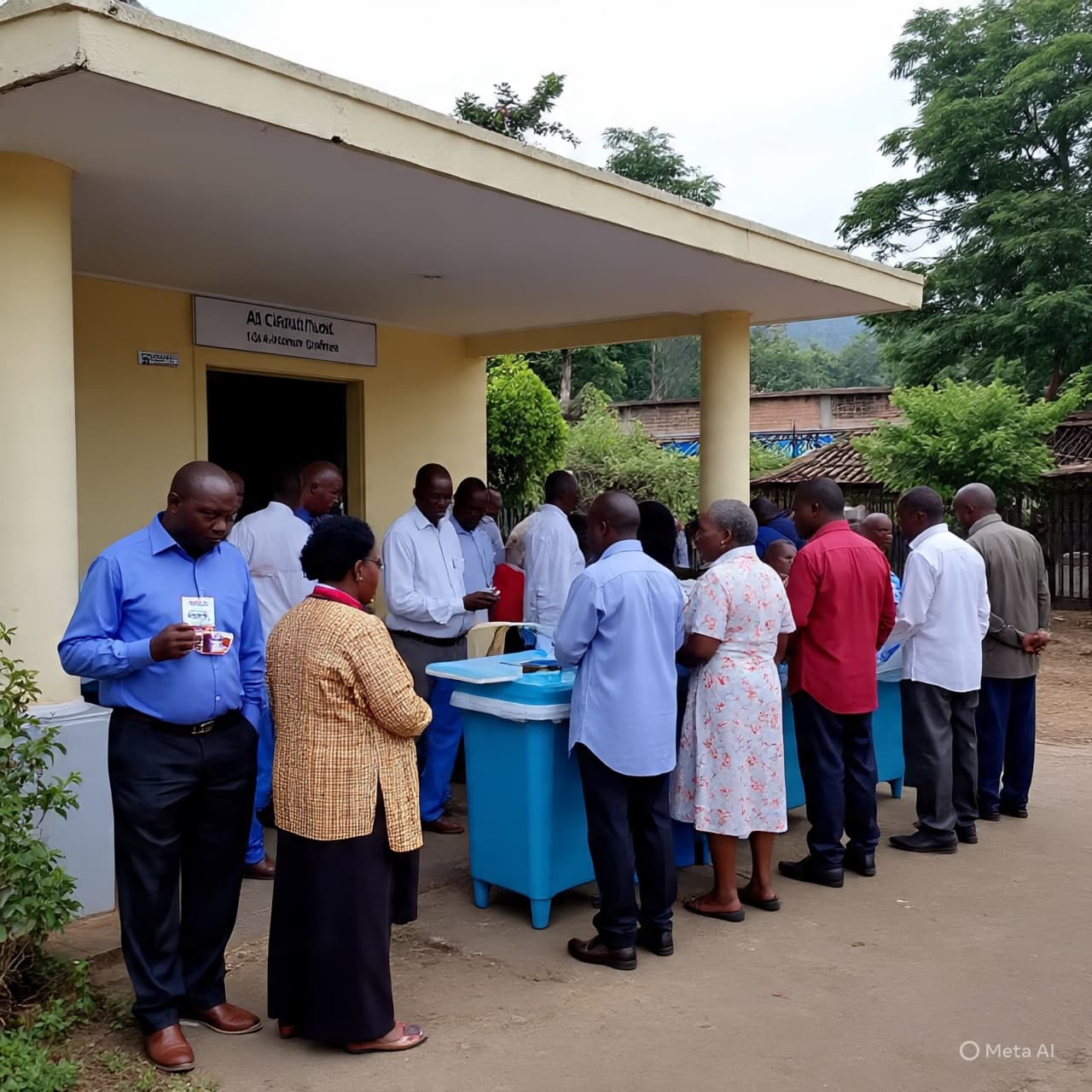
Elections often arrive carrying promises heavier than the paper ballots themselves. In Guinea, they come wrapped in memory — of coups past, of suspended constitutions, of crowds once hopeful and later weary. As polling stations opened, the moment felt less like a beginning than a careful pause, a country standing still to see whether authority could be reshaped into acceptance.
Guinea’s ruling military junta has moved to formalize its grip on power through national elections, presenting the vote as a return to constitutional order after years of military rule. For the generals who seized power in 2021, the election is framed as a bridge from uniform to legitimacy, a ritual meant to signal stability both to citizens at home and partners abroad.
Yet the field on which this contest has unfolded has been notably narrow. Several prominent opposition figures have been barred from running, sidelined by legal rulings, residency requirements, or prolonged exile. Former leaders and influential challengers, once central to Guinea’s political life, remain absent from the ballot, leaving voters with limited choices and critics questioning whether the process offers genuine competition.
At the center of the vote stands junta leader Mamady Doumbouya, whose rise followed the overthrow of President Alpha Condé. Since then, the military authorities have promised a transition to civilian rule while steadily consolidating control over political institutions. A new constitution, approved earlier through a referendum, cleared the path for military leaders to contest elections — a move supporters describe as pragmatic, and opponents see as carefully engineered.
During the campaign, restrictions on political gatherings, arrests of activists, and limits on media activity added to concerns voiced by civil society groups and international observers. Human rights organizations warned that the political environment remained constrained, with opposition voices struggling to organize or reach voters freely.
For some Guineans, the election represents a chance to turn the page, however imperfectly. After years of uncertainty, inflation, and stalled reforms, there is hope that a formalized government might unlock investment and restore predictable governance. Others view the vote with skepticism, seeing it less as a choice than a confirmation of decisions already made.
International partners have responded cautiously. While welcoming steps toward civilian governance, they have emphasized the need for inclusive politics and credible competition. The balance between recognizing progress and acknowledging shortcomings has shaped diplomatic statements, careful in tone and measured in expectation.
As ballots are counted and results take shape, Guinea’s election leaves behind a familiar question. Can legitimacy be claimed through procedure alone, or does it require the presence of real alternatives? In a nation long shaped by power shifts rather than peaceful transitions, the answer may emerge not from the vote itself, but from how authority is exercised once the polls fade from view.
AI Image Disclaimer “Visuals are created with AI tools and are not real photographs.”
Sources Reuters Associated Press Africanews Agence France-Presse AllAfrica
Published by Banx Network. This article is part of the Banx decentralized media programme, powered by the BXE token on the XRP Ledger.