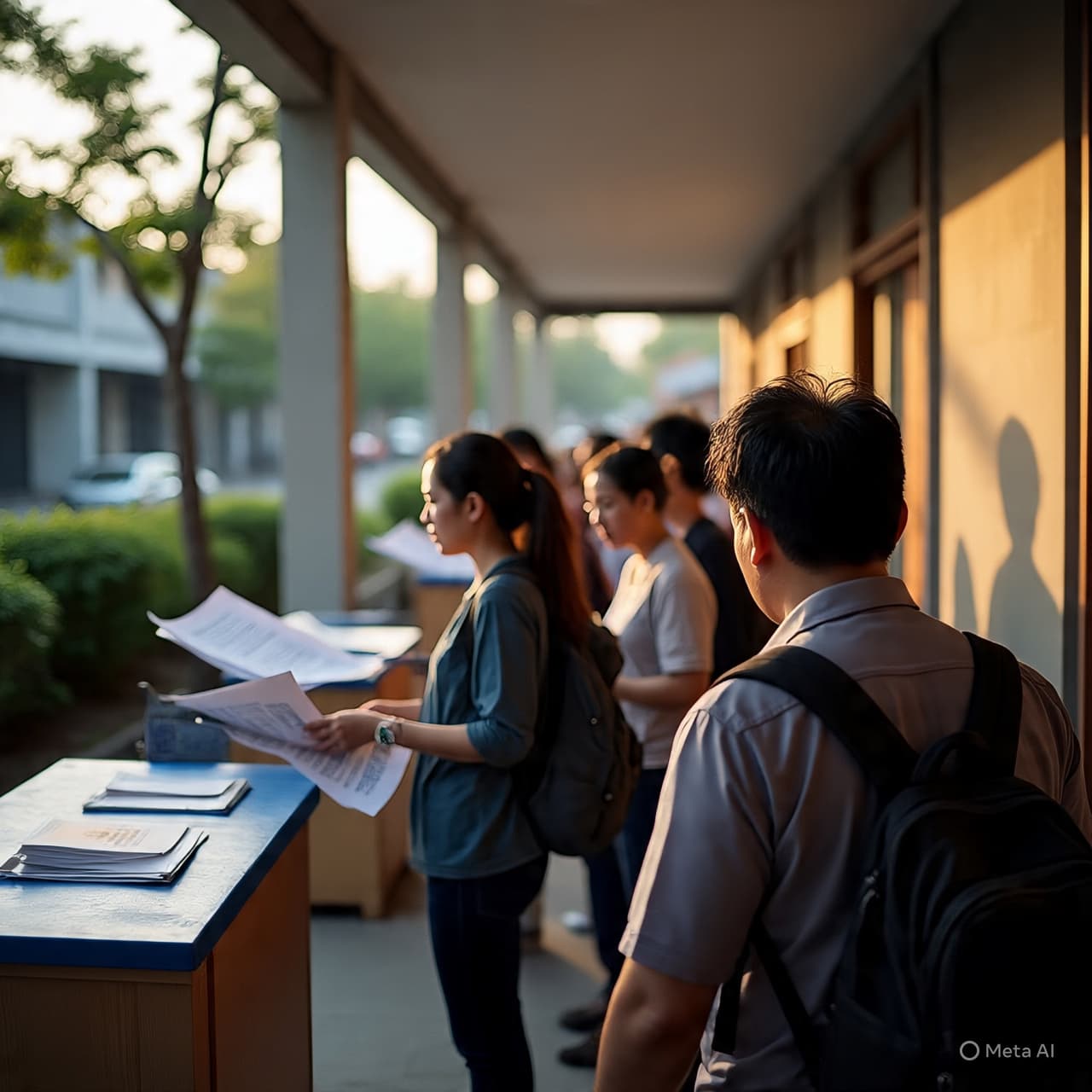
Election days in Thailand tend to arrive carrying more than ballots. They bring echoes of past protests, court rulings, dissolutions, and resets—layers of political memory that settle over polling stations as quietly as the morning heat. In this latest vote, those layers converge again, as conservative and progressive camps face each other in a contest that many see as a measure of where the country may be headed next.
At its surface, the race is procedural: candidates, campaigns, constituencies, counts. Beneath it runs a deeper current. Conservative forces, long anchored in established institutions and networks of power, present themselves as guardians of stability and continuity. Across from them, progressive movements frame the election as a chance to loosen old constraints, pushing for reforms that speak to younger voters, urban centers, and a generation shaped by economic pressure and political disruption.
Turnout has been watched closely, not just as a number but as a signal. In recent years, Thai elections have shown how enthusiasm can surge despite skepticism, how voters continue to engage even when outcomes feel uncertain. Campaigns leaned heavily on issues of governance, economic inequality, military influence, and the balance between tradition and change—familiar themes, but sharpened by years of tension.
The progressive camp has drawn energy from promises of institutional reform and expanded civil freedoms, arguing that Thailand’s future depends on updating systems built for another era. Conservatives, meanwhile, have emphasized experience, national cohesion, and caution, warning that rapid change risks instability. The contrast has been less about personalities than about pace: how quickly the country should move, and how far.
As ballots are cast and counted, the result will resonate beyond the immediate race. It will influence coalition negotiations, legislative priorities, and the broader political climate in a nation where courts and constitutional bodies have often played decisive roles after votes are tallied. Even a narrow margin could shape the balance of power, determining whether momentum tilts toward reform or restraint.
For many voters, the act itself carries quiet weight. Casting a ballot in Thailand has not always guaranteed political certainty, yet it remains a way of marking presence, of insisting on participation in a system that has repeatedly been rewritten. Each election becomes part of a longer conversation rather than a final word.
When the results settle, they will not close that conversation. Instead, they will add another chapter to Thailand’s ongoing negotiation with itself—between past and future, caution and aspiration, continuity and change. In that space between camps, the country continues to define what democracy means in practice, one vote at a time.
AI Image Disclaimer
Visuals are AI-generated and serve as conceptual representations.
Sources
Election Commission of Thailand Reuters Associated Press BBC News
Published by Banx Network. This article is part of the Banx decentralized media programme, powered by the BXE token on the XRP Ledger.