
Key Highlights
- Death Toll:50 confirmed dead due to monsoon-related incidents in Bagmati Province.
- Disaster Events:Nearly 1,000 individual disaster events reported this fiscal year.
- Emergency Response:Millions allocated for search operations and medical supplies.
Hetauda, Nepal—Disaster management officials confirmed on Thursday that the death toll from monsoon-related incidents in Bagmati Province has reached 50. These casualties are the result of a series of disasters that have unfolded from mid-May through early July, primarily driven by intense rainfall that has wreaked havoc across the region.
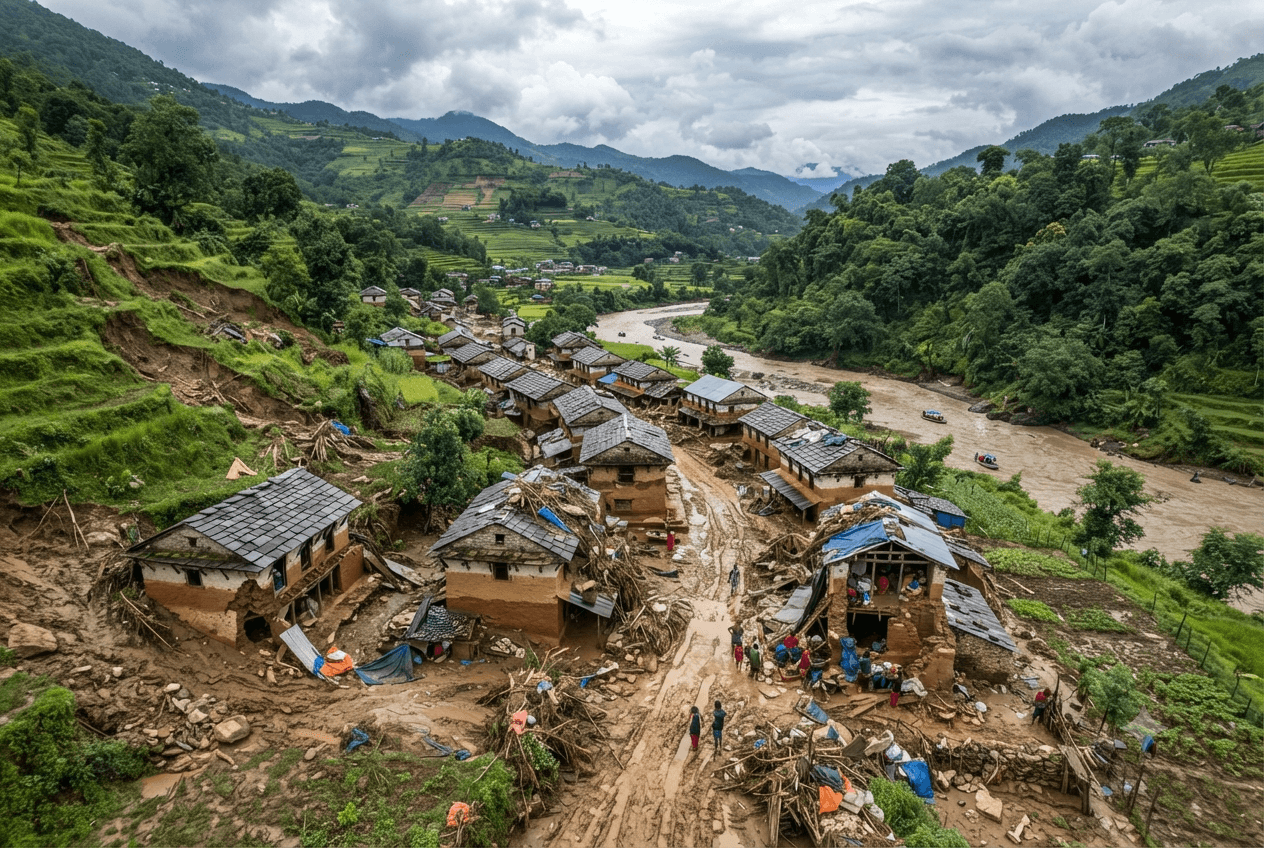
The provincial government has documented nearly a thousand individual disaster events during the current fiscal year, which include heavy rain, flooding, and landslides that have devastated mountain settlements. Many of the fatalities occurred in remote districts where communication lines are often severed, complicating rescue and recovery efforts.
Landslides triggered by unstable mountain slopes pose the most significant threat to local villages. The heavy runoff from rainfall has destabilized earth that was already softened by the seasonal precipitation. In several districts near the Himalayas, entire homes have been swept off their foundations, leaving families displaced and in dire need of assistance.
Monsoon winds have created conditions conducive to sudden, localized cloudbursts, which experts suggest can override normal seasonal weather patterns. These rapid accumulations of water leave little time for residents to evacuate to higher ground, exacerbating the crisis.
In response to the ongoing disaster, the provincial Ministry of Internal Affairs and Law has allocated millions in emergency funding to local district committees. This funding is earmarked for immediate search operations and the stockpiling of medical supplies. Additionally, rope rescue and diving teams have been deployed to assist those in high-risk zones, although the frequency of incidents has overwhelmed local resources.
Officials have also noted a concerning rise in fire incidents occurring concurrently with the floods. As a result, they are updating regional disaster preparedness plans to account for these compounding hazards. Scientists have observed a troubling trend where long dry spells are increasingly interrupted by extreme precipitation, preventing the soil from absorbing moisture effectively. This cycle of drought followed by sudden, destructive floods poses a significant challenge for recovery efforts.
As recovery operations continue, weather services are warning of potential further flooding in the coming days. The government is focusing on mobilizing volunteers to reach isolated mountain communities, with a priority on clearing blocked roads to facilitate the delivery of humanitarian aid. The situation remains critical as officials work tirelessly to mitigate the impact of this devastating monsoon season.
Published by Banx Network. This article is part of the Banx decentralized media programme, powered by the BXE token on the XRP Ledger.



