
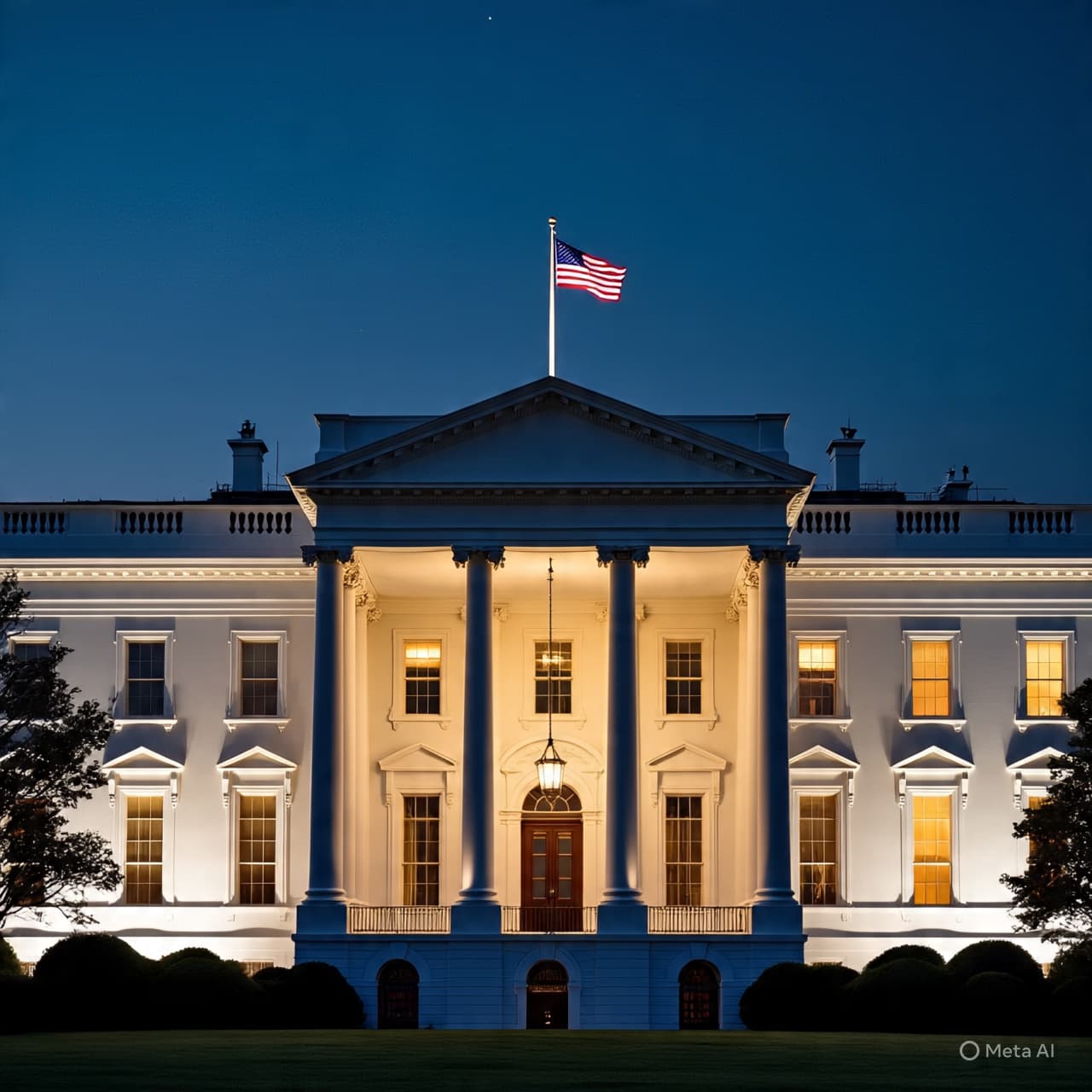
Evening settles slowly over Washington, the marble facades along Pennsylvania Avenue holding the last warmth of daylight as if reluctant to yield it. In these corridors of power, decisions move quietly at first—behind doors, through briefings, across maps marked with small, decisive lines. Outside, summer carries on: traffic hums, headlines scroll, campaign offices flicker late into the night. Yet beneath the ordinary rhythm, a deeper current is shifting, tugging at both foreign policy and domestic politics.
President Donald Trump has pressed forward with a harder line toward Iran, even as advisers and political strategists caution that escalation abroad may ripple into consequences at home. The friction between Washington and Tehran, long a familiar feature of the geopolitical landscape, has sharpened in recent months through expanded military deployments, sharper rhetoric, and signals that the White House is prepared to respond forcefully to Iranian actions in the region.
The shadow of earlier decisions lingers. The United States withdrew from the 2015 nuclear agreement—the Joint Comprehensive Plan of Action—during Trump’s first term, reimposing sweeping sanctions and recasting the relationship as one of maximum pressure. Since then, indirect talks have struggled to regain momentum. Iran’s nuclear program has advanced beyond earlier limits, while U.S. officials have framed their posture as deterrence aimed at preventing a broader conflict.
Now, with midterm elections approaching, the political calendar runs parallel to the strategic one. Polling has shown voters divided over foreign interventions, with economic concerns—fuel prices, inflation, job stability—often eclipsing distant battlefields. Some Republican lawmakers have urged unity behind the administration’s approach, describing it as necessary to project strength. Others, including members wary of prolonged entanglements, have cautioned against steps that could spiral into sustained confrontation.
On Capitol Hill, hearings echo with careful phrasing. Defense officials outline contingency plans and emphasize defensive intent. Diplomats describe ongoing channels of communication, even as military assets reposition in the region. In Tehran, leaders respond with statements of resolve, warning that pressure will not go unanswered. The language on both sides has grown firmer, though neither government has formally declared an intent to wage full-scale war.
Beyond official statements, the practical implications are visible in quieter ways. Naval patrols in the Persian Gulf adjust their routes. Oil markets react with brief tremors, traders calculating risk with each new development. Families of service members scan news alerts with practiced composure. The machinery of state advances methodically, yet always with the awareness that miscalculation can travel faster than intention.
For Trump, the calculus blends foreign policy conviction with political timing. His allies argue that decisive action reinforces credibility abroad and energizes a base that favors assertive leadership. Critics counter that escalation could alienate independent voters wary of conflict and amplify economic volatility at a delicate electoral moment. History offers examples in both directions—conflicts that rallied public support, and others that eroded it over time.
Still, the administration appears committed to its course. Statements from the White House emphasize preparedness and the protection of American interests. Pentagon briefings underscore defensive deployments rather than offensive campaigns. The distinction, subtle in language, carries weight in diplomacy, where phrasing can either narrow or widen the space for de-escalation.
As autumn approaches and campaign advertisements begin to crowd the airwaves, the intersection of geopolitics and electoral politics becomes harder to separate. Ballots will be cast not only in response to domestic debates, but in the context of a world where tensions flare and recede with unpredictable rhythm.
For now, no formal declaration of war has been issued, and diplomatic channels, however strained, remain technically open. Yet the trajectory is unmistakable: a president pressing forward despite warnings of political risk, a rival nation signaling resistance, and an electorate watching events unfold from afar.
In the quiet after dusk, Washington’s monuments stand unchanged, their stone indifferent to the currents of the moment. But policy, like history, is shaped in increments—by choices made under pressure, by calculations of risk and resolve. Whether this path leads to confrontation or to a recalibrated balance will become clearer in time. Until then, the season advances, carrying with it both the weight of foreign conflict and the approaching verdict of voters.
AI Image Disclaimer Visuals are AI-generated and serve as conceptual representations.
Sources Reuters Associated Press BBC News The New York Times Council on Foreign Relations
Published by Banx Network. This article is part of the Banx decentralized media programme, powered by the BXE token on the XRP Ledger.

.jpg&w=3840&q=75 "Blake Lively Awarded $400,000 in Legal Fees After Justin Baldoni Lawsuit Dismissed")
.jpg&w=3840&q=75 "US Declares Drought Disaster for Parts of Puerto Rico as Dry Conditions Persist")