
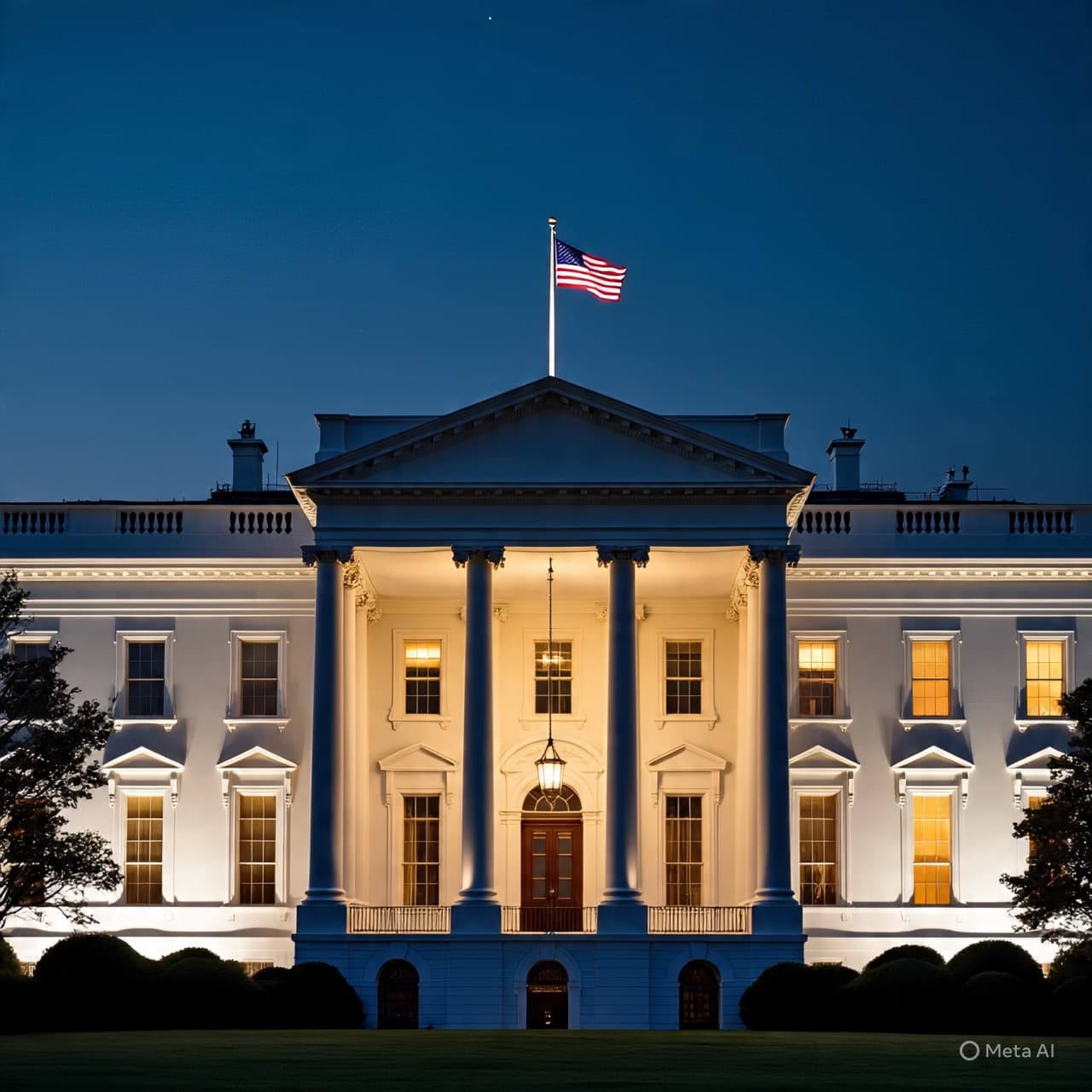
Key Highlights
- Rising Tensions:President Trump escalates rhetoric and military presence regarding Iran.
- Political Implications:Midterm elections influence foreign policy decisions.
- Voter Sentiment:Economic concerns overshadow foreign interventions in polling.
As evening descends on Washington, the marble facades along Pennsylvania Avenue hold onto the last warmth of daylight, reluctant to yield it. In these corridors of power, decisions unfold quietly—behind closed doors, through briefings, and across maps marked with decisive lines. Outside, summer continues its course: traffic hums, headlines scroll, and campaign offices flicker late into the night. Yet beneath this ordinary rhythm, a deeper current is shifting, affecting both foreign policy and domestic politics.
President Donald Trump has adopted a harder line toward Iran, even as advisers caution that escalation abroad may have repercussions at home. The friction between Washington and Tehran, a long-standing feature of the geopolitical landscape, has intensified in recent months through expanded military deployments and sharper rhetoric. The White House signals a readiness to respond forcefully to Iranian actions in the region, raising concerns about the potential for conflict.
The shadow of earlier decisions looms large. The United States withdrew from the 2015 nuclear agreement—the Joint Comprehensive Plan of Action—during Trump’s first term, reimposing sweeping sanctions and recasting the relationship as one of maximum pressure. Since then, indirect talks have struggled to regain momentum, with Iran’s nuclear program advancing beyond earlier limits. U.S. officials frame their posture as deterrence aimed at preventing a broader conflict, but the stakes are high as midterm elections approach.
Polling indicates that voters are divided over foreign interventions, with economic concerns—such as fuel prices, inflation, and job stability—often eclipsing distant battlefields. Some Republican lawmakers urge unity behind the administration’s approach, describing it as necessary to project strength. Others, including members wary of prolonged entanglements, caution against steps that could spiral into sustained confrontation, highlighting the complex interplay between foreign policy and electoral politics.
On Capitol Hill, hearings resonate with careful phrasing. Defense officials outline contingency plans and emphasize defensive intent, while diplomats describe ongoing channels of communication, even as military assets reposition in the region. In Tehran, leaders respond with statements of resolve, warning that pressure will not go unanswered. The language on both sides has grown firmer, though neither government has formally declared an intent to wage full-scale war.
The practical implications of these tensions are visible in quieter ways. Naval patrols in the Persian Gulf adjust their routes, and oil markets react with brief tremors as traders calculate risk with each new development. Families of service members scan news alerts with practiced composure, aware that miscalculations can travel faster than intention. The machinery of state advances methodically, yet always with the awareness of potential consequences.
For Trump, the calculus blends foreign policy conviction with political timing. His allies argue that decisive action reinforces credibility abroad and energizes a base that favors assertive leadership. Critics counter that escalation could alienate independent voters wary of conflict and amplify economic volatility at a delicate electoral moment. History offers examples in both directions—conflicts that rallied public support and others that eroded it over time.
As autumn approaches and campaign advertisements begin to crowd the airwaves, the intersection of geopolitics and electoral politics becomes increasingly complex. Ballots will be cast not only in response to domestic debates but also in the context of a world where tensions flare and recede unpredictably. For now, no formal declaration of war has been issued, and diplomatic channels, however strained, remain technically open. Yet the trajectory is unmistakable: a president pressing forward despite warnings of political risk, a rival nation signaling resistance, and an electorate watching events unfold from afar.
In the quiet after dusk, Washington’s monuments stand unchanged, their stone indifferent to the currents of the moment. But policy, like the changing seasons, continues to evolve, shaped by the interplay of domestic and international forces.
Published by Banx Network. This article is part of the Banx decentralized media programme, powered by the BXE token on the XRP Ledger.



