

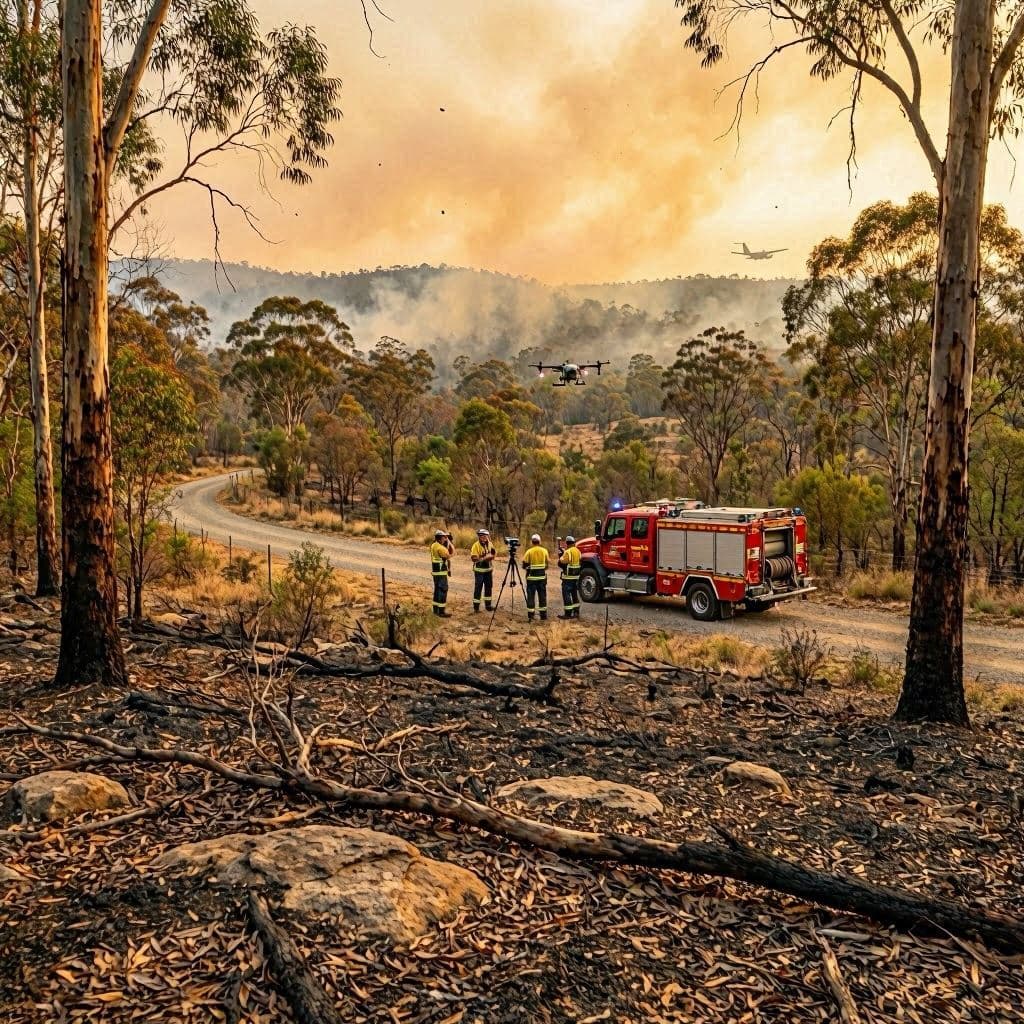
Key Highlights
- New research indicates bushfire risks in Australia may be more severe than previously estimated.
- The study examines factors like temperature and vegetation conditions affecting fire behavior.
- Emergency management agencies are adapting strategies based on evolving scientific findings.
Australia's vast landscapes have long been shaped by fire, a natural force that plays a critical role in the environment. However, recent scientific research suggests that the risks associated with bushfires may be more severe than previously estimated by international climate assessments. This revelation has prompted renewed attention from researchers and policymakers alike, highlighting the urgent need for updated strategies in managing fire risks.
The study, conducted by a team of Australian scientists, indicates that climate-related changes could intensify bushfire behavior beyond earlier projections outlined by the Intergovernmental Panel on Climate Change (IPCC). Researchers examined a variety of factors, including rising temperatures, vegetation conditions, and atmospheric dynamics, to assess their impact on future bushfire risks.
Australia has faced several devastating bushfire seasons in recent decades, most notably the 2019-2020 Black Summer fires, which burned millions of hectares, destroyed communities, and severely impacted wildlife. These events have underscored the importance of understanding the complex interplay of factors that influence bushfire behavior, including weather conditions, fuel loads, land management practices, and climate variability.
The latest findings suggest that certain regions in Australia could experience longer fire seasons and more intense fire weather conditions in the future. As researchers continue to refine predictive models, they aim to better understand the evolving risks associated with bushfires. This ongoing research is crucial for developing effective strategies to mitigate the impact of these natural disasters.
Emergency management agencies are closely monitoring these scientific developments to enhance preparedness, resource allocation, and community warning systems. Advances in forecasting technology have become increasingly important as fire conditions grow more complex, allowing for more accurate predictions and timely responses to potential fire outbreaks.
Environmental experts emphasize that adaptation measures will be essential in reducing future risks. Strategies such as resilient infrastructure, effective landscape management, and community preparedness are critical components of a comprehensive approach to fire risk management. By investing in these areas, communities can better equip themselves to face the challenges posed by a changing fire environment.
While uncertainties remain regarding the precise scale of future impacts, researchers agree that continued scientific study will be vital in helping communities prepare for the evolving landscape of bushfire risks. As climate change continues to influence weather patterns and environmental conditions, the need for proactive measures has never been more pressing.
Published by Banx Network. This article is part of the Banx decentralized media programme, powered by the BXE token on the XRP Ledger.




