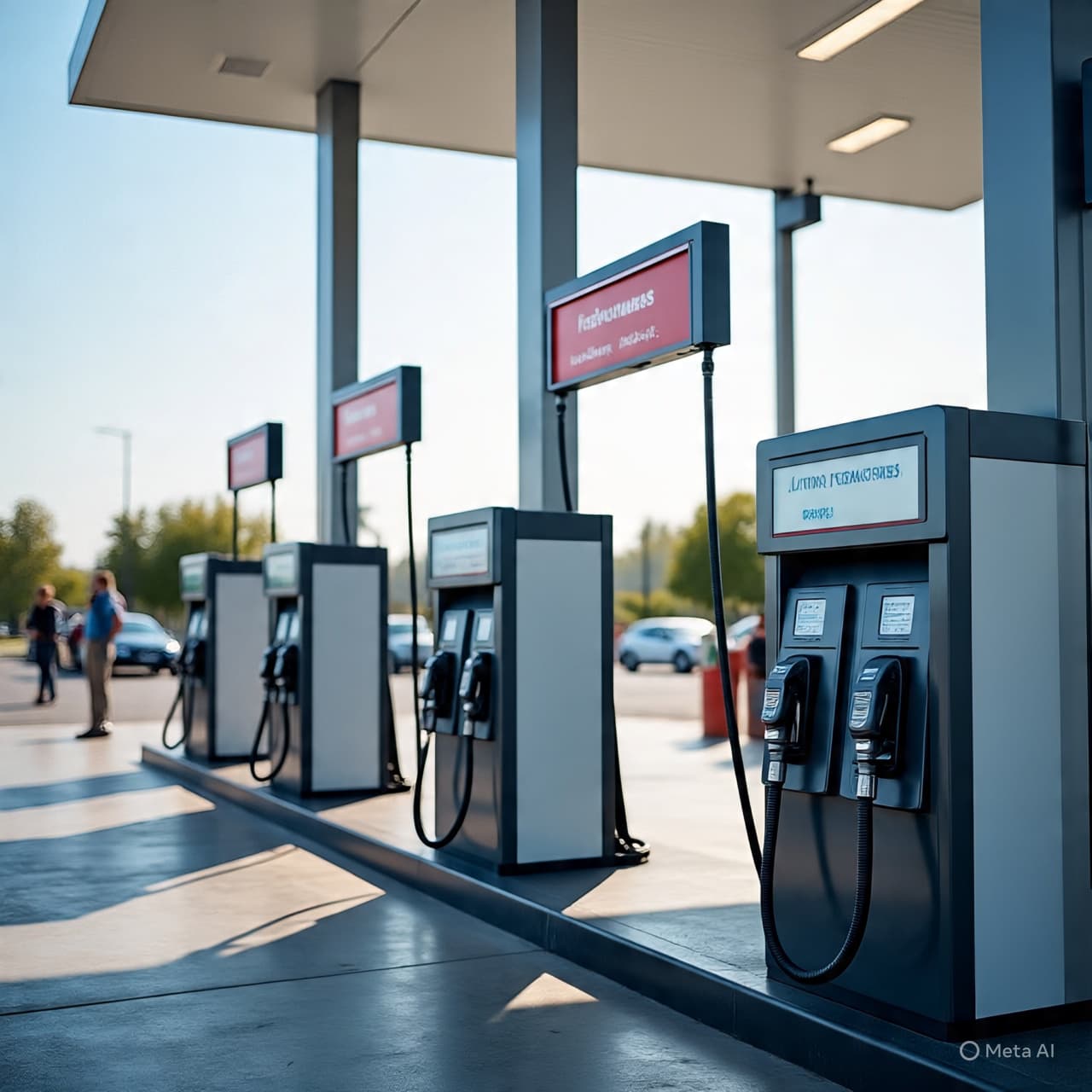
There are seasons when the air itself seems to carry more than weather—when it holds the quiet tension of rising costs, of choices made far from the everyday road but felt in every mile traveled. At the fuel pump, numbers flicker upward or downward like a subtle barometer of broader forces, and with each shift, policies ripple outward into ordinary lives.
In this landscape, the U.S. Environmental Protection Agency has approved the expanded sale of a higher-ethanol gasoline blend, commonly known as E15, during months when its availability has traditionally been restricted. The move is presented as part of an effort to ease pressure on fuel prices, offering consumers an additional option at the pump as demand and seasonal factors continue to shape the market.
E15 fuel, which contains 15 percent ethanol compared to the more widely used E10 blend, has long occupied a somewhat conditional place in the energy mix. Typically, its sale is limited during the summer due to concerns about emissions and air quality under existing regulations. The recent approval effectively extends its availability, allowing it to remain on the market during a period when it might otherwise be withdrawn.
Supporters of the decision suggest that increasing access to E15 could provide modest relief at the pump. Ethanol, often derived from corn, can be less expensive than traditional gasoline components, and blending it at higher levels may reduce overall fuel costs for consumers. For agricultural producers, the policy also carries an economic dimension, potentially increasing demand for corn and supporting rural economies.
Yet, as with many energy decisions, the measure arrives with layers of complexity. Environmental considerations remain part of the conversation, particularly regarding how higher-ethanol blends interact with air quality standards. Some experts note that while ethanol can reduce certain emissions, it may contribute to others under specific conditions, leaving the overall environmental impact open to continued study and discussion.
There are also technical considerations for drivers. While many vehicles on the road today are compatible with E15, not all engines—particularly older models or small equipment—are designed to use higher ethanol blends. Regulators and industry groups often emphasize the importance of clear labeling and consumer awareness to ensure that fuel choices align with vehicle requirements.
The EPA’s decision does not stand in isolation, but rather as part of a broader pattern of temporary waivers and policy adjustments aimed at navigating fluctuations in fuel supply and demand. In recent years, similar measures have been introduced in response to market pressures, reflecting a willingness to adapt regulatory frameworks in the face of changing conditions.
For policymakers, the balance is a delicate one. Lowering costs for consumers remains an immediate priority, particularly during periods of economic strain. At the same time, long-term environmental goals and regulatory consistency continue to shape the broader direction of energy policy.
As the higher-ethanol fuel becomes more widely available, its effects will likely unfold gradually—noticed perhaps not in sweeping changes, but in small differences at the pump, in agricultural markets, and in ongoing environmental assessments. The decision opens another chapter in the evolving relationship between energy, economy, and environment.
For now, the approval stands as a practical step within a larger, ongoing conversation—one that moves quietly alongside the daily act of refueling, where policy meets the road in the most literal sense.
AI Image Disclaimer Images in this article are AI-generated illustrations, meant for concept only.
Source Check (Credible Media Outlets): Reuters Associated Press The New York Times The Washington Post Bloomberg
Published by Banx Network. This article is part of the Banx decentralized media programme, powered by the BXE token on the XRP Ledger.