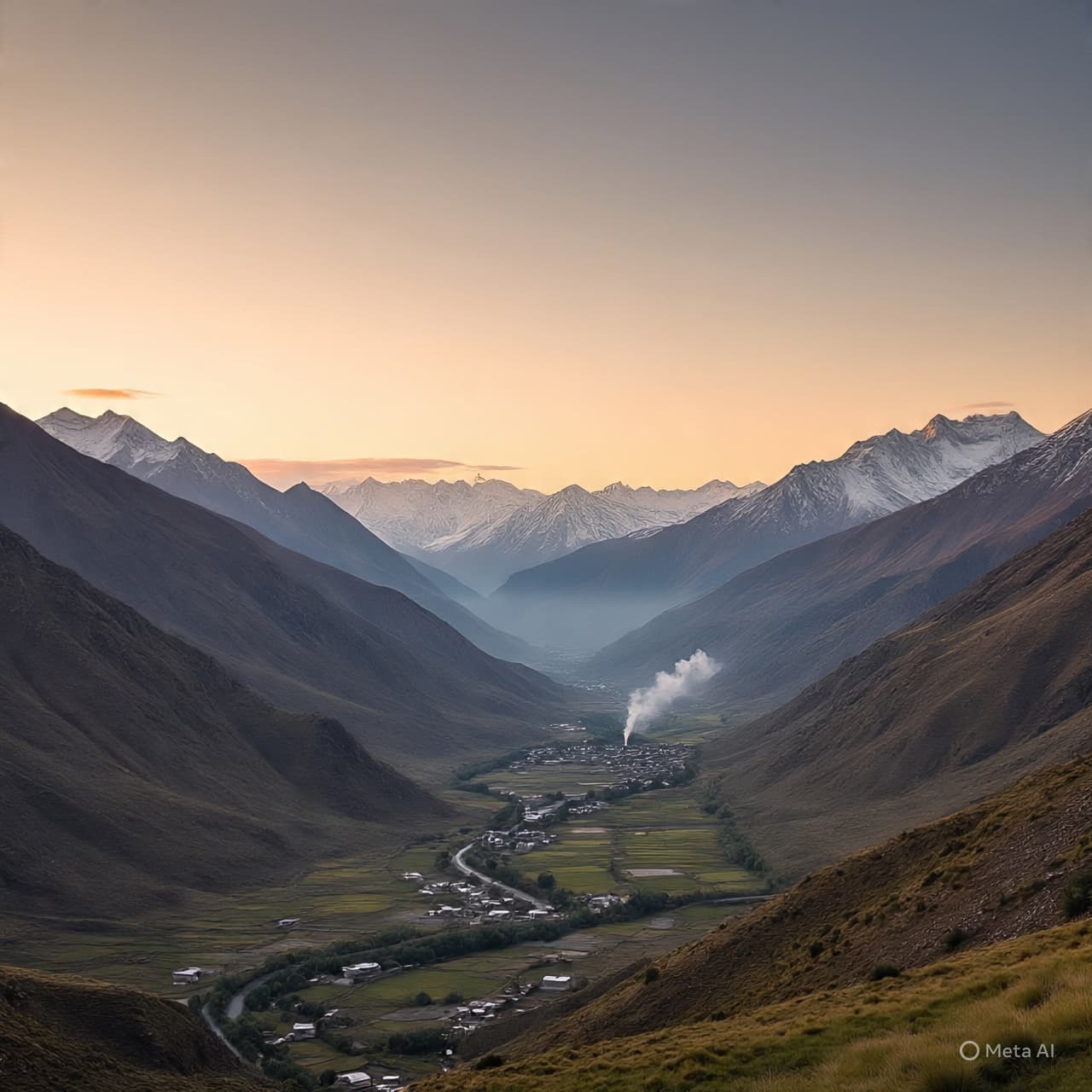
At dawn, the mountains along the Pakistan–Afghanistan border hold their silence like an old secret. The ridgelines rise in pale layers, cut by narrow roads and dry riverbeds that have carried traders, families, and fighters for generations. In villages scattered across this terrain, morning begins with small rituals — kettles set to boil, livestock untethered, children rubbing sleep from their eyes. It is a landscape accustomed to the tremor of history.
This week, that tremor returned. Pakistani officials said their forces carried out targeted strikes inside Afghan territory, describing the operation as a response to militant threats they say originate across the border. The announcement was delivered in the measured language of security briefings, citing the need to protect Pakistani civilians and military personnel from armed groups accused of staging attacks from Afghan soil.
On the Afghan side, the toll was counted differently. The Afghan Red Crescent Society reported that at least 18 people were killed in the strikes, including women and children. Aid workers described damaged homes and families displaced from small settlements in border provinces, where the line between the two countries is less a visible boundary than a shifting understanding shaped by history and terrain.
Tensions between Islamabad and Kabul have simmered for months. Pakistan has repeatedly accused militant factions — particularly elements it links to Tehrik-i-Taliban Pakistan — of using Afghan territory as a staging ground for attacks. Afghan authorities under the Taliban have rejected those claims, insisting that they do not allow their land to be used against neighboring states. The dispute unfolds against a backdrop of fragile diplomacy, where accusations travel faster than envoys.
For communities living along the frontier, geopolitics arrives not as theory but as sound — the distant rush of aircraft, the echo of explosions carried across valleys. The border itself, drawn during the colonial era and long contested, remains porous in practice. Families straddle both sides; trade routes weave between checkpoints. In such places, state actions ripple quickly through tightly knit lives.
Islamabad has framed its latest operation as limited and precise, emphasizing that it targeted specific militant hideouts. Afghan officials have condemned the strikes as a violation of sovereignty. The language on both sides remains firm, though neither has signaled an immediate escalation beyond statements and diplomatic protest.
Humanitarian organizations continue to assess needs in affected areas. The Red Crescent’s figures may evolve as access improves and families account for the missing. In remote villages, where infrastructure is sparse and winter approaches, even minor damage to homes can carry lasting consequences.
The broader regional context adds further weight. Pakistan is navigating economic strain and domestic security challenges, while Afghanistan remains under international isolation and humanitarian pressure. Cross-border militancy complicates an already delicate balance, where cooperation is urged publicly but mistrust lingers beneath the surface.
As evening settles again over the mountains, smoke thins into the cold air and villagers gather what they can from damaged walls. Official statements will continue, perhaps followed by diplomatic exchanges or renewed patrols. Yet for those who wake each day beneath these ridgelines, the border is not a headline but a horizon — one that can shift suddenly, reminding them how closely peace and peril share the same ground.
AI Image Disclaimer These images are AI-generated illustrations intended for visual context only.
Sources Reuters Associated Press BBC News Al Jazeera Afghan Red Crescent Society
Published by Banx Network. This article is part of the Banx decentralized media programme, powered by the BXE token on the XRP Ledger.