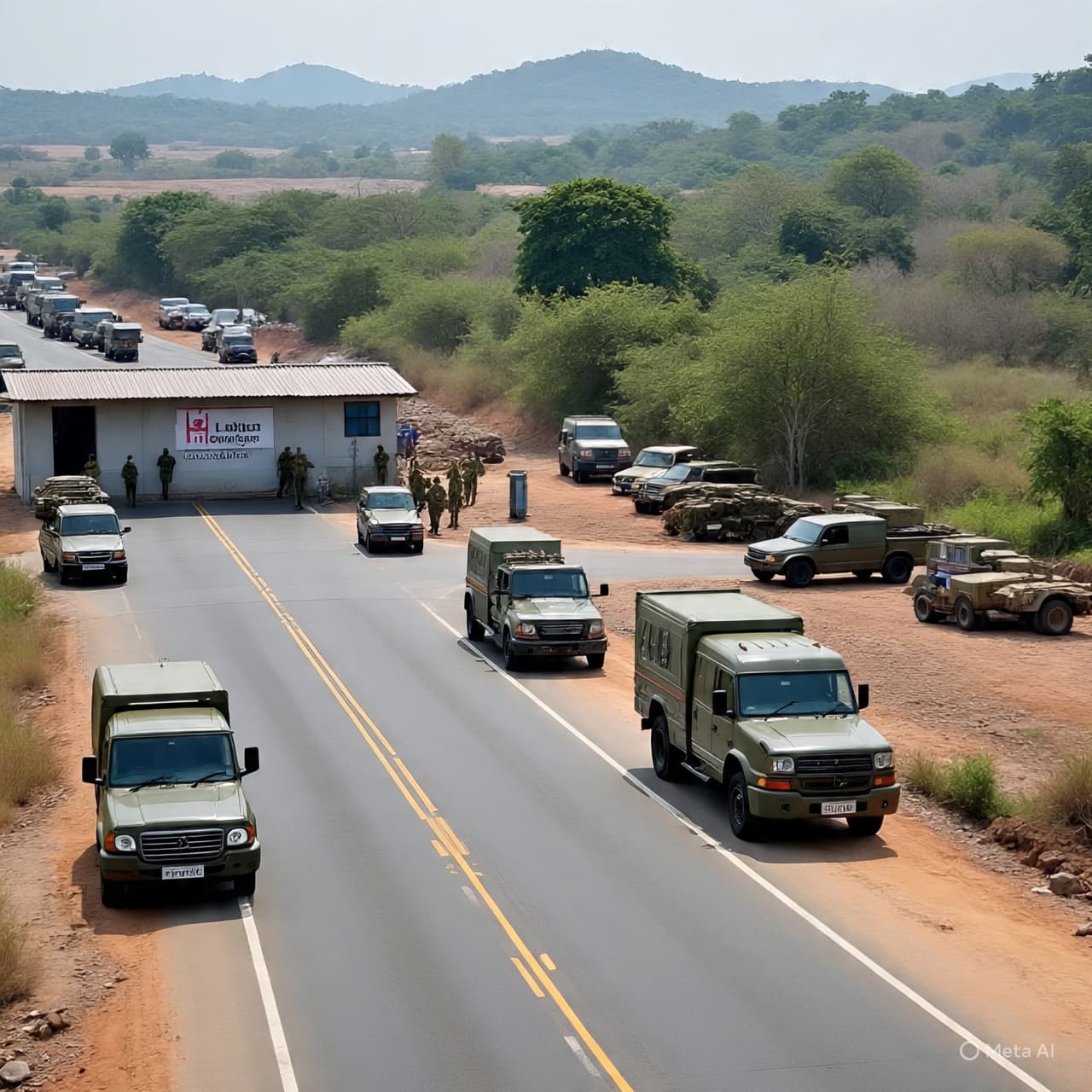
At borders, the air often feels heavier. Roads narrow, watchtowers rise, and ordinary commerce takes on political weight. Along the Thailand-Cambodia frontier, where history has left scars both visible and remembered, the tension has once again thickened, carrying with it the hum of engines, the crackle of gunfire, and the uneasy pause before the next decision.
As fighting escalates in disputed border areas, Thailand is now weighing a move that reaches beyond soldiers and checkpoints. Officials have said they are considering blocking fuel exports to Cambodia, a step that would mark a significant tightening of pressure as clashes spread and security concerns deepen. Fuel, usually an invisible lifeline of daily life, has become a strategic question in a conflict that shows few signs of calming.
The violence, according to regional authorities and humanitarian accounts, has intensified in recent days, spilling from long-contested land borders toward coastal zones. Thailand has imposed curfews in some affected areas, citing the need to protect civilians as artillery fire and troop movements push closer to populated communities. On the Cambodian side, families have fled villages, crossing into temporary shelters with little more than what they could carry.
Against this backdrop, Thai officials have raised alarms about fuel shipments leaving Thai ports for Cambodia, warning that such supplies could be diverted for military use. While no final decision has been announced, the possibility alone signals how far the dispute has escalated — from skirmishes at the frontier to economic measures that could ripple through civilian life.
Cambodia relies heavily on imported fuel, much of it routed through Thailand. Any disruption could affect transportation, electricity generation, and basic services, particularly at a moment when displacement and fear already dominate daily routines near the border. Aid groups have cautioned that economic pressure, while a political tool, often lands hardest on ordinary people far removed from command posts and negotiation tables.
Diplomatic efforts continue, though unevenly. Earlier attempts at de-escalation, including international mediation, have struggled to hold amid fresh reports of fighting. Each side accuses the other of violating understandings meant to restore calm, while residents on both sides wait, listening for signs that the night will pass quietly.
Thailand’s consideration of a fuel export block reflects a broader regional dilemma: how to assert security without deepening humanitarian harm, how to signal resolve without closing doors to dialogue. Energy, in this moment, is no longer just about supply and demand, but about leverage, consequence, and the fragile balance between pressure and restraint.
For now, the pumps continue to run, and the borders remain tense. Whether fuel becomes the next front in this conflict will depend on decisions made far from the villages and camps that feel the impact first. In a region shaped by shared history and interdependence, the hope remains that the flow of diplomacy can move faster than the flow of conflict.
AI Image Disclaimer “Graphics are AI-generated and intended for representation, not reality.”
Sources Reuters Associated Press Al Jazeera Channel NewsAsia Bangkok Post
Published by Banx Network. This article is part of the Banx decentralized media programme, powered by the BXE token on the XRP Ledger.

.jpg&w=3840&q=75 "Zelensky Warns China Is Helping Russia Develop a Starlink Rival")