In the earliest moments of any encounter between matter and life, water is almost always present. It gathers around surfaces, slipping between molecules, arranging itself in fleeting patterns that shift from one instant to the next. In this thin and restless layer, chemistry often decides how living systems respond to the materials they touch.
For scientists working with nanoparticles—objects so small that thousands could fit across the width of a human hair—this watery boundary has become an important place to observe.
Nanoparticles are frequently coated with carefully designed molecular layers. These coatings determine how the particles interact with proteins, membranes, and cells. They influence whether a nanoparticle slips quietly through biological environments or attracts attention from the body’s defenses. For years, researchers have sought to understand what governs these interactions at the molecular level.
Recent research suggests that the answer may lie partly in the energetics of hydration—the way water molecules organize themselves around nanoparticle surfaces and the energy associated with that arrangement.
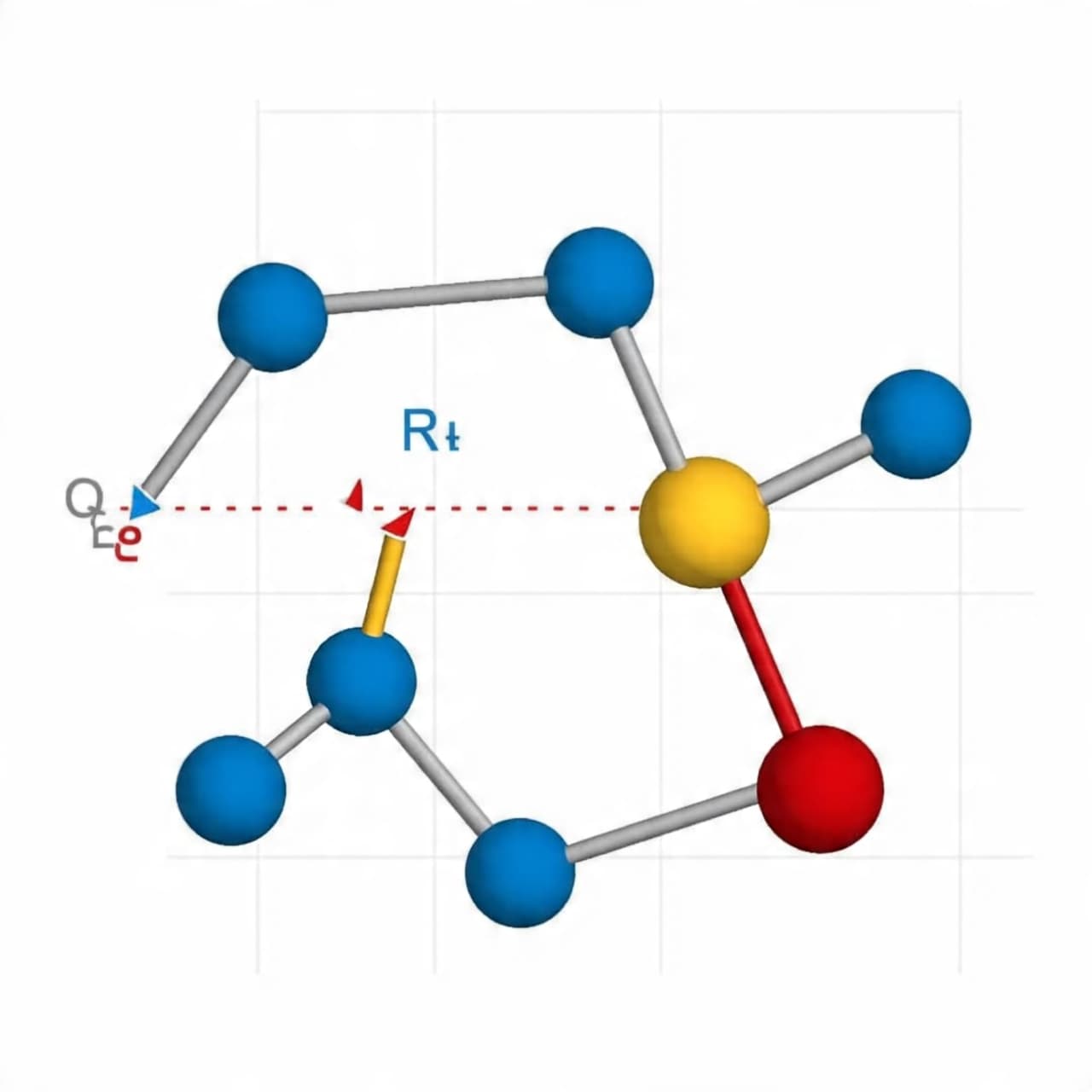
When a nanoparticle enters an aqueous environment such as blood or cellular fluid, water molecules rapidly gather around its coating. The precise structure of this hydration layer depends on the chemistry of the surface: the distribution of charged groups, hydrophobic regions, and flexible molecular chains. Each configuration subtly alters how strongly water molecules bind, rearrange, and exchange positions.
By studying these energetic patterns, scientists have begun to link the behavior of the hydration layer with the biological activity of the nanoparticles themselves. Surfaces that encourage stable, tightly structured hydration shells may interact differently with proteins than those where water remains more loosely arranged.
These differences can shape the first moments of contact between a nanoparticle and a biological system. Proteins approaching the surface encounter not only the coating but also the dynamic shell of water surrounding it. In some cases, the hydration layer acts as a barrier that reduces unwanted binding. In others, it may facilitate interactions that trigger biological responses.
Researchers investigating these effects used computational modeling and experimental measurements to analyze how different nanoparticle coatings influence hydration energy landscapes. Their findings suggest that biological outcomes—such as protein adsorption or cellular recognition—can often be predicted from the energetic properties of the surrounding water layer.
The work offers a new perspective on how nanoscale materials behave in living environments. Rather than focusing solely on the chemistry of the coating itself, scientists are beginning to treat water as an active participant in the interaction.
This perspective carries practical implications. Nanoparticles are widely studied for applications ranging from drug delivery and medical imaging to environmental sensing. Understanding how hydration energetics influence biological responses could help researchers design coatings that behave more predictably inside the body.
At the nanoscale, where the boundaries between physics, chemistry, and biology blur, even a single layer of water molecules can influence the fate of a material. The quiet structure of that layer—formed and reformed countless times each second—may hold the key to understanding how nanoparticles meet living systems.
The study reports that the biological activity of nanoparticle coatings can be explained by the energetics of the hydration layers surrounding them, providing a framework for predicting interactions between nanoscale materials and biological environments.
AI Image Disclaimer
Visuals are AI-generated and serve as conceptual representations.
Source Check
Credible coverage and/or primary reporting exist from: Nature Communications ScienceDaily Phys.org ACS Nano Chemical & Engineering News
Published by Banx Network. This article is part of the Banx decentralized media programme, powered by the BXE token on the XRP Ledger.