
Key Highlights
- Recent wolf attack near Hamburg raises awareness of wildlife in urban areas.
- Wolves are gradually returning to regions they once inhabited in Germany.
- Authorities emphasize the rarity of wolf attacks and the importance of coexistence.
In recent weeks, the boundary between the wild and the familiar has been starkly illustrated in northern Germany. A wolf attack near Hamburg has drawn attention to the country's evolving relationship with its wildlife, particularly as wolves begin to reclaim territories they once roamed before human expansion altered the landscape. This incident, while rare, has sparked renewed discussions about the complexities of living alongside wildlife in urban settings.
For decades, wolves were largely absent from Germany, their presence diminished due to hunting and habitat loss. However, conservation efforts and protective policies have led to a gradual resurgence of wolf populations, particularly in forested regions. As these populations expand, they are now venturing into areas that are increasingly populated by humans, leading to a new reality where encounters, though still uncommon, are becoming more visible.
The recent attack has reignited conversations about safety and coexistence. Local authorities have been quick to reassure the public that such incidents are exceedingly rare and that wolves typically avoid human contact. Nonetheless, communities near expanding wolf habitats are understandably concerned, especially in regions where livestock and pets are at risk. This tension highlights the need for effective wildlife management strategies that balance ecological health with public safety.
Wildlife experts advocate for a multifaceted approach to managing the return of wolves. This includes monitoring wolf populations, educating the public about wildlife behavior, and implementing protective measures for livestock and pets. The goal is to foster a coexistence that respects both human needs and the ecological role of wolves in the environment. The return of these animals is not merely a singular event but part of a broader ecological narrative, reminding us that nature operates in cycles of absence and return.
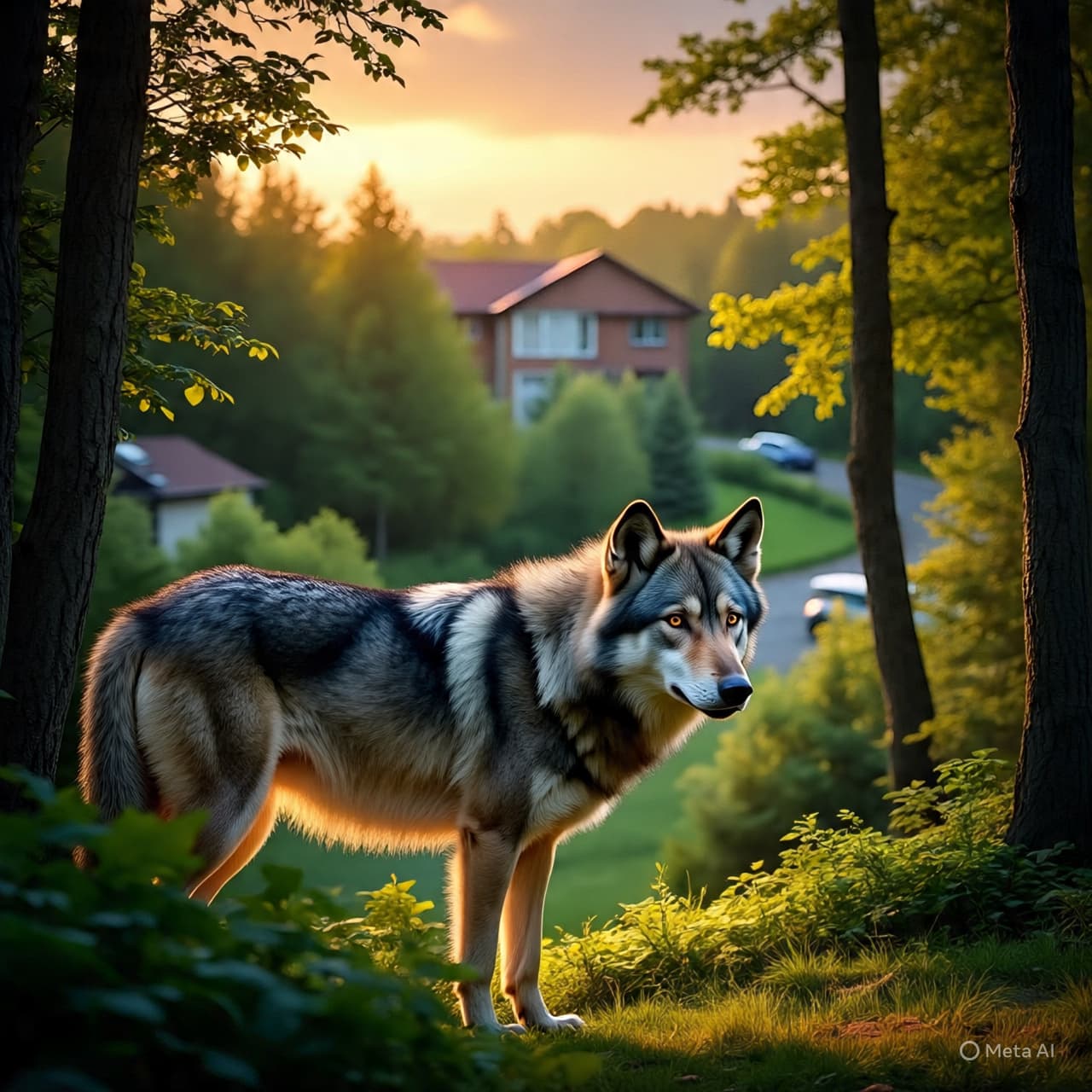
As evening falls over the northern edges of Germany, the presence of a wolf—once unimaginable in such proximity—signals a shift in the landscape. It is not merely a disruption but a recalibration of space, where human and wild lives intersect in ways that are both ancient and newly unfamiliar. The challenge now lies in how to adapt to this new reality, learning to live alongside a creature that was never truly gone but has now reasserted its place in the ecosystem.
In this quiet intersection of urban and wild, the question remains: how do we respond to the return of wolves, and how do we ensure a harmonious coexistence that respects both the needs of humans and the rights of wildlife?
Published by Banx Network. This article is part of the Banx decentralized media programme, powered by the BXE token on the XRP Ledger.



