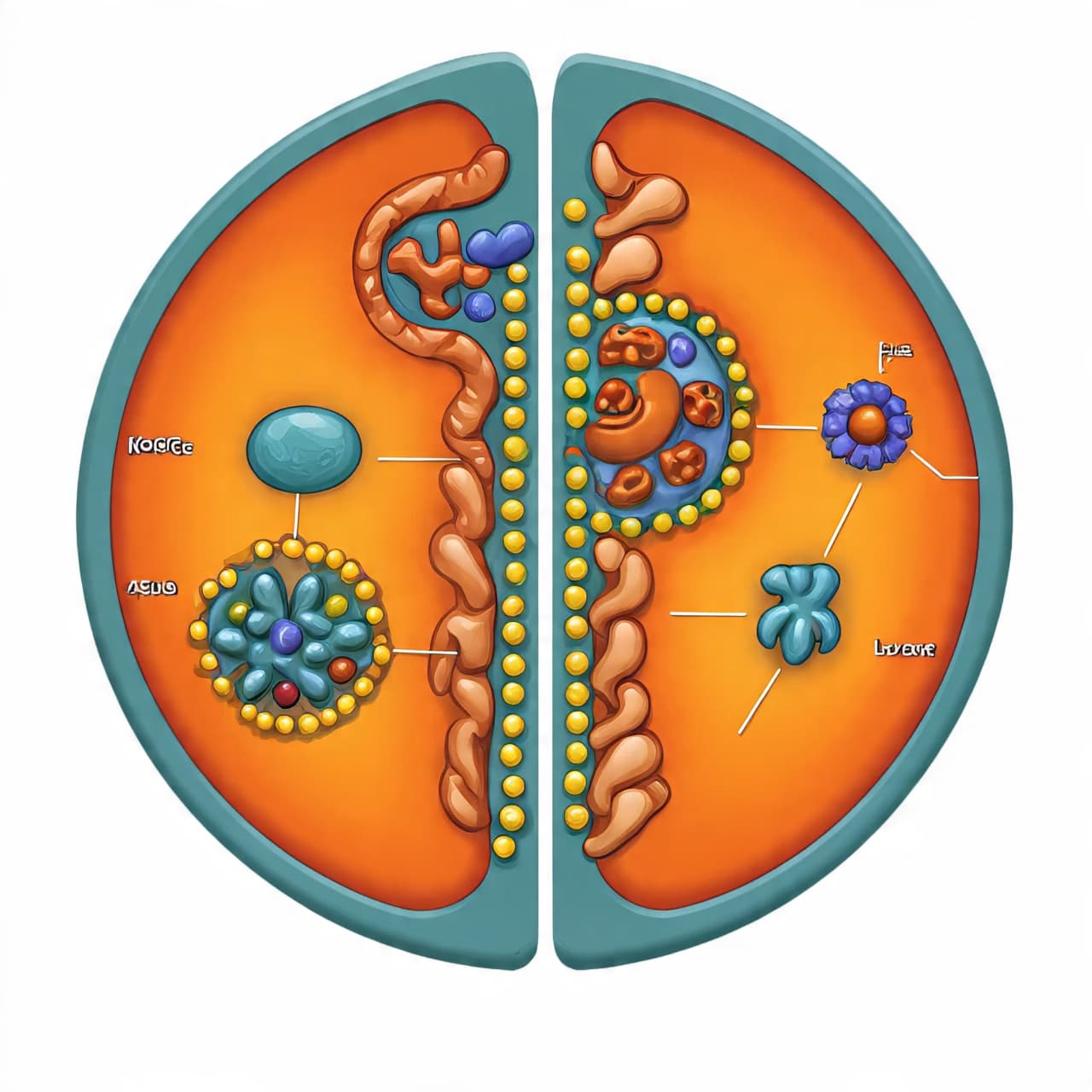
There are boundaries in life that seem firm at first glance, yet reveal themselves to be fluid upon closer study. The shoreline shifts with each tide. The horizon bends with perspective. And within every living cell, the membrane—once imagined as a simple protective wall—moves, bends, and breathes with a quiet intelligence of its own.
For decades, scientists have tried to understand how the cell membrane behaves with such precision and adaptability. It is not merely a barrier; it is a living interface, orchestrating communication between the interior of the cell and the vast biochemical world beyond. The long-standing “fluid mosaic model,” first proposed in the 1970s, described the membrane as a flexible sea of lipids with proteins floating within it. That model offered clarity, yet it also left lingering questions about how structure and motion coexist with such intricate order.
Recent research has brought renewed insight into this enduring mystery. Advances in super-resolution microscopy, cryo-electron imaging, and molecular simulations have allowed scientists to observe membrane dynamics at unprecedented detail. Rather than a uniformly fluid surface, the membrane appears to organize itself into transient microdomains—sometimes referred to as lipid rafts—where specific proteins and lipids gather briefly before dispersing again.
These dynamic clusters help explain how signaling pathways activate so efficiently. When receptors on the membrane detect external signals—hormones, neurotransmitters, or immune triggers—they do not act alone. Instead, they assemble into coordinated neighborhoods, enhancing communication speed and specificity. The membrane, then, behaves less like an open sea and more like a shifting archipelago, where islands form just long enough to conduct vital exchanges.
Another key revelation involves the role of the cytoskeleton, the structural framework beneath the membrane. Far from being passive scaffolding, the cytoskeleton interacts continuously with membrane components, influencing their movement and spatial organization. This interplay creates a delicate balance between stability and flexibility—allowing cells to maintain shape while adapting to stress, division, and migration.
Scientists have also clarified how membrane curvature is generated and regulated. Specialized proteins can bend the lipid bilayer, enabling processes such as endocytosis—the cell’s method of engulfing nutrients or signaling molecules. What once seemed like spontaneous deformation now appears to be carefully choreographed, guided by protein–lipid interactions and energy-dependent mechanisms.
These findings do not overturn the classic fluid mosaic model so much as refine it. The membrane remains fluid, but it is a fluid with pattern. It remains dynamic, yet it is not random. The behavior that once seemed mysterious now emerges as an elegant system governed by molecular cooperation and physical principles.
The implications extend beyond basic biology. Understanding membrane behavior informs research into viral entry, cancer metastasis, neurodegenerative disease, and targeted drug delivery. Many pathogens exploit membrane microdomains to enter cells. Likewise, pharmaceutical strategies increasingly aim to design therapies that interact precisely with membrane-bound receptors.
Yet even as scientists describe these mechanisms with growing clarity, the tone of discovery remains measured. Biology rarely resolves into absolutes. Each answer reveals deeper layers of complexity, inviting further inquiry rather than finality.
For now, researchers report that the long-debated unpredictability of cell membrane behavior is becoming increasingly understandable through high-resolution imaging and computational modeling. The mystery has not vanished, but it has softened—transformed from confusion into structured curiosity. And in that quiet shift, the membrane stands not as a wall, but as a living frontier of discovery.
AI Image Disclaimer: Visuals are created with AI tools and are not real photographs.
Sources: Nature Science Cell Scientific American The New York Times
Published by Banx Network. This article is part of the Banx decentralized media programme, powered by the BXE token on the XRP Ledger.