From the ground, Earth's atmosphere often appears seamless, fading gently into the darkness of space. Yet the boundary between our planet and the cosmos is far more intricate than it seems, shaped by invisible particles, solar activity, and forces that scientists are still striving to fully understand.
NASA researchers have announced important progress in the operation of the Carruthers Geocorona Observatory, a newly deployed mission designed to study the outermost layer of Earth's atmosphere. The observatory recently completed key calibration activities, paving the way for expanded scientific observations.
The mission focuses on the geocorona, an extremely thin cloud of hydrogen atoms that surrounds Earth and extends far into space. Although nearly imperceptible from the planet's surface, this outer atmospheric region plays an important role in interactions between Earth and the space environment.
Scientists say understanding the geocorona could improve knowledge of how Earth's atmosphere evolves and responds to changes in solar activity. Solar radiation and charged particles emitted by the Sun continuously influence the outer layers of the atmosphere.
The observatory's instruments are designed to detect faint ultraviolet emissions produced by hydrogen atoms. By mapping these emissions, researchers hope to create a more detailed picture of atmospheric behavior on a global scale.
Improved understanding of the upper atmosphere may also benefit space operations. Satellites orbiting Earth can be affected by changes in atmospheric density, particularly during periods of heightened solar activity.
Researchers emphasize that observations gathered by the mission could contribute to broader studies of space weather. Predicting how solar events influence Earth's environment remains a major priority for scientists and satellite operators alike.
The mission also highlights NASA's continuing investment in Earth science. While deep-space exploration often captures public imagination, studying our own planet remains an equally important component of modern scientific research.
As the Carruthers Geocorona Observatory begins routine operations, scientists anticipate that the mission will provide valuable insights into one of Earth's least understood atmospheric regions.
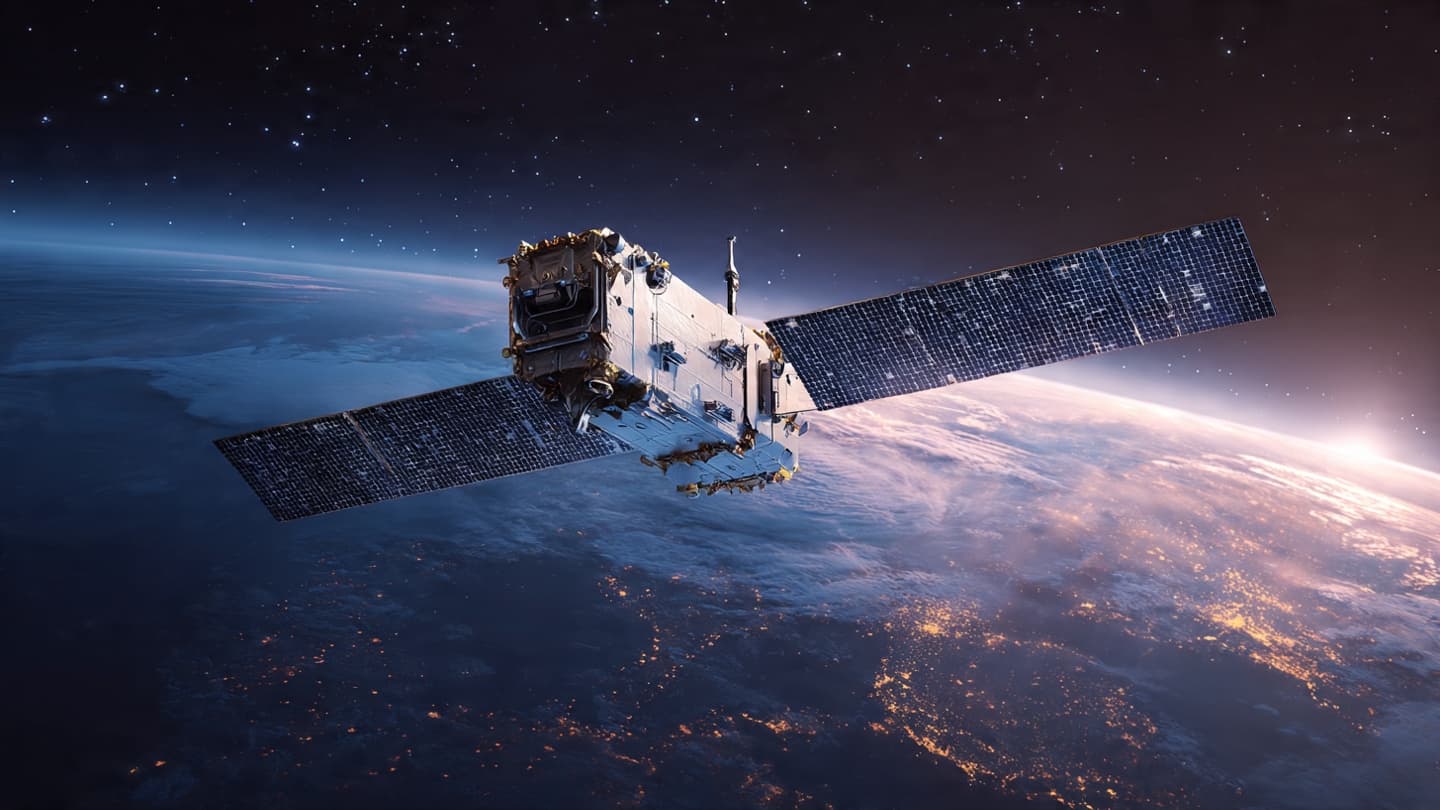
AI Image Disclaimer: The illustrations accompanying this article are AI-generated and are intended solely to visualize scientific concepts and mission activities.
Sources (verification check): NASA, arXiv, SpaceNews, Science Daily
Published by Banx Network. This article is part of the Banx decentralized media programme, powered by the BXE token on the XRP Ledger.