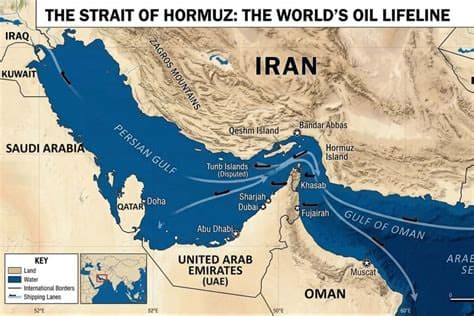
In the half‑light before sunrise, the Strait of Hormuz appears like a vein of silver cutting through an expanse of blue and gray, its quiet surface reflecting the first glimmers of dawn. In ordinary times, this slender channel carries a steady procession of steel‑hulled giants — tankers and freighters laden with the world’s oil and gas — threading their way between continents as the heartbeat of global commerce. Today, however, the rhythm has slowed, and the passage feels more like a whispered negotiation between sea and sky than the bustling thoroughfare it once was.
Since the broader conflict between Iran and its adversaries escalated earlier this year, shipping through this critical corridor has contracted dramatically. Where once an average of around 138 vessels passed through the strait daily, data now show the pace shrunk so sharply that only roughly the equivalent of a month’s worth of traffic passed in the whole of March, a trickle compared with seasons past. More than twenty ships have been attacked in the vicinity, and more than 2,000 vessels now sit anchored or stalled in ports or gulf waters, their crews uncertain when — or whether — they can continue their journeys.
Amid this altered flow, Tehran has fashioned what some maritime observers have come to call “Tehran’s tollbooth,” a controlled corridor within its territorial waters that allows a limited number of ships to transit under conditions set by Iranian authorities. Only vessels that Tehran deems “non‑hostile” — excluding those tied to the United States, Israel, and aligned partners — are permitted this passage, often with visual verification required and, according to some reports, unofficial payments or fees levied in hard currencies.
The waterway’s narrowness — at points less than 20 miles wide between Iran and Oman — magnifies this shift. It is one of the few gateways from the Persian Gulf to the open ocean, carrying about a fifth of the world’s oil and gas under ordinary conditions, and its partial closure has global ripples. Tanker insurers have raised war‑risk premiums, crew rotations have stalled, and cargoes destined for distant markets have been delayed or rerouted, adding to the sense of an artery that, though not fully blocked, is hardly running free.
For the sailors who remain at sea, there is a palpable tension between hope and caution. Some vessels navigate by hugging the Iranian coast, hugging paths closer to the territorial waters where verification is possible, while others reportedly turn off tracking beacons just before transit, a sign of the complex and opaque adjustments shipmasters make in this uneasy chapter.
The world watches these waters not only for what they carry — oil, gas, and the essential goods of daily life — but for what they represent: a chokepoint where geopolitics and economics meet, and where the decisions of distant capitals are measured in the slow turning of propellers and the reluctant sigh of anchors raised. Yet even as traffic slows and corridors narrow, the strait does not lie empty. It continues to carry ships, each one a quiet testament to the resilience of maritime life amid uncertainty and to the fragile balance between conflict and connection that defines this place.
AI image disclaimer Visuals are AI‑generated and serve as conceptual representations.
Sources The Guardian, India Today, Lloyd’s List, Wikipedia.
Published by Banx Network. This article is part of the Banx decentralized media programme, powered by the BXE token on the XRP Ledger.