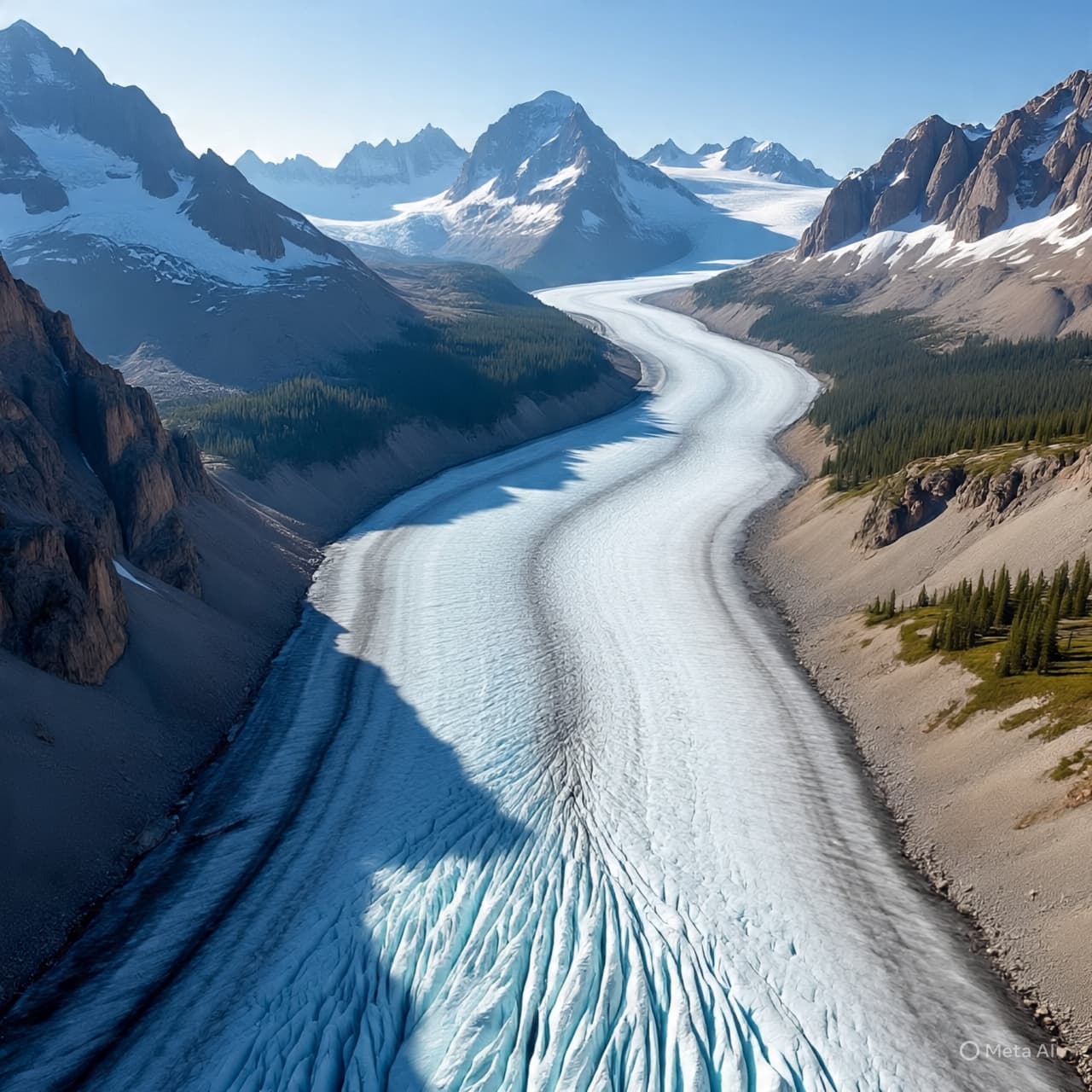
In the high, silent reaches of Wyoming’s Absaroka Range, time has been measured in centuries and in ice. For thousands of years, the Sunlight glacier clung to the shaded slopes of Sunlight Peak, a testament to the slow rhythms of snow and season. But in recent years, those rhythms have begun to change — not with thunderous collapse, but with the quiet persistence of melt and retreat.
For researchers who study these ancient ribbons of ice, glaciers are archives of Earth’s climate, narrators of change. They record the breath of winters past and the warmth of summers present. Watching a glacier thin, year after year, is like watching an old story lose its pages.
According to a new study led by scientists at Washington University in St. Louis, the glacier system near Sunlight Peak — long held as one of the enduring remnants of the last great glaciation — is shrinking at rates that surprise even seasoned observers. Using more than a century of documentation, including geophysical surveys, satellite data, and historical photographs, researchers have charted the glacier’s decline in remarkable detail. The ice is melting at rates of up to half a meter per year, and in its thinner reaches, some sections could disappear within a decade or less.
This is not a sudden disappearance, but a sustained unraveling. In places where only meters of ice remain, the landscape is already shifting from solid white to dark rock and soil. The glacier that once fed cold streams and shaded basins now feeds questions about what the future may hold. The deeper, thicker parts of the system are expected to persist longer — perhaps into later decades or even centuries — but the signs are clear: the glacier is in retreat.
What makes this documentation especially poignant is its length. Researchers drew on images dating back to the 1890s, when early U.S. Geological Survey photographers first captured the glacier’s crest. By comparing those images to modern views, and combining them with precise instruments that measure ice thickness and movement, scientists have built a layered narrative of loss and transformation.
This story is not unique to Sunlight. Mountain glaciers in Wyoming and elsewhere — from Cloud Peak Glacier in the Bighorns to the now-shadowed remnants of Petersen Glacier in Grand Teton National Park — have been retreating for decades. Many of these ice fields were formed during the Little Ice Age, less than a millennium ago, and have been generally declining since the mid-19th century.
Yet each glacier tells its own tale. Where one may disappear first, another lingers, caught in shaded cirques or fed by occasional late-season snowfall. Sunlight’s unfolding decline serves as both a specific chronicle and a broader lesson: even the slowest aspects of the landscape are subject to change in a warming world.
The research emphasizes careful measurement over dramatic declaration. Glacier retreat affects ecosystems, water supplies, and local landscapes, but it also becomes a reference point for understanding regional climate dynamics. Observations like these help scientists refine models, improve predictions, and contextualize change across mountain systems.
As the Sunlight glacier continues its retreat, researchers will keep watching — not only to document loss, but to understand the processes that bring these ancient ice masses to the brink of disappearance. For those who study the cryosphere, each meter of melt is data; each exposed rock face is a reminder of a landscape in motion.
Recent analyses show that the Sunlight glacier system near Sunlight Peak in Wyoming is melting as much as 50 cm per year and that some thinner sections could be gone in the next decade, although some thicker ice may persist longer into the century. Scientists used long-term photographic records, field measurements, and satellite data to track glacier change and emphasize ongoing monitoring efforts for understanding regional climate and hydrological impacts.
AI Image Disclaimer Graphics are AI-generated and intended for representation, not reality.
Sources Phys.org Washington University in St. Louis News Mirae News Wikipedia – Sulphur Glacier Wikipedia – Cloud Peak Glacier
Published by Banx Network. This article is part of the Banx decentralized media programme, powered by the BXE token on the XRP Ledger.