

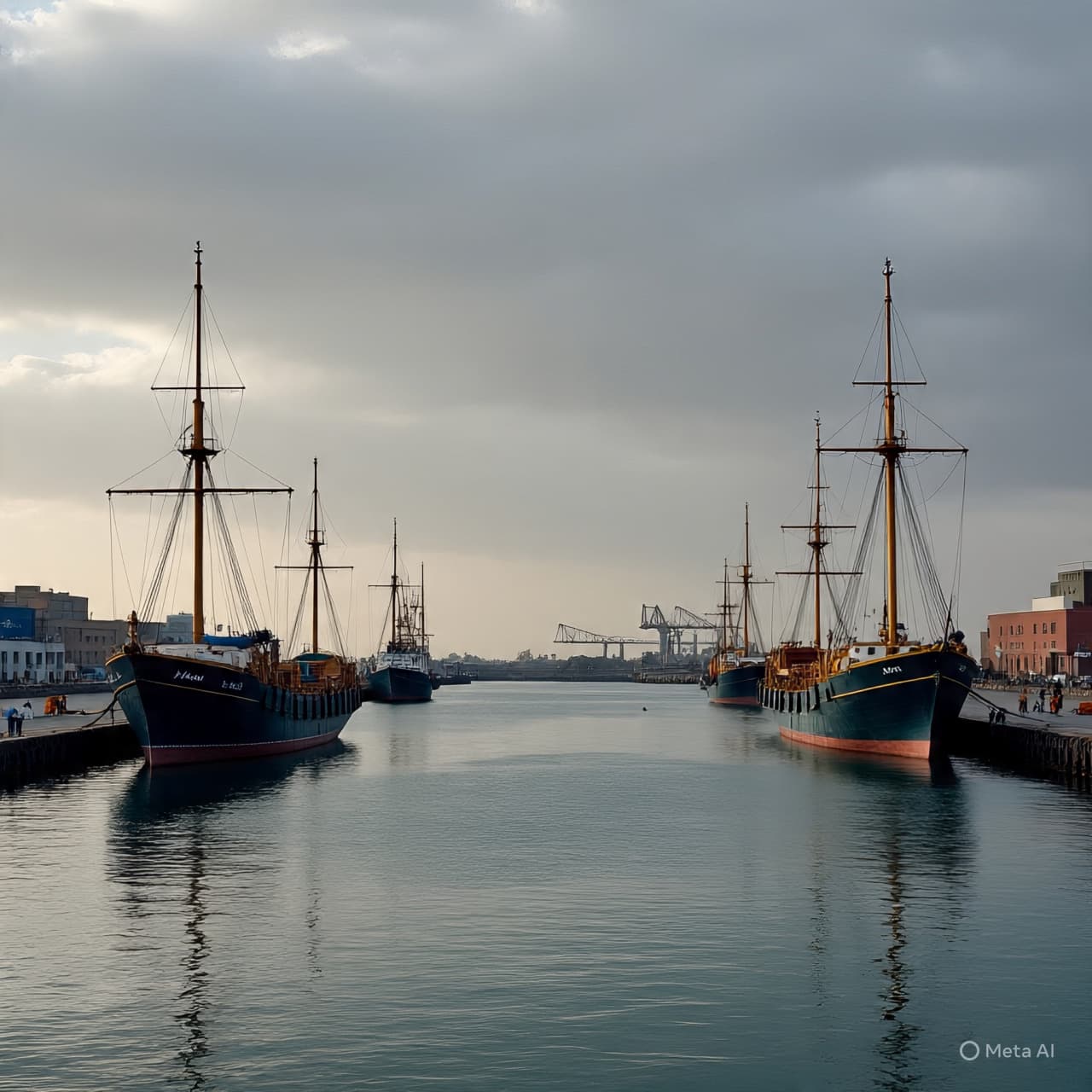
Key Highlights
- Port Sudan serves as a critical hub for trade and geopolitics.
- Recent U.S.-Sudan intelligence talks focused on security and counterterrorism.
- The ongoing conflict in Sudan complicates international engagement.
Port Sudan stands at a unique crossroads, where the Red Sea meets the shores of a nation grappling with profound challenges. This port city has historically been a vital gateway for trade and migration, but in recent years, it has also become a focal point for geopolitical maneuvering. The recent intelligence engagements by the United States in this region reflect a nuanced approach to a complex situation, where the currents of diplomacy and conflict intertwine.
In January, Sudan's intelligence chief, aligned with the military, traveled to Washington for discreet discussions with U.S. intelligence officials. These meetings, characterized by their low profile, were not publicized through grand announcements or press releases. Instead, they focused on critical issues such as mutual security concerns, counterterrorism strategies, and the shared threat posed by extremist networks. This approach underscores a cautious yet pragmatic engagement, aimed at aligning interests without making overt diplomatic overtures.
The absence of public fanfare surrounding these talks is significant. While many Sudanese citizens yearn for a ceasefire and a pathway to national reconciliation, the discussions in Washington did not address these pressing demands. Instead, they were framed around understanding threats and managing expectations, reflecting a strategic choice by U.S. officials to prioritize security over immediate political solutions.
Within Port Sudan, the implications of these diplomatic interactions are felt acutely. The city has endured the spillover effects of the ongoing civil war, which has claimed tens of thousands of lives and displaced millions. In this context, the presence of foreign intelligence agencies, including Egyptian and British officials, adds layers of complexity to the local landscape. Their engagements often oscillate between visible cooperation and discreet negotiations, highlighting the delicate balance of interests at play.
Experts caution that intelligence engagement does not necessarily equate to trust or a formal alliance. Instead, it often reflects a shared acknowledgment of mutual concerns regarding regional stability and the threat of extremism. However, for critics in Sudan, such outreach can be perceived as an imposition, raising questions about the nature of foreign involvement in domestic affairs.
Port Sudan, in its quieter moments, symbolizes the precarious balance between internal conflict and external interests. The U.S. decision to engage with Sudanese intelligence officials sends a subtle yet significant message: in a world marked by fractured alliances and uncertain outcomes, measured dialogue can serve as a foundation for potential understanding. Yet, as Sudan's struggle continues, these intelligence talks represent just one thread in a much larger narrative, with the future of both Port Sudan and the nation hanging in the balance.
As this chapter unfolds, the interplay of local dynamics and international interests will shape the trajectory of Sudan's political landscape. The ongoing conflict, coupled with the complexities of foreign engagement, underscores the need for a comprehensive approach to peace that addresses both immediate security concerns and the long-term aspirations of the Sudanese people.
Published by Banx Network. This article is part of the Banx decentralized media programme, powered by the BXE token on the XRP Ledger.




