
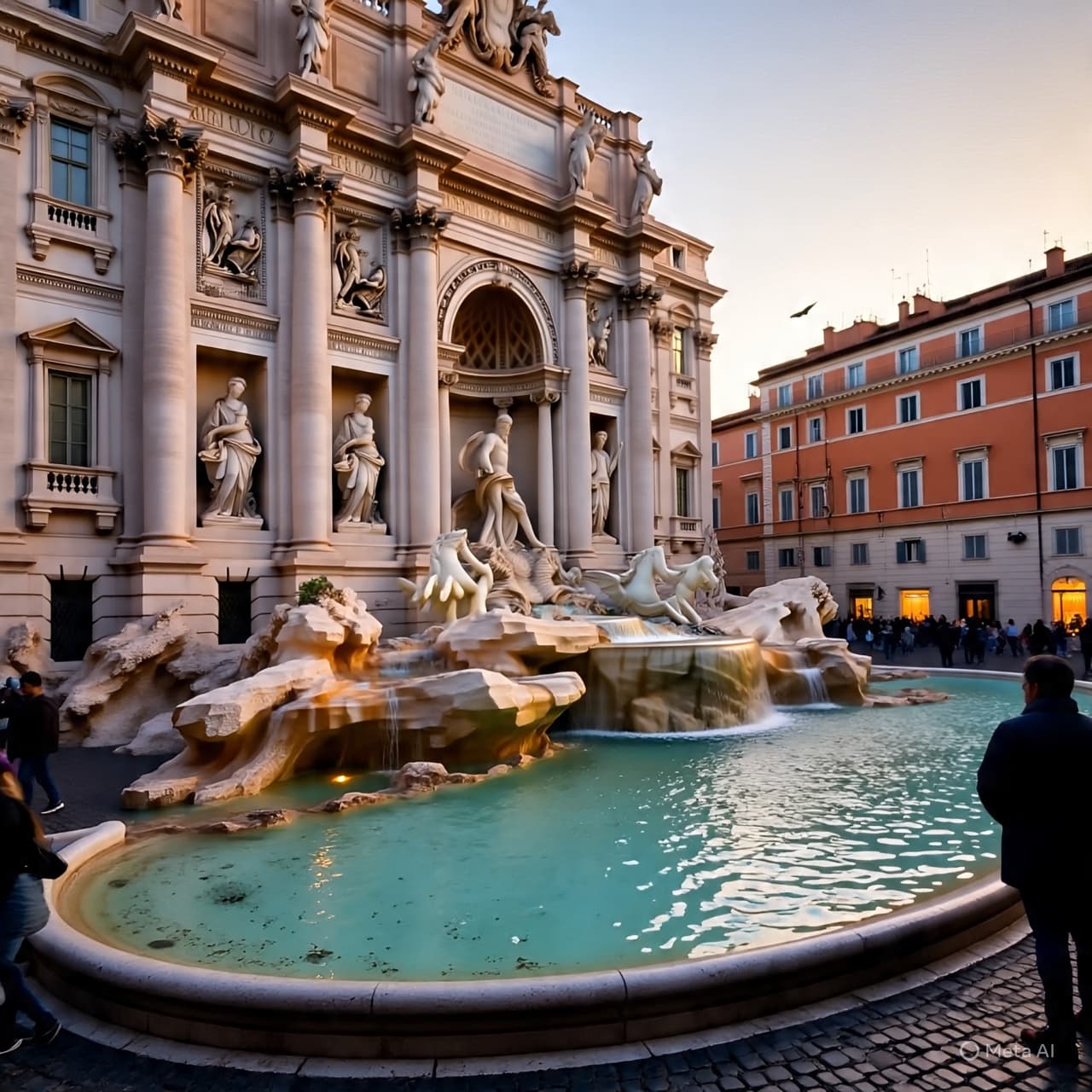
At dawn, before footsteps multiply and cameras rise, the Trevi Fountain often returns to itself. Water glides over stone with a steadiness that has outlasted empires, and the basin holds a calm that feels almost private. It is in this delicate balance between permanence and pressure that Rome has decided to make a small but symbolic change: beginning in February 2026, visitors will pay a €2 ticket to approach the fountain.
City officials describe the measure not as a toll on beauty, but as a way to protect it. Trevi is among the most visited landmarks in the world, drawing tens of thousands daily during peak seasons. The crush of bodies has worn at the edges of the experience and the stone itself, challenging custodians tasked with preserving a monument that was never designed for modern crowds.
Under the plan, access will be regulated through timed entry, with residents retaining free access and certain hours remaining open without charge. The goal, officials say, is to thin the surge, restore a sense of order, and allow conservation teams to better manage cleaning and maintenance. Coins will still arc into the water—tradition remains—but the surrounding space may finally breathe.
The proposal has stirred a familiar Roman debate about stewardship and accessibility. Supporters see a modest fee as a practical response to overtourism, one that acknowledges the real costs of preservation. Critics worry about the symbolism of paying to stand before a public fountain, a place woven into the city’s shared life and collective memory.
Yet Rome has faced this question before, at museums, archaeological sites, and even streets reshaped by footfall. The Trevi decision reflects a broader reckoning across historic cities: how to welcome the world without letting the world wear away what it came to admire.
As winter gives way to spring in 2026, the fountain will continue its patient flow. Visitors will still arrive with wishes, hopes, and the impulse to pause. The difference may be subtle—a ticket scanned, a moment spaced—but the intention is clear: to ensure that the ritual endures, unhurried, for those yet to come.
Published by Banx Network. This article is part of the Banx decentralized media programme, powered by the BXE token on the XRP Ledger.


