
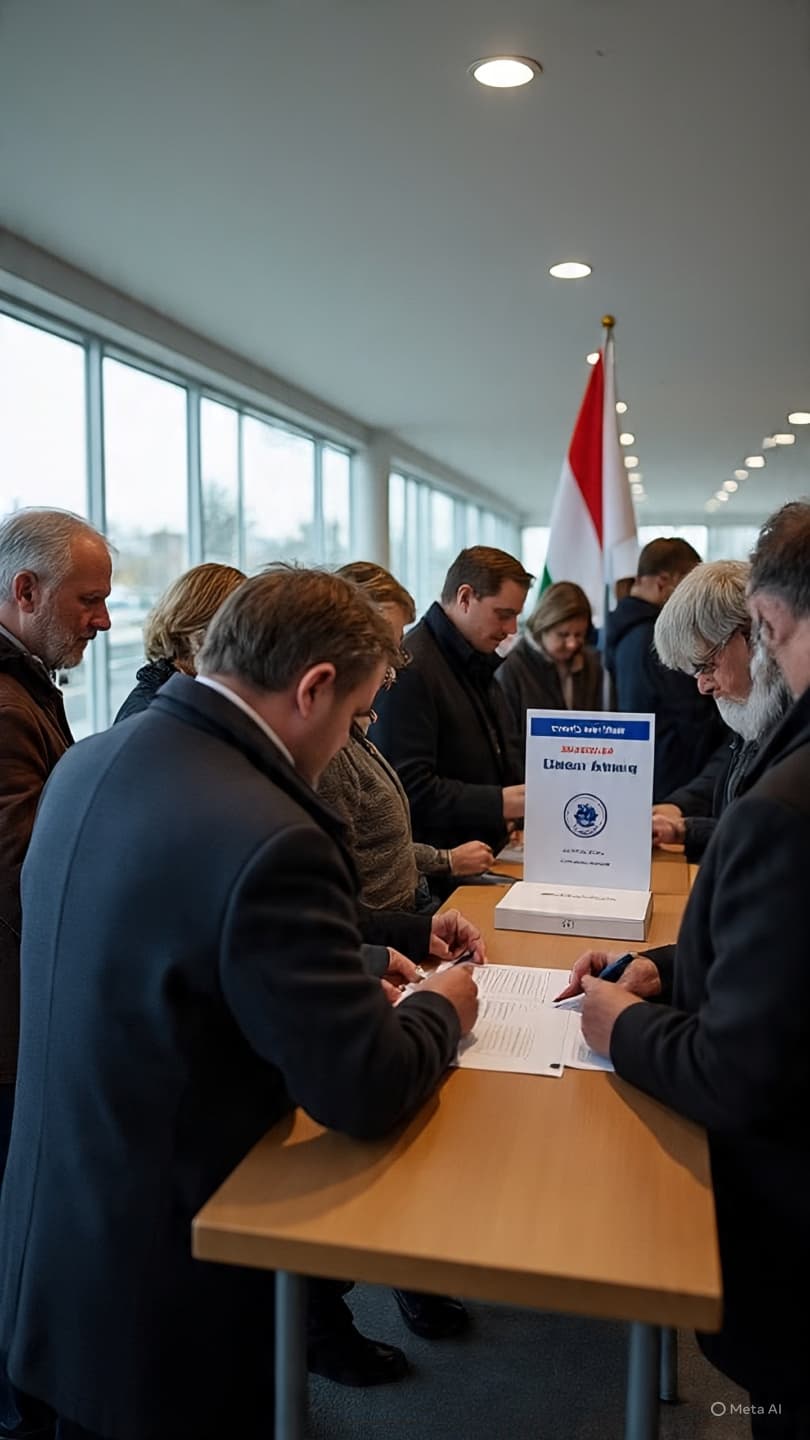
Key Highlights
- Rumen Radev wins Bulgaria's presidential election, continuing his leadership.
- Bulgaria navigates a complex identity between EU commitments and Russian ties.
- Voter sentiment reflects domestic concerns alongside international positioning.
Bulgaria stands at a pivotal moment, where the subtle shifts in political direction are felt rather than seen. The recent presidential election has reaffirmed Rumen Radev's position, a leader often viewed as favoring engagement with Russia. His victory is not just a personal triumph but a reflection of Bulgaria's intricate geopolitical landscape, where history, geography, and modern alliances converge.
Radev's win signals continuity in Bulgaria's political narrative. His previous term was characterized by a pragmatic approach, advocating for dialogue with Moscow while maintaining Bulgaria's commitments to the European Union and NATO. This duality in his leadership style has become a hallmark of his governance, illustrating the delicate balance Bulgaria must strike between its Western affiliations and its historical ties to Russia.
The election results are not merely a reflection of Radev's popularity but also a response to the electorate's pressing concerns. Issues such as governance, economic stability, and public trust have significantly influenced voter behavior. While Radev is often labeled as 'pro-Russia,' this characterization oversimplifies the complexities of Bulgarian politics, where domestic issues play a crucial role in shaping international perceptions.
In the broader European context, Bulgaria's position may seem modest, yet it serves as a microcosm of the diverse perspectives that exist within the EU. The implications of Radev's victory extend beyond national borders, as they highlight the coexistence of varying political ideologies within shared European institutions. The election acts as a mirror, reflecting not only policy preferences but also the collective mood of the populace, which appears to favor stability amid a backdrop of uncertainty across the continent.
As Bulgaria moves forward, the significance of Radev's leadership will be tested by the decisions made in the coming months. The balance between maintaining international partnerships and addressing internal priorities will be critical. The electorate's choice for continuity may indicate a desire for familiarity in navigating the complexities of both domestic and foreign policy.
In conclusion, while the election result stands as a reaffirmation of Radev's leadership, it also opens the door for ongoing dialogue about Bulgaria's role in the evolving geopolitical landscape. The future will depend on how effectively Radev can manage the intricate web of relationships that define Bulgaria's identity on the world stage.
Published by Banx Network. This article is part of the Banx decentralized media programme, powered by the BXE token on the XRP Ledger.



