Elections, in their quiet essence, are often imagined as moments of clarity—when a nation pauses, gathers its voice, and looks toward its own reflection. Yet, there are times when this process unfolds not in stillness, but amid currents that are far less certain. In , the approach to the ballot box arrives against a backdrop where the rhythms of governance intersect with the echoes of conflict and the weight of unresolved tensions.
The country’s path toward elections carries both continuity and complexity. On one hand, the act of voting represents a commitment to institutional processes—a reaffirmation that, even in challenging circumstances, the framework of democracy continues to function. On the other, the realities surrounding this moment reveal a landscape shaped by conflict, displacement, and regional disparities that cannot be easily set aside.
The shadow of the remains a defining element of this context. Though active hostilities have eased in some respects, their aftereffects continue to influence political, social, and economic conditions. Communities affected by the conflict face ongoing challenges, and the process of recovery moves at a pace that reflects both progress and fragility.
Beyond Tigray, other regions have also experienced varying degrees of instability. Localized conflicts, tensions between different groups, and questions of governance contribute to an environment where uniform participation becomes more difficult to achieve. Elections, in such circumstances, must navigate not only logistical hurdles but also the broader question of inclusivity—who is able to vote, and under what conditions.
The institutions overseeing the electoral process carry a significant responsibility. Ensuring transparency, fairness, and accessibility requires careful coordination, particularly in areas where infrastructure and security present additional challenges. Observers often emphasize that credibility is not defined solely by the act of voting itself, but by the trust that surrounds it—before, during, and after ballots are cast.
At the same time, political engagement continues to evolve. Parties and candidates, operating within this complex environment, seek to connect with a population that is both attentive and affected by the current realities. Public discourse, shaped by a mix of hope and caution, reflects the multifaceted nature of the moment.
For many citizens, the elections represent more than a procedural event. They are intertwined with broader aspirations for stability, representation, and a sense of normalcy. The act of participation, however, is influenced by conditions on the ground—by access, by security, and by the confidence individuals place in the process.
Internationally, Ethiopia’s elections are being watched with measured attention. The country’s role within the region, combined with its internal dynamics, lends broader significance to the outcome. Yet, external perspectives often remain secondary to the domestic realities that ultimately shape the process.
As election day approaches, the narrative that emerges is neither entirely defined by challenge nor by certainty. It exists somewhere in between—a reflection of a nation navigating its own complexities while maintaining a commitment to forward movement. The balance is delicate, and its outcome will unfold in time.
In the immediate term, Ethiopia continues its preparations, with authorities outlining plans to conduct the elections amid existing conditions. While uncertainties remain, the process itself proceeds, marking another step in the country’s ongoing political journey.
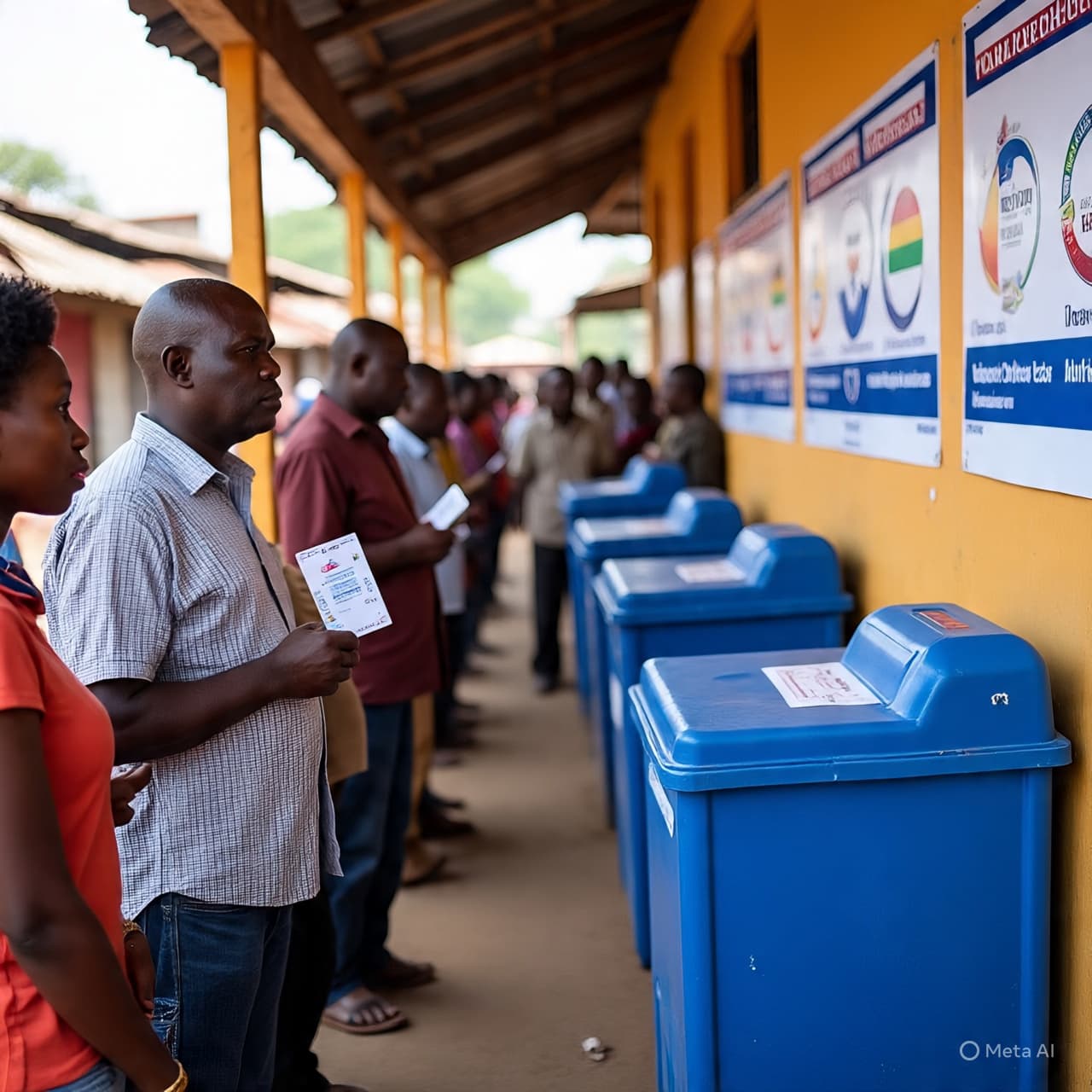
AI Image Disclaimer Visuals are created with AI tools and are not real photographs.
Source Check (Credible Media Outlets): Reuters BBC News Al Jazeera The Guardian Associated Press
Published by Banx Network. This article is part of the Banx decentralized media programme, powered by the BXE token on the XRP Ledger.