In the early light of a Budapest morning, the city streets hum not just with the rhythm of everyday life, but with the subtle murmur of political possibility. Hungary stands at a crossroads, and the voices of its citizens carry the weight of decades, dreams, and caution alike. Into this delicate tapestry steps Péter Magyar, a figure once part of the established order, now charting a course against it. His campaign to challenge Prime Minister Viktor Orbán is less a loud confrontation than a reflective invitation: to reconsider, to reimagine, and to gently question the path that has brought the nation to this moment.
At the heart of Magyar’s campaign lies a story of transformation — personal, political, and national. Having left the orbit of Fidesz, he now speaks to an electorate eager for renewed connections with the broader world, promising to realign Hungary with the values of the European Union while nurturing the country’s own identity. He addresses issues both tangible and profound: economic fairness, public trust, and the quiet reassurance that government can serve rather than dominate. It is a dialogue conducted not in the harsh language of confrontation, but in the softer, reflective tones of possibility.
The stakes are unmistakable. Orbán’s tenure has shaped modern Hungary in visible and invisible ways, embedding policies that supporters praise as stability and detractors critique as constraint. Magyar’s challenge is therefore not simply electoral, but existential — a test of how a democracy interprets its past, listens to its present, and envisions its future. He appeals to voters with the notion that change need not be abrupt or revolutionary, but considered and steady, the kind that allows society to breathe as it evolves.
Observers note that Europe watches with measured interest, both in solidarity and caution. The EU’s tone has shifted, softening its critique of Orbán while funds remain contingent on democratic norms, reminding citizens that national choices resonate beyond borders. Yet, for the people of Hungary, the question is immediate and intimate: which vision will guide them through the next chapter? Magyar’s campaign, gentle in rhetoric but firm in ambition, places this choice squarely in the hands of voters, inviting reflection over rhetoric, conversation over conflict.
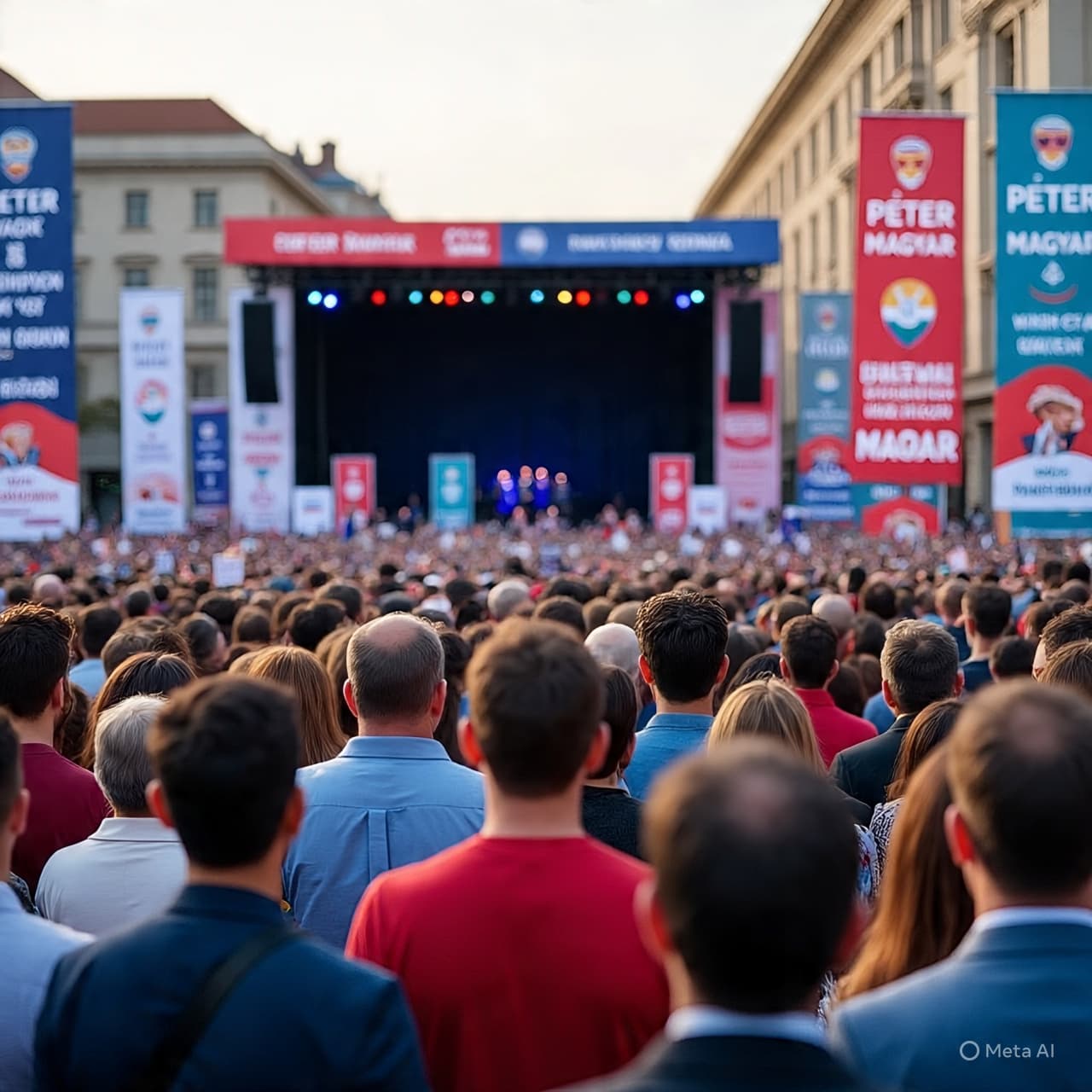
As campaign rallies unfold and debates stir the streets, the outcome remains unwritten. Hungary’s story is still being told, not with the force of inevitability but with the quiet insistence of possibility. Magyar’s entry into the political stage does not promise certainty, only a careful reconsideration, a pause to ponder what Hungary can be when history, hope, and responsibility converge. In this reflective pause, citizens find not just candidates, but the invitation to imagine a future where their voices shape the narrative with clarity and care.
AI Image Disclaimer Illustrations were produced with AI and serve as conceptual depictions, not real photographs.
Sources AP News Financial Times Euronews Reuters NV News
Published by Banx Network. This article is part of the Banx decentralized media programme, powered by the BXE token on the XRP Ledger.