The evening air in southern Lebanon often carries sound farther than expected—voices drifting across hills, the distant hum of traffic, the faint, rhythmic echo of something unsettled beyond the horizon. On certain nights, that quiet is interrupted not by noise alone, but by absence—the sudden stillness that follows an event whose weight lingers long after it has passed.
In recent days, that stillness has gathered around the deaths of three journalists in southern Lebanon, an incident that has drawn a sharp response from officials in Beirut. The Lebanese government described the strike as a “blatant war crime,” attributing responsibility to Israel amid an already fragile and tense border environment. The journalists, working near the frontier where exchanges of fire have become an almost daily occurrence, were part of a small press presence documenting the shifting realities of life along the line that divides.
Details emerging from the scene suggest that the group had been operating in a known media area, wearing identifiers that marked them as press. Their equipment—cameras, protective gear, vehicles—stood as quiet signals of their role, attempting to create a boundary between observer and participant in a space where such distinctions are often difficult to maintain. Yet in conflict zones, even these signals can blur, carried away in the speed and uncertainty of unfolding events.
The deaths have intensified scrutiny of the broader exchanges between Israeli forces and armed groups along Lebanon’s southern border, particularly in the context of ongoing hostilities involving Hezbollah. Since the escalation that followed the outbreak of war in Gaza, cross-border strikes have become more frequent, tracing an uneasy pattern of retaliation and restraint. Villages near the frontier have seen periodic evacuations, while the presence of journalists—local and international—has remained a constant, if precarious, thread in documenting the situation.
International reactions have followed familiar yet somber paths. Press freedom organizations have called for investigations, emphasizing the protections afforded to journalists under international humanitarian law. Statements from diplomatic channels have echoed concerns about civilian safety and the risks faced by those reporting from active conflict zones. Meanwhile, Israeli officials have indicated that operations target militant activity, often noting the complexities of distinguishing combatants in areas where armed groups operate close to civilian infrastructure.
For the communities along the border, the incident folds into a longer narrative of uncertainty. The presence of cameras and microphones has long served as a bridge between these remote, often overlooked areas and the wider world. Their absence, even temporarily, leaves a different kind of silence—one where fewer stories cross the boundary, where fewer moments are carried outward.
As the investigation unfolds and calls for accountability gather momentum, the facts remain stark: three journalists have been killed, and a government has formally condemned the act in the language of international law. Beyond that, the implications continue to ripple outward, touching questions of safety, visibility, and the fragile line between witnessing and vulnerability.
In the fading light of another day along the border, the landscape remains much as it was—fields, roads, distant watchpoints—but the memory of what occurred settles into it, quietly altering its contours. And within that altered space, the work of telling continues, shaped as much by those who remain as by those who are no longer there to speak.
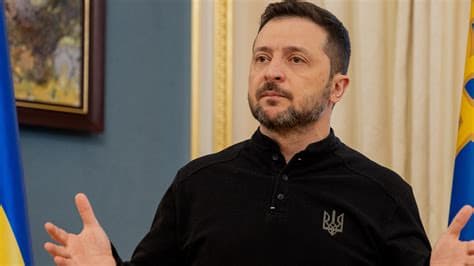
AI Image Disclaimer These images are AI-generated for illustrative purposes and do not depict real events.
Sources Reuters Associated Press Al Jazeera BBC News Committee to Protect Journalists
Published by Banx Network. This article is part of the Banx decentralized media programme, powered by the BXE token on the XRP Ledger.