
Key Highlights
- Incident:An oil tanker was hijacked off the coast of Somalia, reviving piracy concerns.
- Maritime Security:The hijacking underscores vulnerabilities in global shipping routes.
- Economic Impact:Disruptions in the Horn of Africa can affect global supply chains.
Reports have emerged of a suspected piracy incident involving an oil tanker traveling toward Somalia’s capital. According to maritime monitoring sources, the vessel was seized in waters off the Somali coast, reviving concerns about a threat that had largely receded in recent years but never fully disappeared from regional memory.
The ship, carrying petroleum products and bound along established shipping lanes that connect the Middle East, East Africa, and global markets, was intercepted in a zone long associated with both commerce and risk. Details remain limited, as maritime authorities continue to verify the situation and track the vessel’s movement.
For much of the past decade, international naval patrols and coordinated security efforts had significantly reduced piracy incidents in the region. At its peak in the late 2000s and early 2010s, Somali piracy disrupted major shipping corridors, prompting global military cooperation and private security measures aboard commercial vessels. Gradually, those incidents declined, and the sea lanes regained a sense of routine passage.
Yet maritime security experts have long cautioned that the underlying conditions—economic strain, fragmented coastal governance, and the vastness of unmonitored waters—were never fully resolved. Instead, the activity shifted into quieter intervals, less visible but not entirely absent.
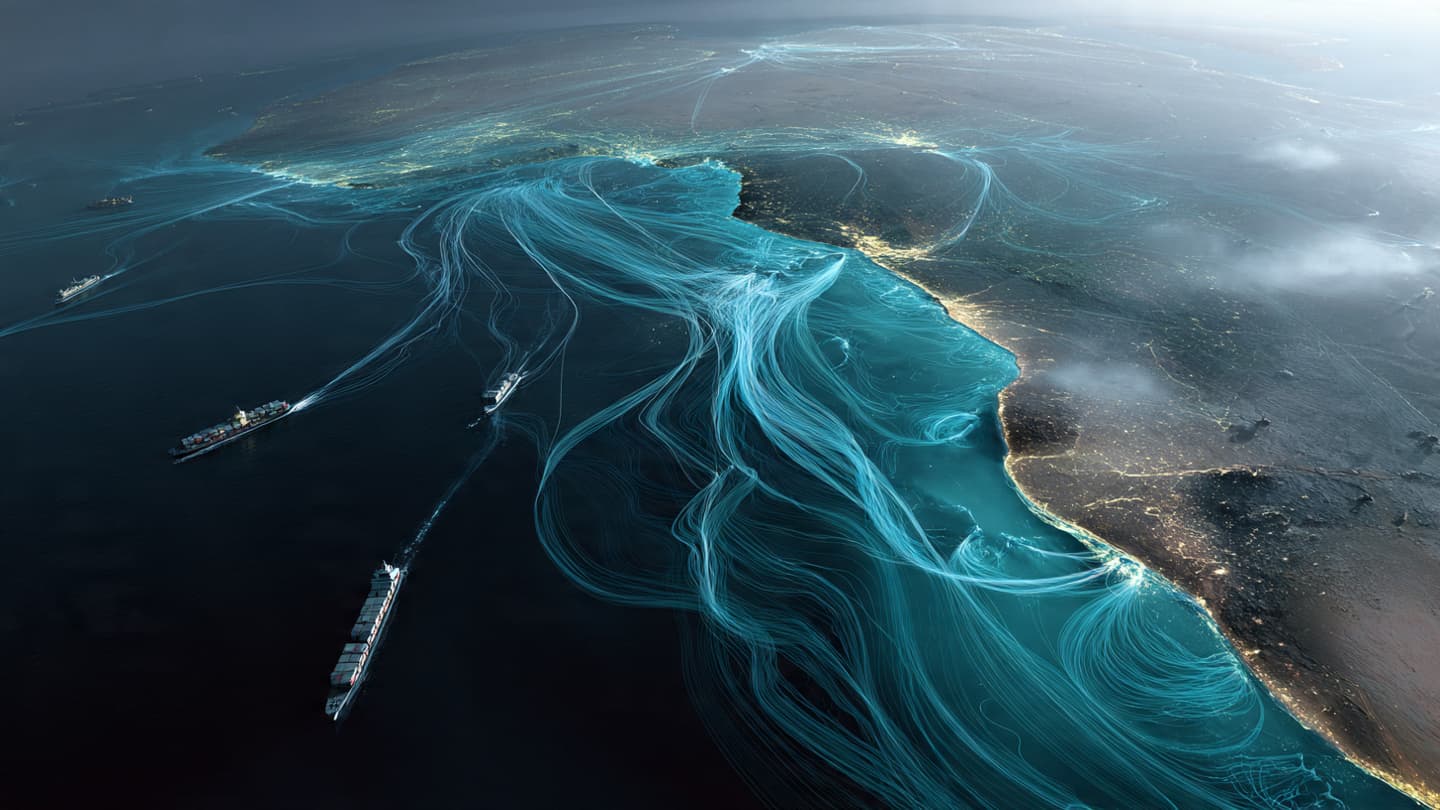
In this latest incident, the reported hijacking of an oil tanker underscores how quickly maritime stability can feel conditional. Shipping lanes in the region are among the busiest in the world, linking the Red Sea, the Gulf of Aden, and the Indian Ocean. Any disruption in this corridor reverberates far beyond the immediate waters, affecting insurance costs, delivery timelines, and global energy logistics.
Somalia’s coastline, stretching along one of the longest in mainland Africa, has always been both a gateway and a threshold. Fishing villages, port cities, and informal landing points coexist with international shipping routes that pass within sight of shore but often beyond the reach of local infrastructure. It is in this overlap—between proximity and distance—that maritime vulnerabilities tend to surface.
Authorities and maritime security firms are now monitoring the situation closely, attempting to determine the vessel’s location and the identity of those responsible for the seizure. Naval forces operating in the region have historically responded to such incidents through coordinated patrols and escort missions, though operational details vary depending on jurisdiction and current deployments.
For crews aboard commercial ships navigating these waters, the sea is experienced in layers: routine movement interrupted by alerts, radar updates, and periodic advisories that speak in the language of caution. Most voyages pass without incident. But the possibility of disruption, however reduced in recent years, remains part of the background awareness of maritime travel in this corridor.
The broader context is not only security-related but also economic. Oil shipments and cargo vessels passing through the Horn of Africa form a critical artery in global supply chains. Even isolated disruptions can ripple outward, affecting refineries, markets, and distribution schedules thousands of miles away.
As the situation continues to develop, official confirmations and operational responses are expected from regional maritime authorities and international partners engaged in anti-piracy coordination. For now, details remain under verification, and the condition of the vessel and its crew has not been fully clarified in public reporting.
What remains clear is the return—however brief or contained—of an old maritime concern. The ocean, vast and indifferent, continues to carry both commerce and risk along the same invisible lines.
And somewhere between those lines, a single vessel alters course in a way that reminds the world how thin the boundary can be between passage and interruption.
Published by Banx Network. This article is part of the Banx decentralized media programme, powered by the BXE token on the XRP Ledger.



