
Key Highlights
- At least 25 heat-related deaths reported across the U.S.
- New Jersey's death toll rises from 19 to 22 due to extreme heat.
- Illinois records one additional heat-related fatality.
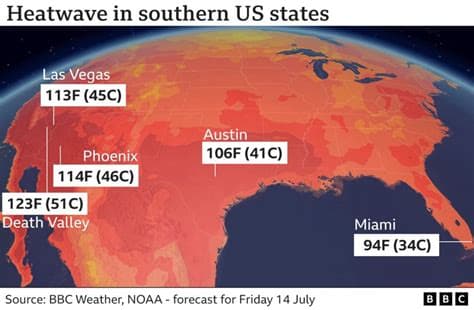
A severe heatwave sweeping across the United States has led to at least 25 confirmed deaths attributed to heat-related causes. The extreme temperatures have affected various regions, particularly the Deep South, Midwest, and East Coast, prompting health officials to issue warnings and advisories to the public.
According to a report by NBC News, New Jersey has seen a significant increase in heat-related fatalities, with health official Dalya Eweis confirming that the number rose from 19 to 22 on Saturday. This alarming rise highlights the severe impact of the ongoing heatwave, which has been characterized by record-breaking temperatures that have persisted for several days.
In addition to New Jersey, Illinois has also reported one additional heat-related death, bringing the total number of fatalities to 25 across the affected states. The National Weather Service has issued excessive heat warnings in multiple areas, advising residents to take precautions against the sweltering conditions.
The heatwave has not only resulted in tragic loss of life but has also strained emergency services and healthcare systems. Hospitals are experiencing an influx of patients suffering from heat exhaustion and heat stroke, conditions that can be life-threatening if not treated promptly. Local authorities are urging residents, especially vulnerable populations such as the elderly and those with pre-existing health conditions, to stay hydrated and avoid outdoor activities during peak heat hours.
As the heatwave continues, meteorologists are monitoring the situation closely. Forecasts indicate that temperatures may remain elevated for the coming days, with some areas experiencing highs exceeding 100 degrees Fahrenheit. This prolonged heat poses significant risks, and officials are emphasizing the importance of community awareness and preparedness.
In response to the crisis, various organizations and local governments are mobilizing resources to provide relief to those affected by the heat. Cooling centers are being established in several cities to offer refuge from the extreme temperatures, and outreach programs are being implemented to check on vulnerable individuals who may be at risk.
The ongoing heatwave serves as a stark reminder of the increasing frequency and intensity of extreme weather events linked to climate change. As communities across the nation grapple with the immediate impacts of this heatwave, discussions about long-term strategies to mitigate such events are becoming increasingly urgent.
Published by Banx Network. This article is part of the Banx decentralized media programme, powered by the BXE token on the XRP Ledger.



