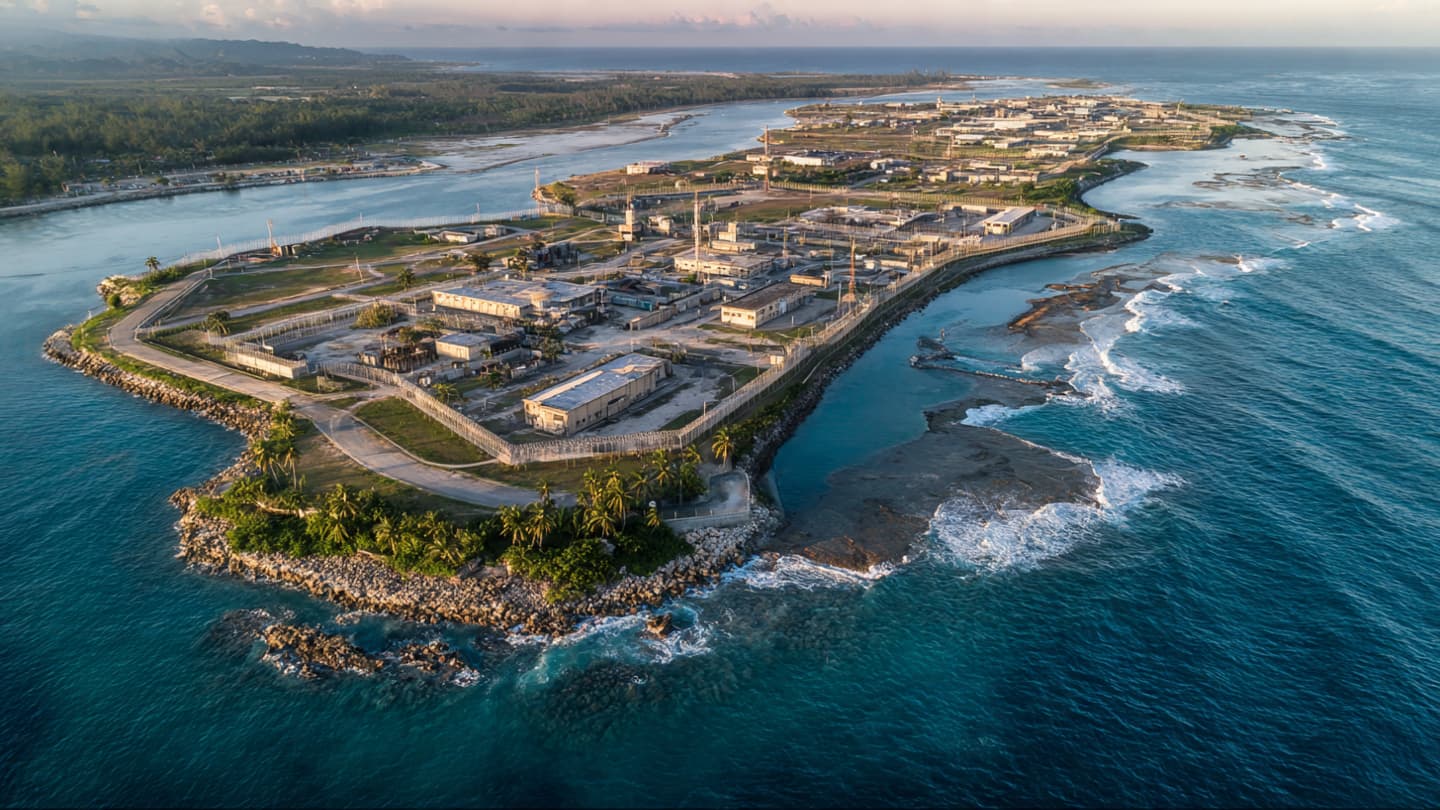
There are places in the world where geography becomes inseparable from memory. Guantánamo Bay is one of them — a stretch of coastline long shaped not only by military fences and naval operations, but by decades of political symbolism, legal controversy, and unresolved history between the United States and Cuba. Now, amid renewed debate surrounding migration policy and executive authority, the naval base has once again returned to the center of international scrutiny.
Human rights advocates, legal scholars, and several political organizations have urged former President Donald Trump to publicly reject any notion of a future U.S. takeover of Cuba while also ending proposals tied to using Guantánamo Bay as a detention site for migrants intercepted during enforcement operations. Critics argue that such rhetoric and policy discussions risk reviving some of the most controversial aspects of post-9/11 detention policy while intensifying already sensitive relations across the Caribbean region.
The debate reportedly intensified after comments and policy discussions linked to Trump allies raised questions regarding expanded migration enforcement strategies and the possible future role of Guantánamo facilities. Advocacy groups warned that transferring migrants to the naval base could create legal ambiguity regarding detainee protections, asylum rights, and international humanitarian standards.
Guantánamo Bay has occupied a uniquely controversial position in modern political history. Operated by the United States under a long-disputed lease agreement dating back to the early twentieth century, the base became globally associated with indefinite detention and counterterrorism operations following the September 11 attacks. Over time, legal challenges and international criticism transformed the site into a broader symbol of debates surrounding executive power, human rights, and the boundaries of wartime policy.
For Cuba, Guantánamo remains an enduring sovereignty dispute. Cuban governments across generations have argued that the United States maintains control of the territory against Havana’s wishes, describing the arrangement as a lingering remnant of historical interventionism. American officials, meanwhile, continue viewing the naval installation as strategically important within broader regional security operations.
Legal experts involved in the current debate argue that using Guantánamo for migrant detention could create significant constitutional and international law concerns. Some advocacy organizations warn that offshore detention systems risk limiting transparency, judicial oversight, and access to legal representation for vulnerable populations seeking asylum or humanitarian protection.
At the same time, immigration remains one of the most politically charged issues in American public life. Trump has repeatedly emphasized stricter border enforcement, mass deportation efforts, and expanded detention capacity as central parts of his political platform. Supporters argue that tougher measures are necessary to manage migration flows and maintain border security, while critics warn that aggressive enforcement proposals risk undermining humanitarian obligations and legal protections.
The renewed focus on Guantánamo also reflects how certain historical symbols continue resurfacing during periods of political tension. Even decades after the height of the “war on terror,” the detention facility retains powerful emotional and legal associations internationally. For many observers, debates involving the site extend beyond logistics alone and instead touch broader concerns regarding how democratic governments exercise authority during moments framed as crises.
Human rights organizations have urged policymakers to avoid approaches that could blur distinctions between migration management and national security detention systems. Some groups also expressed concern that rhetoric surrounding Cuba and Guantánamo could complicate diplomatic relations throughout Latin America and the Caribbean, where historical memories of intervention remain politically sensitive.
Meanwhile, the Biden administration has continued navigating its own immigration challenges, including border management pressures, asylum backlogs, and regional migration agreements. The broader American political debate over immigration remains deeply polarized ahead of future election cycles, with detention policy likely to remain a central issue.
For now, no formal policy change involving Guantánamo Bay has been implemented under the proposals drawing criticism. Yet the discussion itself has already revived longstanding international debates over detention practices, executive authority, and the enduring symbolism carried by one of the world’s most politically charged military installations.
As migration pressures continue shaping political discourse across the Americas, Guantánamo once again stands not only as a naval base, but as a reminder of how places shaped by history can continue influencing modern debates long after earlier conflicts fade from the headlines.
AI Image Disclaimer The images featured alongside this article are AI-generated illustrations intended to visually support the topic and should not be interpreted as real photographs.
Source Check — Credible Sources Found
Mainstream / credible sources currently covering the story:
Reuters The Guardian Associated Press Human Rights Watch BBC News
Published by Banx Network. This article is part of the Banx decentralized media programme, powered by the BXE token on the XRP Ledger.