
Key Highlights
- Discovery:Astronomers have detected a rare free-floating exoplanet named SM-158, located approximately 10,000 light-years from Earth.
- Unique Characteristics:Unlike typical exoplanets, SM-158 does not orbit a star, raising questions about its formation and existence.
- Implications:This discovery may indicate that free-floating planets are more common in the galaxy than previously thought.
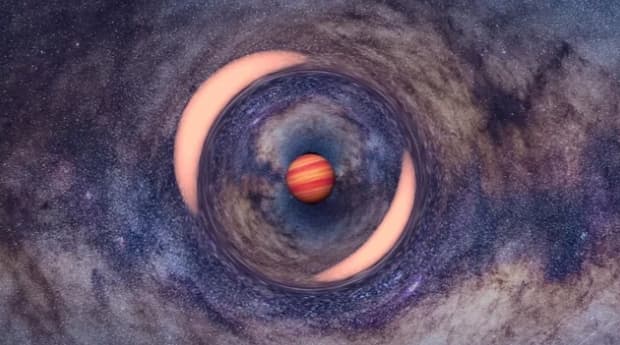
Astronomers have made a groundbreaking discovery by detecting a rare 'free-floating' exoplanet, designated SM-158, situated around 10,000 light-years from Earth. Unlike typical exoplanets that orbit stars, this planet appears to drift through space without any stellar companion. This unique characteristic offers a remarkable opportunity for scientists to study planetary dynamics in a new light.
The discovery of SM-158 challenges existing theories of planetary formation and migration. Traditionally, it is believed that planets form in protoplanetary discs around stars. However, the existence of free-floating planets suggests that some may be ejected from their original systems or could have formed in isolation, independent of any star. This finding prompts a reevaluation of how planetary systems evolve and the processes that govern their formation.
Using advanced telescopes and imaging technology, researchers were able to analyze the characteristics of SM-158, including its estimated mass and temperature. Initial findings indicate that free-floating exoplanets could be more common in our galaxy than previously believed. This revelation could significantly alter our understanding of the distribution and variety of planetary types in the universe.
The study of SM-158 may also provide valuable insights into the atmospheres of these isolated planets. As astronomers explore the chemical compositions and potential habitability of such distant worlds, they may uncover new information about the conditions that could support life beyond our solar system. The implications of this discovery extend beyond just one planet; it emphasizes the importance of ongoing astronomical surveys and the need for continued exploration of the cosmos.
As the field of exoplanet research continues to advance, the implications of discovering free-floating planets like SM-158 could reshape our comprehension of the universe and the processes that govern the formation of cosmic bodies. Further observations and research will be crucial in unraveling the mysteries surrounding these intriguing celestial phenomena, potentially leading to new discoveries that challenge our current understanding of planetary science.
Published by Banx Network. This article is part of the Banx decentralized media programme, powered by the BXE token on the XRP Ledger.



