Key Highlights
- ASML's projected contribution to the Dutch economy is 1.6% by 2026.
- The company is a key player in the semiconductor manufacturing sector.
- ING warns of potential economic vulnerabilities tied to ASML's market position.
Economists at ING have projected that ASML, a leading supplier of semiconductor manufacturing equipment, could contribute approximately 1.6% to the Dutch economy by 2026, up from an estimated 1.3% in 2025. This increase underscores ASML's growing significance in a market driven by the demand for advanced computing systems. As the semiconductor industry continues to evolve, ASML's performance is closely tied to investments in chip manufacturing, making it a crucial player in the global supply chain.
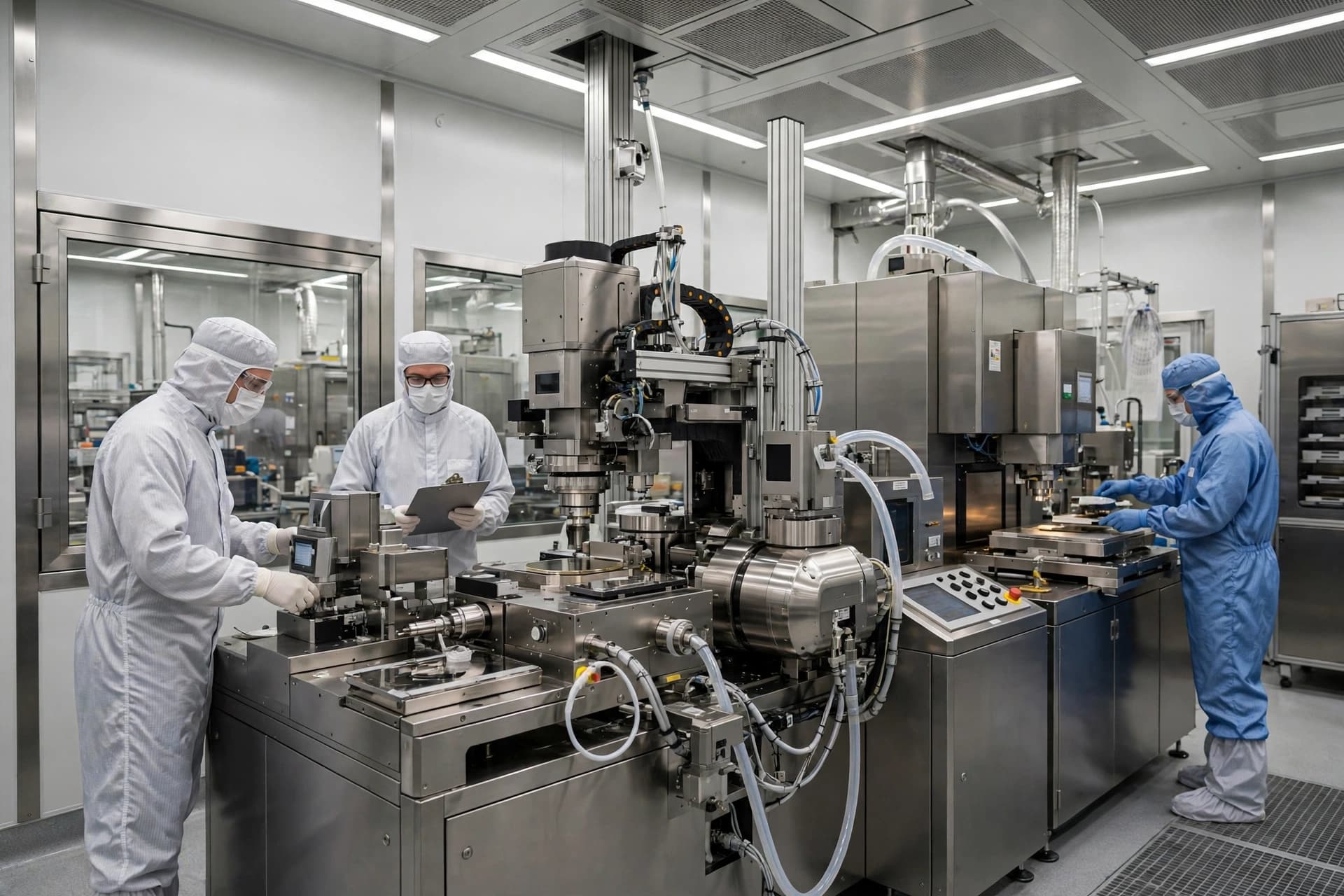
ASML's machines are integral to the complex process of creating microscopic patterns on silicon wafers, which are essential for modern chips. These chips power a wide range of devices, from smartphones to sophisticated data centers. With technology companies increasingly investing in artificial intelligence infrastructure, chipmakers are on the lookout for equipment that can support the production of more advanced chips. This trend positions ASML at a strategic juncture in a supply chain that spans multiple continents, enhancing its importance in the global economy.
The impact of ASML extends beyond its own operations. The company's research teams, suppliers, and specialized workforce contribute to a broader economic ecosystem in the Netherlands. When ASML expands, the ripple effects can be felt across local engineering firms, service providers, universities, and communities connected to its operations. This interconnectedness helps explain why a single technology company can play such a significant role in national economic forecasts.
Moreover, ASML's prominence sets the Netherlands apart from other European nations that have struggled to capture a similar share of the global technology boom. While many countries are still seeking ways to bolster their positions in advanced computing, ASML provides equipment that is not easily replaceable with conventional alternatives. Its specialized technology has solidified the Netherlands' status as a vital link between scientific research, industrial production, and the burgeoning demand for AI computing capabilities.
However, ING has cautioned that the Netherlands' increasing reliance on ASML could pose economic risks if the company's market position falters or if global demand shifts. The report draws parallels to Nokia's decline in Finland, which saw a significant drop in its economic contribution after failing to adapt to the smartphone revolution. While this comparison does not predict a similar fate for ASML, it highlights the potential vulnerabilities associated with heavy reliance on a single corporate entity.
Additional challenges loom on the horizon. Export restrictions to China, geopolitical tensions among major technology economies, supply chain disruptions, and a shortage of skilled labor could all impact ASML's future growth. According to ING's analysis, ASML plans to boost its production capacity by 30% in both 2027 and 2028. Achieving this ambitious target will require not only increased machinery and investment but also a skilled workforce, robust infrastructure, reliable suppliers, and access to international markets.
As the Netherlands looks ahead, the focus will extend beyond merely tracking ASML's rising corporate valuation. The broader question will be how the country can leverage ASML's position to enhance research, cultivate talent, and foster the growth of other innovative businesses. While ASML's success presents a significant opportunity, a resilient economy also depends on a diverse array of industries and the capacity to adapt to changing technology markets. For now, ASML stands as a powerful emblem of Dutch industrial prowess, with its influence reaching deep into the infrastructure of the global AI economy.
Published by Banx Network. This article is part of the Banx decentralized media programme, powered by the BXE token on the XRP Ledger.