
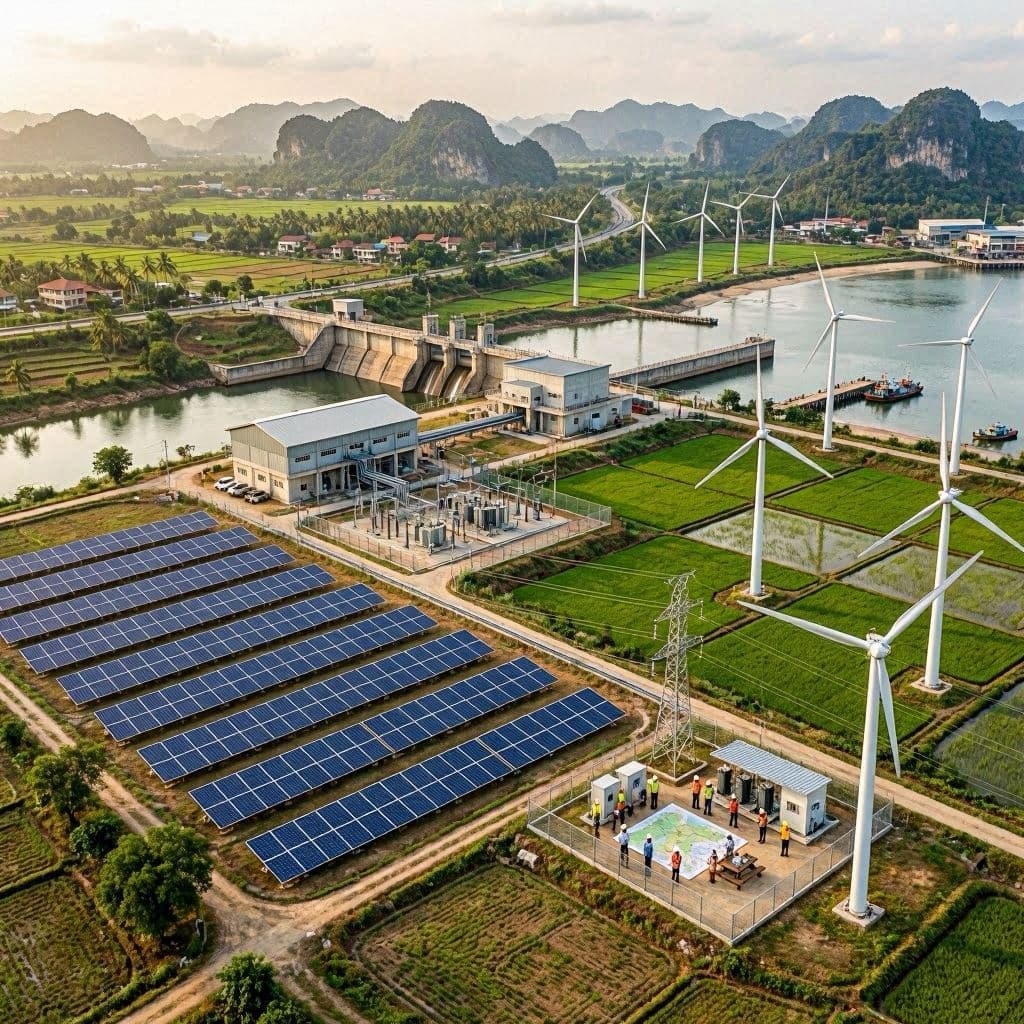
Key Highlights
- ASEAN member states are enhancing collaboration on clean energy initiatives.
- Renewable energy technologies are set to play a crucial role in the region's energy future.
- Challenges such as financing gaps and regulatory differences persist.
The transition toward cleaner energy often unfolds gradually, like the first light of dawn spreading across a vast horizon. Across Southeast Asia, that transition is increasingly becoming a shared regional endeavor. ASEAN member states are intensifying collaboration on clean energy initiatives as part of broader efforts to reduce emissions and strengthen long-term sustainability.
Regional officials have reaffirmed commitments to expanding renewable energy deployment, promoting low-carbon technologies, and encouraging greater cross-border cooperation in the energy sector. This initiative reflects a growing recognition that climate and energy challenges cannot be addressed by individual countries alone. The need for a unified approach is underscored by the region's rapid economic growth, which is accompanied by rising energy demand.
Southeast Asia remains one of the world's fastest-growing economic regions, and policymakers face the dual challenge of sustaining economic expansion while limiting greenhouse gas emissions. Renewable energy technologies such as solar, wind, hydropower, and geothermal energy are expected to play an increasingly significant role in the region's future energy mix. Several ASEAN countries have already announced ambitious targets aimed at expanding renewable capacity, signaling a commitment to a greener future.
Collaboration is also extending beyond electricity generation. Governments are exploring opportunities in energy efficiency, green hydrogen, battery storage, and smart grid technologies that could support broader decarbonization efforts. The ASEAN Centre for Energy has emphasized that regional cooperation can facilitate knowledge sharing, attract investment, and accelerate technology adoption across member states. Joint initiatives may also help reduce development costs, making the transition to clean energy more feasible.
Despite growing momentum, challenges remain. Financing gaps, infrastructure constraints, and regulatory differences continue to affect the pace of clean energy deployment throughout the region. These obstacles must be addressed to ensure that the ambitious targets set by ASEAN countries can be met.
Nevertheless, ASEAN's strengthened cooperation signals a collective determination to pursue a more sustainable energy future while supporting economic resilience and regional prosperity. As the region moves forward, the commitment to clean energy will not only benefit the environment but also enhance energy security and economic stability for all member states.
Published by Banx Network. This article is part of the Banx decentralized media programme, powered by the BXE token on the XRP Ledger.



