In the hush of a laboratory where lasers pulse like distant heartbeats and atoms are cooled toward near-stillness, physicists are learning to treat time not merely as a measure, but as a material. In this carefully engineered quiet, matter can be persuaded into patterns that exist not in bricks and bonds, but in rhythm itself. The familiar idea of a crystal — a repeating structure in space — begins to loosen, and something more elusive comes into view.
A recent theoretical study suggests that under the right conditions, ultracold atoms subjected to precisely timed external drives could organize into a two-dimensional moiré pattern formed from time. Rather than stacking layers of physical material at a slight twist, as in conventional moiré systems, researchers propose layering oscillations — overlapping frequencies that interfere and produce a larger, repeating structure in a combined space-time framework.
The idea builds on the concept of time crystals, first proposed in the past decade and later realized experimentally. Time crystals exhibit motion that repeats periodically without dissipating energy in the way ordinary systems do. They break time-translation symmetry, meaning their behavior cycles in a stable pattern even in the absence of continuous energy input beyond the initial driving conditions.
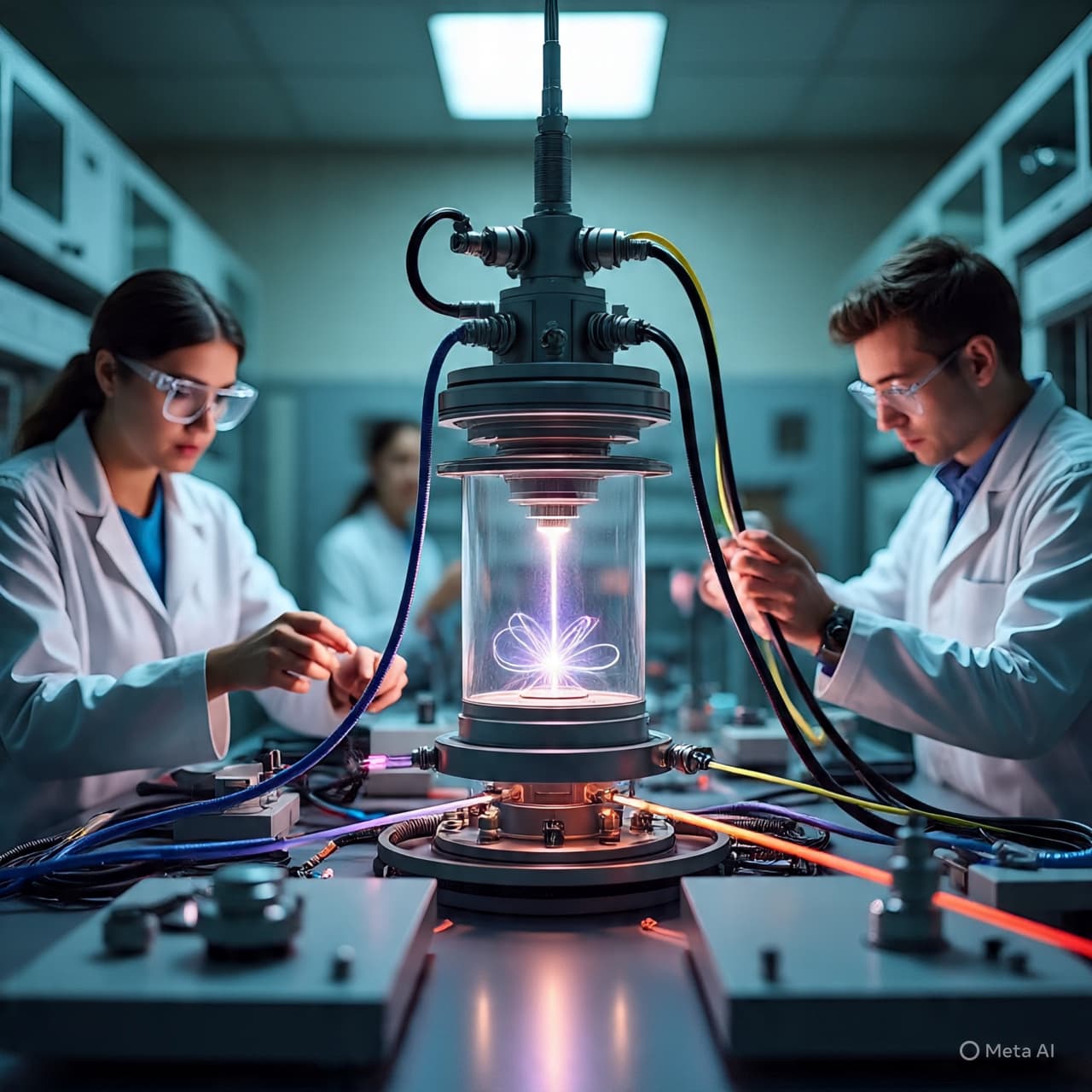
In the newly predicted system, thousands of interacting atoms would be confined in a smooth trap and subjected to multiple periodic drives. As these drives overlap, a moiré-like interference pattern could emerge in the atoms’ collective motion. The resulting structure would effectively behave like a two-dimensional lattice — not carved into physical space, but encoded in the timing and phase of atomic oscillations.
When researchers simulated such a setup, they found that the system could support superfluidity within this time-based lattice. Superfluids are known for their ability to flow without internal friction, a state of matter typically observed in ultracold environments such as liquid helium or atomic Bose–Einstein condensates. In the predicted moiré time crystal, regions of coherent flow would arise as atoms synchronize across the engineered temporal lattice, moving collectively in a frictionless quantum state.
The work remains theoretical, but it outlines experimental conditions that could be tested in advanced cold-atom laboratories. These facilities already use laser fields and magnetic traps to manipulate atomic clouds with extraordinary precision. By tuning frequencies and interaction strengths, scientists may be able to recreate the layered temporal drives required to produce the predicted moiré structure.
If realized, such systems could broaden the understanding of how symmetry and coherence emerge in quantum matter. They may also offer new platforms for exploring quantum simulation and control, where phases of matter are programmed through timing rather than physical fabrication. Instead of carving a lattice into silicon or stacking atom-thin sheets, researchers would sculpt order through rhythm.
The proposal suggests that crystallinity need not belong solely to space. Under quantum rules, periodicity in time can create structures as meaningful as those built from atoms in rigid grids. In that sense, the boundary between motion and matter becomes less distinct.
For now, the findings stand as a prediction awaiting experimental confirmation. Physicists continue to refine their models and identify feasible laboratory parameters. Whether the superfluid moiré time crystal will emerge in practice remains to be seen, but the theoretical framework points toward new intersections of symmetry, time, and collective flow.
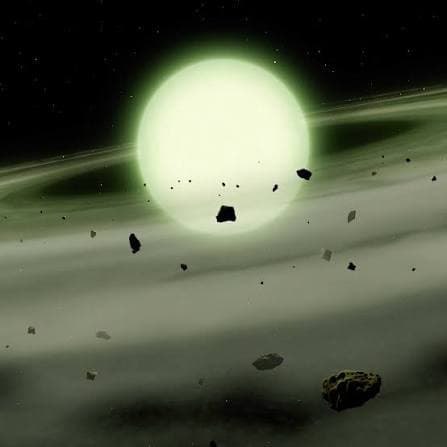
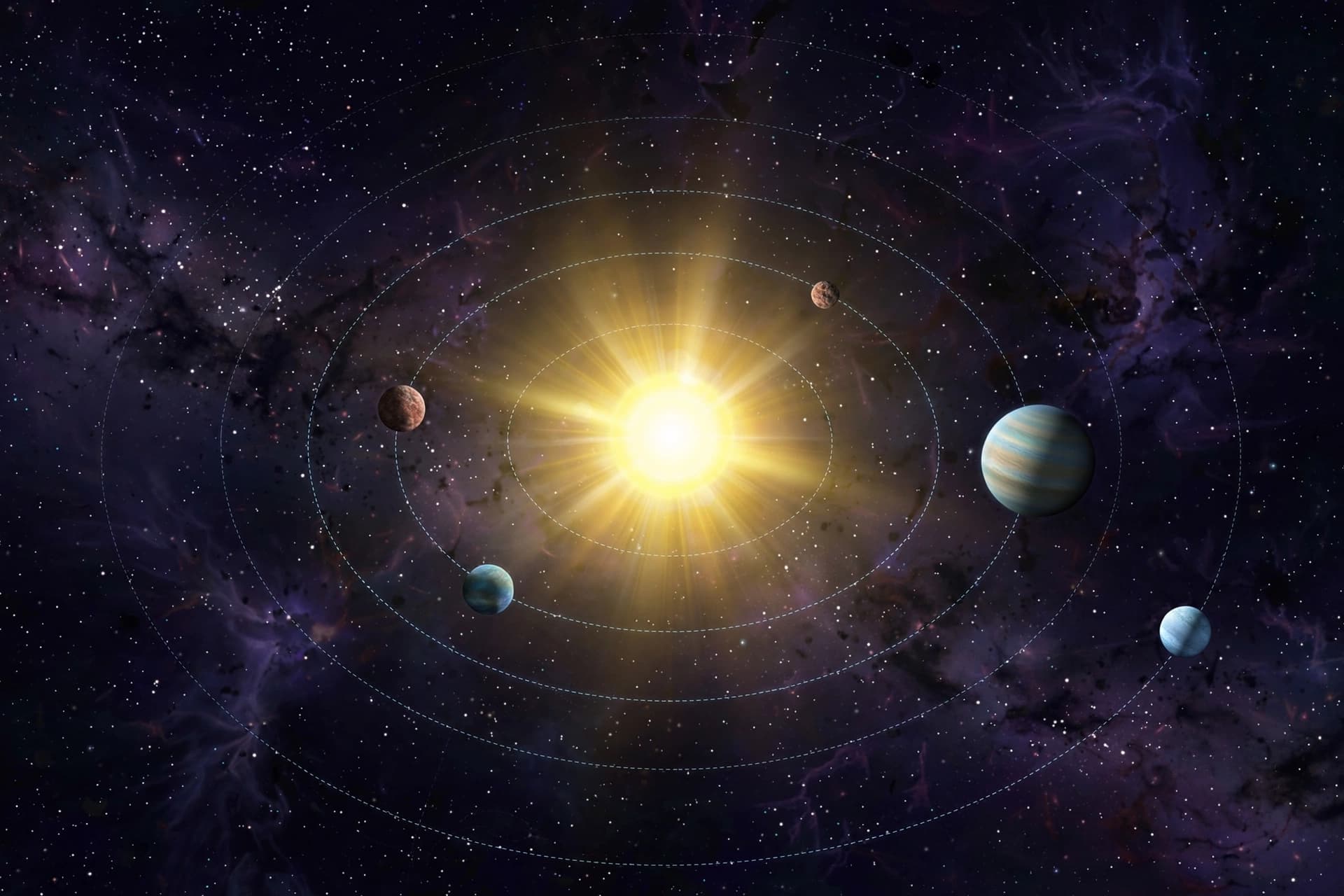
AI Image Disclaimer Visuals are AI-generated and serve as conceptual representations.
Sources (Media Names Only) Phys.org Nature Physics Physical Review Letters Science New Scientist
Published by Banx Network. This article is part of the Banx decentralized media programme, powered by the BXE token on the XRP Ledger.