
Key Highlights
- Pope Leo XIV addresses global transformation and technological change.
- The Vatican emphasizes unity and ethical responsibility in its message.
- Public reactions reflect a mix of curiosity and calls for cooperation.
Pope Leo XIV has recently made headlines with a significant public statement that addresses the rapid transformations occurring in today's world. The Vatican, a longstanding institution known for its adherence to tradition, is now acknowledging the swift pace of change that affects not only its followers but society at large. This announcement is particularly relevant as it resonates with ongoing discussions about technology, migration, and the ethical implications of modern advancements.
In his statement, Pope Leo XIV highlighted the need for communities, governments, and religious institutions to respond thoughtfully to the challenges posed by technological advancements and social fragmentation. Reports from various international Catholic media outlets indicate that the Pope's message focused on themes of unity, compassion, and ethical responsibility, urging a collective reflection on how these elements can guide humanity through turbulent times.
The Vatican's representatives have framed this announcement as part of a broader initiative to foster dialogue across nations and cultures. In an era marked by geopolitical tensions, environmental crises, and economic disparities, the Pope's call for reflection serves as a reminder of the interconnectedness of moral and political decisions. Observers noted that the Vatican has increasingly engaged with contemporary issues, including the social consequences of artificial intelligence and the ethical boundaries of emerging technologies.
The timing of Pope Leo XIV's remarks is particularly significant. As governments worldwide grapple with the implications of automation, digital surveillance, and climate policy, the Vatican seeks to position itself as a relevant voice in these critical conversations. By addressing these pressing issues, the Pope aims to ensure that religious perspectives are included in discussions that shape the future of society.
Responses to the Vatican's statement have been largely positive among Catholic leaders, who view it as a crucial reminder of the moral dimensions of political and economic choices. Analysts suggest that the Vatican's influence extends beyond religious practice, leveraging its global moral authority to impact diplomatic discussions and policy-making.
Public reactions to the Pope's message have varied, with some interpreting it as a caution against the dangers of social fragmentation in the digital age. Others have embraced its broader appeal for international cooperation and human-centered policymaking. This diverse range of interpretations underscores the relevance of the Vatican's message in today's complex social landscape.
Historians have pointed out that papal statements often emerge during periods of significant global transition. From the industrial revolution to the current era of globalization, religious leaders have sought to provide ethical guidance in response to changing times. In this context, Pope Leo XIV's announcement can be seen as a continuation of this tradition, emphasizing the importance of humanitarian perspectives in navigating the challenges of modernity.
As the Vatican's message circulates through diplomatic channels, religious communities, and public discourse, its long-term impact on policy debates remains to be seen. However, it has already sparked important conversations about how societies can effectively navigate the complexities of a rapidly changing world.
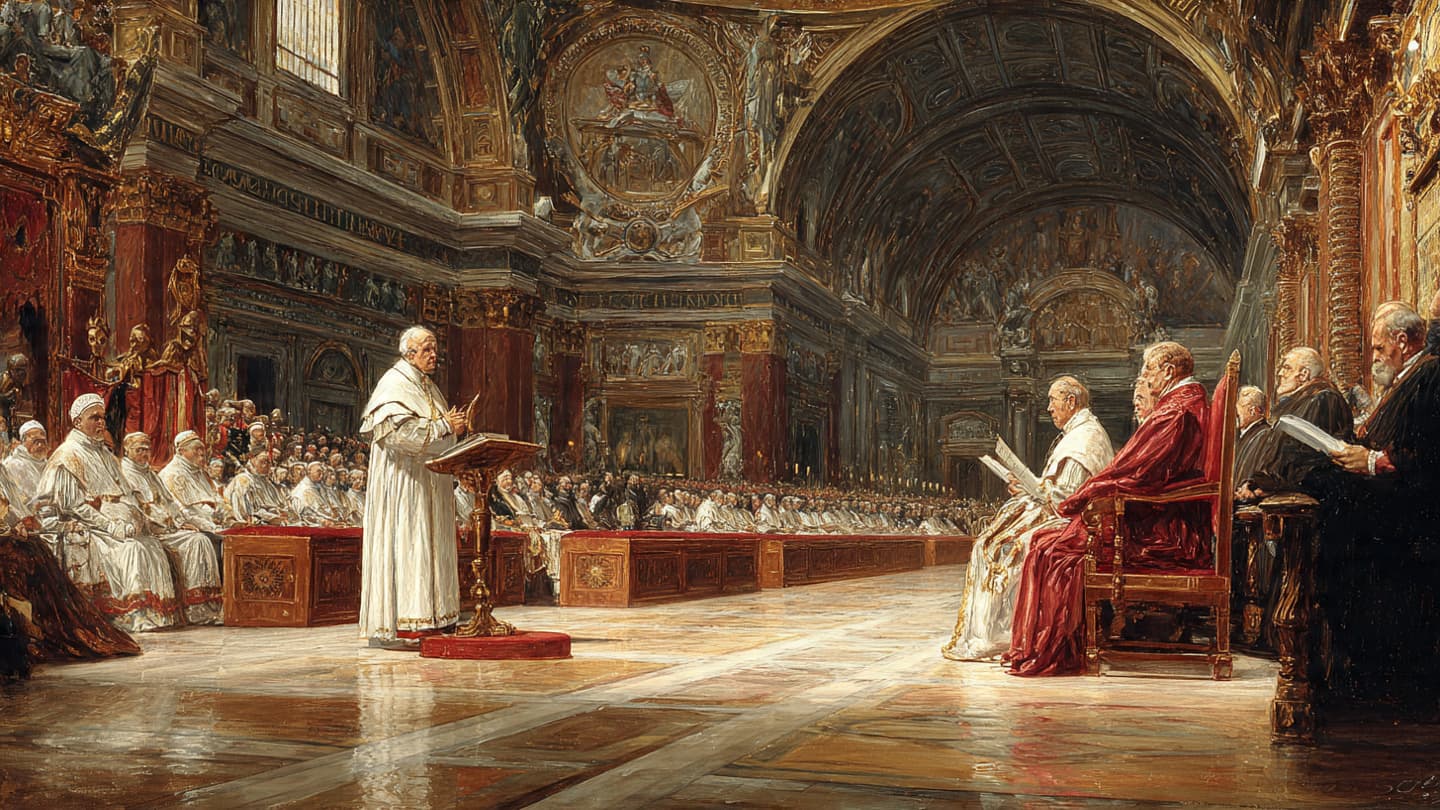
Images used in this article are AI-generated artistic representations intended for editorial support.
Published by Banx Network. This article is part of the Banx decentralized media programme, powered by the BXE token on the XRP Ledger.



