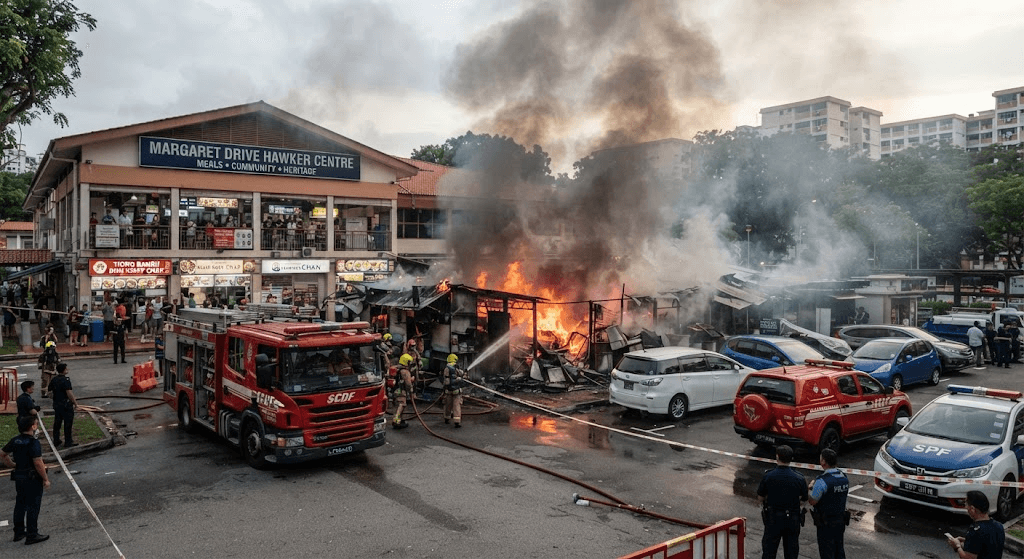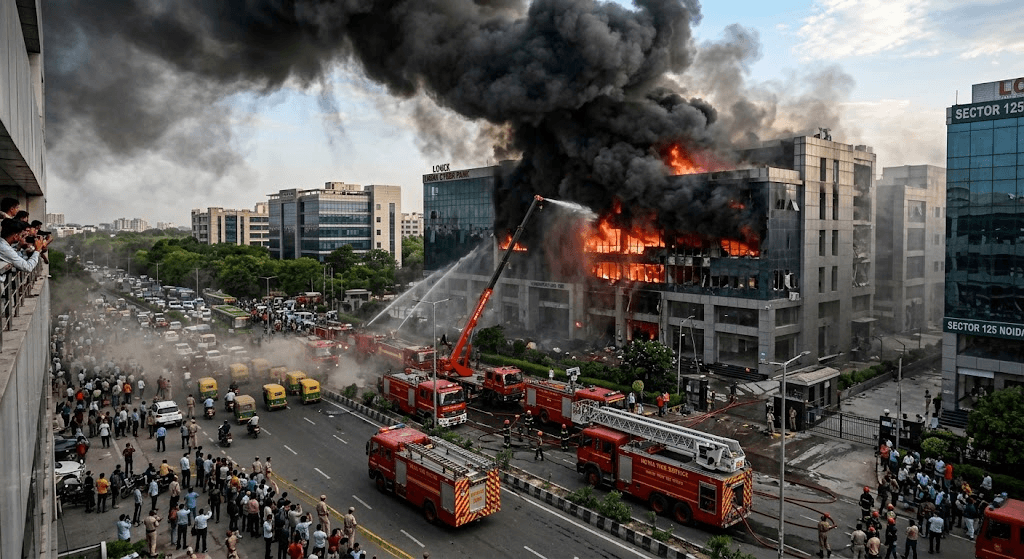
When the routine of a quiet residential quarter is shattered, the first sign that the world is attempting to re-establish order is the steady, urgent approach of those who have dedicated themselves to the work of emergency response. The incident in Viet Yen Ward, which unfolded with such devastating speed, was met with a swift, coordinated mobilization. There is a particular, somber gravity to the sight of sirens and flashlights cutting through the darkness, an indication that the machinery of care is being brought to bear on a situation that defies human comprehension.
The emergency services—police, medical staff, and local officials—move with a blend of professional detachment and deeply human urgency. To watch this process is to see the intersection of modern systems and the raw, unpredictable reality of human tragedy. They are the frontline observers, entering a space that has been fundamentally altered, working with a precision born of training and the weight of the responsibility they carry to mitigate further harm, even when the path is obstructed by the reality of the loss.
In those initial, critical hours, the goal is not merely to investigate but to stabilize. The medical teams at Viet Yen General Hospital, in particular, serve as the silent, essential counterparts to the investigators on the scene. Their work is a testament to the persistent belief that, even in the midst of extreme chaos, life is the primary, defining value. To hear that a survivor has been stabilized is to acknowledge the quiet, intense effort of every person who helped navigate that difficult, frantic window of time.
There is a rhythm to the emergency response that is rarely seen from the outside—a sequence of actions that are practiced, refined, and then executed under conditions that test the limit of human composure. The synchronization between the first responders and the hospital staff is a critical, unseen bridge. For the residents of the Bai Bang residential quarter, the presence of these teams provided a sense that, even as the walls of their familiar reality seemed to crumble, there were others there to help steady the ground.
The activation of these services is, at its heart, an affirmation of the communal bond. It is an acknowledgment that when one member of the neighborhood is plunged into a crisis of this magnitude, the resources of the entire district are brought into play. This is not just a tactical response; it is a manifestation of the community’s collective effort to hold space for the injured and to treat the scene with the respect that the loss of life demands.
As the investigation now turns to the methodical documentation of what occurred, the emergency response teams have already begun to recede into the background, their urgent work complete. Yet, the impact of their arrival—the sense that someone was coming, someone was helping—lingers. It is a vital part of the community’s attempt to process the event, providing a framework of action that helps mitigate the feeling of utter helplessness that inevitably follows such a tragic night.
The local leaders have expressed gratitude for the rapid deployment of these services, noting the coordination that allowed for the successful transport and treatment of the survivor. It is a small but significant detail, a point of light in an otherwise dark narrative. For those who were there, in the heat of the response, the memory will likely be one of focused intensity—a series of deliberate steps taken in the service of life and the pursuit of justice.
Finally, the activation of emergency protocols is a reflection of the seriousness with which the province approaches the sanctity of its citizens' lives. While the outcome of the incident was profoundly tragic, the response itself serves as a reminder of the structures that exist to protect and serve. It is a quiet, necessary, and vital part of the story, one that highlights the endurance and dedication of those who walk toward the crisis when others, by necessity or shock, must turn away.
The Bac Ninh Provincial Police and emergency services in Viet Yen Ward activated comprehensive response protocols immediately following the reports of the domestic incident. Medical teams were dispatched to the scene, facilitating the urgent transport of the surviving victim to Viet Yen General Hospital, while police units secured the area to ensure the safety of residents and the integrity of the scene. Local officials noted that the coordination between the responding units was swift, allowing for immediate stabilization efforts for the survivor.
Published by Banx Network. This article is part of the Banx decentralized media programme, powered by the BXE token on the XRP Ledger.