
Key Highlights
- New high-speed rail in Serbia connects Belgrade to Hungary.
- Trains reach speeds of up to 200 km/h, reducing travel times.
- Stations are being transformed into modern hubs of connectivity.
The Serbian landscape has long been defined by the slow, rhythmic crawl of the seasons, a place where time seems to settle into the furrows of the ploughed earth. Yet, a new sound is beginning to ripple across the plains between Belgrade and the northern reaches, a low, electric hum that speaks of a different kind of momentum. The introduction of high-speed rail is more than a feat of engineering; it is a reshaping of the very geography of the heartland.
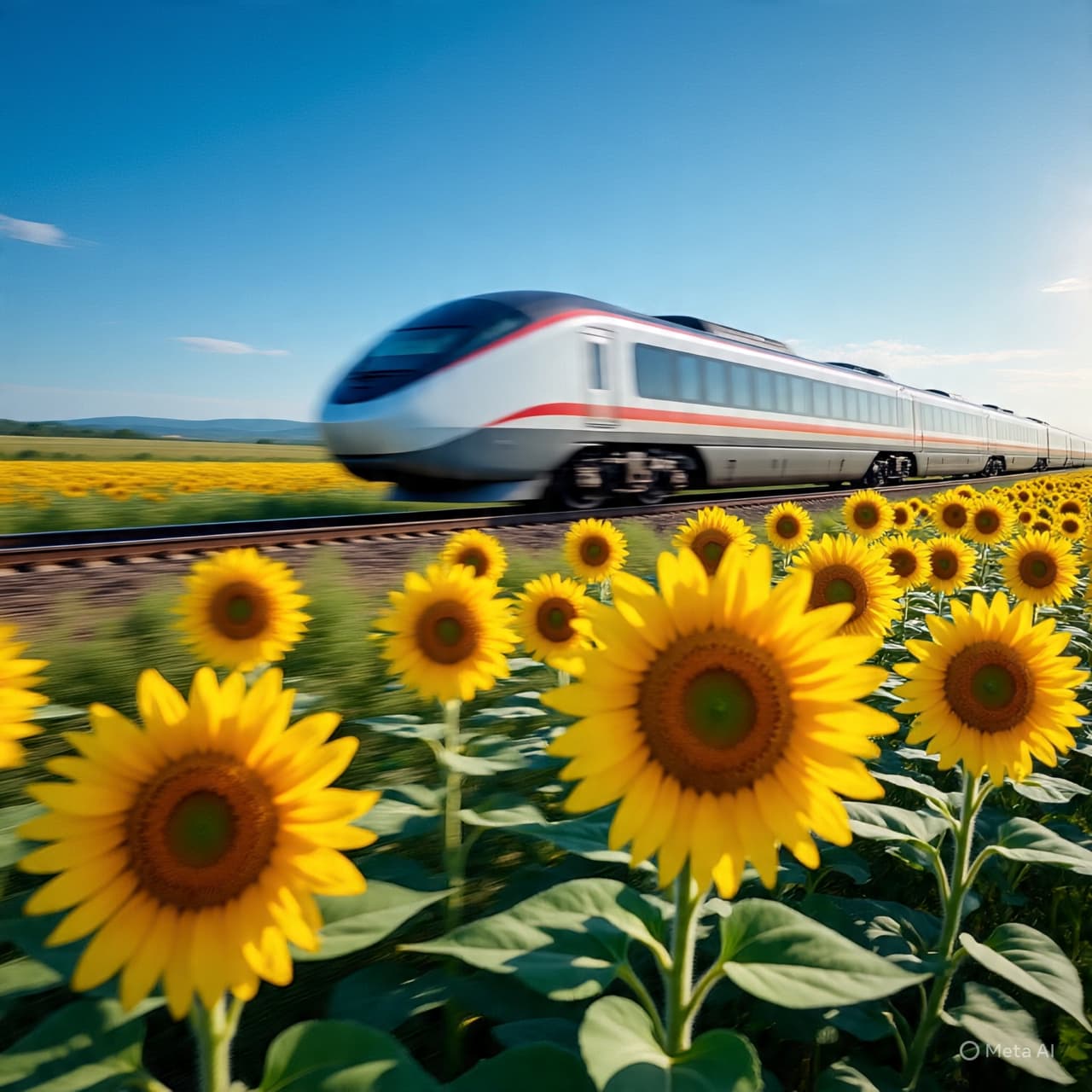
To watch the silver streak of a train bisect the horizon is to witness the contraction of space itself. Distances that once required a day’s devotion are now being measured in mere breaths, pulling cities together into a single, cohesive pulse. It is a quiet revolution of connectivity, one that allows the traveler to remain anchored in the past while moving at the speed of the future.
There is a reflective grace in the motion, a steady glide that lacks the frantic friction of the motorway. From the window, the world becomes a fluid tapestry of green and gold, a blurred memory of orchards and villages that remain still while the passenger flies. It is a moment of suspended animation, a chance to contemplate the direction of a nation from the comfort of a climate-controlled cabin.
The stations, once sleepy outposts of a bygone era, are being reimagined as cathedrals of glass and light, places of transition that feel both urgent and airy. They are the new crossroads of the Balkans, where the old languages of trade are being updated into the digital parlance of the modern European network. It is an organic expansion, a stretching of the limbs of a country that is finding its stride.
Investors and planners observe the tracks with a sense of quiet accomplishment, noting how the ease of movement ripples through the local economies. It is not just about the destination, but the life that springs up along the route, the small towns that suddenly find themselves within reach of the capital’s light. The rail is a vein, carrying the lifeblood of commerce and culture to the extremities.
The natural world, too, seems to accept the intrusion with a stoic silence, the tracks curving around the hills as if they have always belonged to the contour of the land. There is a cleanliness to this progress, a rejection of the heavy smoke of the industrial past in favor of a silent, powerful efficiency. It is a steward’s approach to growth, one that respects the earth it traverses.
As the network expands toward the borders, there is a sense that the country is repositioning itself as a vital link in a much larger chain. The rail does not just connect two points; it connects a people to the broader aspirations of a continent. It is a narrative of openness, a willingness to be part of a world that is constantly in motion.
We are left to wonder how this speed will change the soul of the places it touches, whether the quickened pace will erode the stillness that Belgrade has so carefully preserved. Yet, for now, there is only the beauty of the journey, the steady, shimmering flight across the Balkan plain. It is a testament to the human desire to bridge the gap between here and there.
The Serbian Ministry of Construction, Transport, and Infrastructure has confirmed the successful initial testing of the high-speed rail section connecting Belgrade to the Hungarian border. Reaching speeds of up to 200 kilometers per hour, the new link is expected to reduce travel times significantly between major regional hubs. Official commercial operations are slated to begin following final safety certifications by European rail authorities.
Published by Banx Network. This article is part of the Banx decentralized media programme, powered by the BXE token on the XRP Ledger.



