
Key Highlights
- Record Snowfall:Japan faces some of the heaviest snowfalls in decades.
- Transportation Disruptions:Flights delayed and schools closed due to extreme weather.
- Cultural Reflections:Snow's impact on architecture, cuisine, and seasonal traditions.
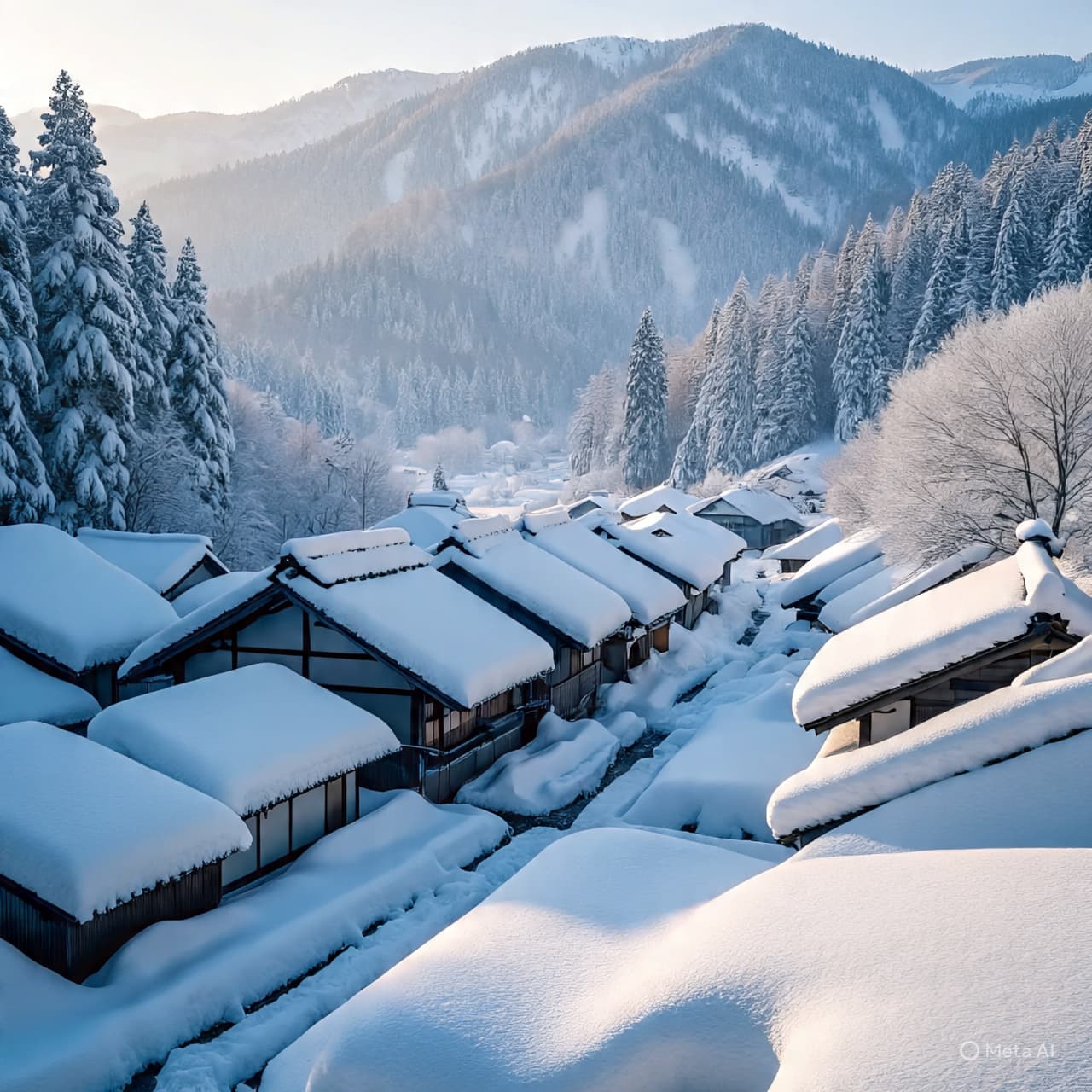
Japan's winter landscape has transformed dramatically this season as record-breaking snowfall blankets the nation. The snow arrives quietly, often during the night, reshaping familiar streets while the country sleeps. By morning, towns awaken beneath a different sky, with rooftops rounded into soft domes and tree branches bending under the weight of the snow. This winter, the snowfall has not only met expectations but exceeded them, layering on until ordinary seasonal measures have given way to unprecedented records.
Across northern and central Japan, storms have delivered some of the heaviest snowfalls in decades. Coastal cities along the Sea of Japan and mountain communities, accustomed to winter's weight, have seen accumulation rise swiftly, swallowing doorways and narrowing streets into quiet corridors. Snowplows have worked tirelessly through the night, their steady movements carving paths through the thick silence that has settled over the landscape.
Photographs from the region tell a story of tranquility and transformation. Trains have paused beneath veils of falling snow, their outlines softened to near abstraction. Farmers have moved cautiously across fields where boundaries have vanished, the land smoothed into a single pale surface. In some towns, snowbanks have climbed higher than cars, reshaping the scale of daily life and reminding residents of their smallness in the face of nature's grandeur.
Meteorologists attribute these conditions to persistent cold air masses meeting moisture from the sea, a familiar pattern that has been intensified this year by both duration and volume. Authorities have issued warnings as transportation systems slowed, with flights delayed and schools closed in areas where snowfall has overwhelmed infrastructure designed for predictability rather than extremes. Along mountain roads, the risk of avalanches has become a growing concern, prompting emergency crews to remain vigilant.
Yet, amid the disruption, images of resilience emerge. Shopkeepers clear entrances with practiced motions, while children trace paths through drifts taller than themselves. Steam rises from hot springs where snow gathers at the edges, creating a striking contrast between warmth and cold. Even in the face of adversity, life continues in measured steps, showcasing the adaptability of communities.
Japan's long relationship with snow is as cultural as it is climatic. Winter has shaped architecture, cuisine, and seasonal rhythms, celebrated in art and poetry for centuries. However, the scale of this year's snowfall has shifted the tone from familiarity to awe. What is usually picturesque has, in some areas, become heavy with consequence—beautiful yet demanding attention.
As skies gradually clear, the photographs remain: records not only of accumulation but of time slowed by weather. They depict a country momentarily wrapped in quiet, navigating the delicate balance between endurance and adaptation. Ultimately, the snow will melt, retreating into rivers and memory, leaving behind a reminder that even well-known seasons can arrive differently, inviting us to see them anew.
Published by Banx Network. This article is part of the Banx decentralized media programme, powered by the BXE token on the XRP Ledger.



