The language of international confrontation can sometimes move faster than events themselves. At a meeting in Moscow on October 1, Russian President Vladimir Putin described the current global situation as dangerous and warned Western countries against further escalation over Ukraine, particularly in connection with Russia's heavily militarized Baltic exclave of Kaliningrad.
Speaking at the Valdai Discussion Club, Putin said Russia had no intention of attacking European countries and said Moscow wanted peaceful coexistence. At the same time, he repeated that Russia would use all weapons available to it, including nuclear weapons, if Russian territory were directly attacked.
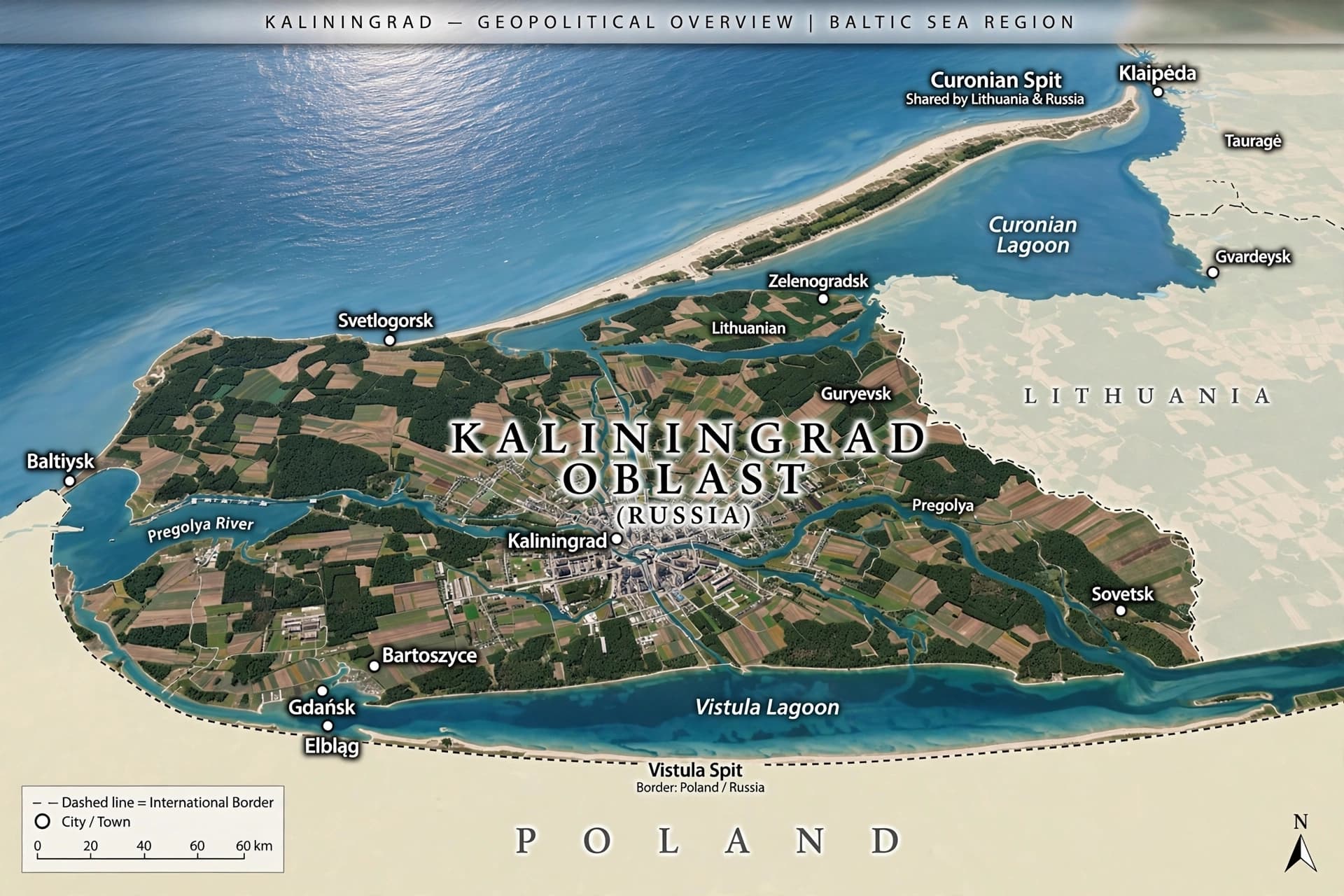
Kaliningrad is geographically separated from the rest of Russia and lies between NATO members Poland and Lithuania on the Baltic Sea. Its position has made the territory strategically important, particularly as NATO has expanded its military presence and exercises in the broader Baltic region following Russia's invasion of Ukraine.
Putin's comments followed a Russian diplomatic warning to NATO. Moscow said it would regard an attempt to isolate or cut off Kaliningrad as a serious threat and warned that nuclear weapons could be used in response. NATO Secretary General Mark Rutte said the alliance had responded to the message by emphasizing that NATO is defensive and does not threaten Kaliningrad.
The dispute comes amid a broader deterioration in relations between Russia and European countries. European governments have accused Moscow of conducting hybrid activities, including sabotage and other forms of interference, across the continent. Russia denies those accusations and has also rejected claims that it is preparing to attack a NATO member.
Putin also addressed the military balance between Russia and NATO. He acknowledged the alliance's greater overall size but argued that Russia possesses particular weapons capabilities that he described as an advantage. His remarks continued a pattern of increasingly explicit warnings surrounding the potential consequences of a direct confrontation between Russia and NATO.
At the same time, Putin said Russia was prepared for dialogue with Western leaders under certain conditions. He mentioned the possibility of a future meeting involving U.S. President Donald Trump and Chinese President Xi Jinping if an appropriate agenda could first be established. His comments also touched on the economic effects of Ukrainian attacks against Russian oil infrastructure.
The immediate significance of the statements lies less in any announced change to military operations than in the increasingly explicit language surrounding escalation. With the war in Ukraine continuing and NATO-Russia relations strained, officials on both sides are publicly emphasizing deterrence while warning about the risks of miscalculation. The statements leave diplomacy, military posture and restraint closely intertwined in a particularly sensitive period.
AI Image Disclaimer: Any accompanying image is AI-created and should be viewed as an illustrative representation, not a photograph of the event.
Sources: Reuters, Associated Press, The Guardian, EFE, NATO
Published by Banx Network. This article is part of the Banx decentralized media programme, powered by the BXE token on the XRP Ledger.

.jpg&w=3840&q=75 "British Police Charge Man With Preparing Terrorist Acts Against Reform UK’s Nigel Farage")