
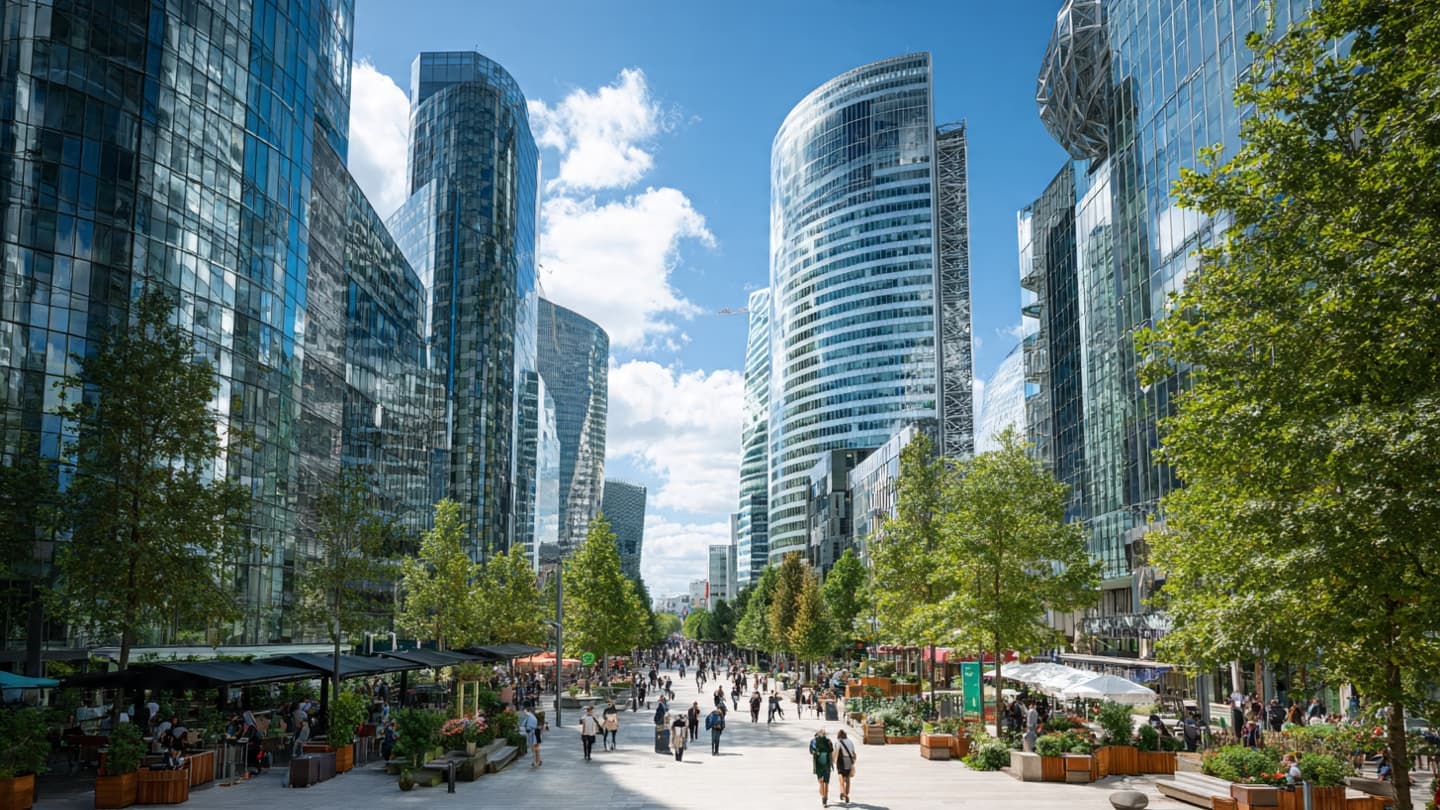
Economic confidence often grows in quiet moments rather than dramatic ones. Like the gradual return of light after a cloudy morning, optimism can emerge even while uncertainty remains visible on the horizon. Across France, July offered such a moment as business confidence reached its highest level in four months despite record heatwaves and continuing global challenges.
According to the latest survey released by France's national statistics agency, INSEE, companies across several industries reported improved sentiment. While the overall confidence indicator remained below its long-term average, the increase suggested that businesses were finding reasons to look forward despite operating in a demanding environment.
Manufacturing, services, and retail businesses all contributed to the improvement. Manufacturers reported healthier production expectations and stronger order books, while service-sector companies noted more stable business conditions. Retail firms also experienced better expectations as consumer activity showed signs of resilience during the summer season.
The improvement came despite exceptional weather conditions. France experienced intense summer heatwaves that affected daily operations in many regions. Companies adjusted working hours, strengthened employee safety measures, and modified logistics schedules to maintain productivity without compromising workplace well-being.
Global uncertainty also remained an important factor. Businesses continued monitoring energy markets, international supply chains, and broader economic developments that could influence operating costs. Even so, many firms demonstrated an ability to adapt through careful planning and improved risk management.
Tourism-related businesses provided another encouraging signal. Hotels, restaurants, and hospitality operators reported stronger expectations as domestic and international visitors supported seasonal demand. Air-conditioned accommodations and flexible services became increasingly valuable during periods of extreme temperatures, contributing to improved confidence within the sector.
Economists caution that confidence should not be confused with certainty. Many firms still acknowledge ongoing risks, including volatile energy prices, supply constraints, and slower international demand. Nevertheless, higher confidence often encourages companies to maintain investment plans, preserve employment, and continue expanding where opportunities exist.
Business sentiment is widely regarded as a leading indicator rather than a guarantee of future performance. Improvements in confidence frequently reflect expectations about the months ahead, influencing decisions on production, recruitment, and capital investment before official economic data fully captures those changes.
For France, July's survey suggests an economy that continues adjusting rather than retreating. Companies are responding to extraordinary weather, evolving global conditions, and shifting customer behavior with measured optimism instead of excessive caution. That balance may prove valuable as businesses navigate the remainder of the year.
While challenges remain, the latest confidence survey reflects the resilience of French enterprises. Rather than ignoring uncertainty, many businesses appear to be adapting to it, demonstrating that confidence can gradually strengthen even when the wider economic landscape continues to evolve.
AI Image Disclaimer
Illustrations were produced with AI and serve as conceptual depictions.
Source Check Credible sources available for this topic:
Reuters INSEE (French National Institute of Statistics and Economic Studies) S&P Global Market Intelligence Financial Times Bloomberg
Published by Banx Network. This article is part of the Banx decentralized media programme, powered by the BXE token on the XRP Ledger.



