
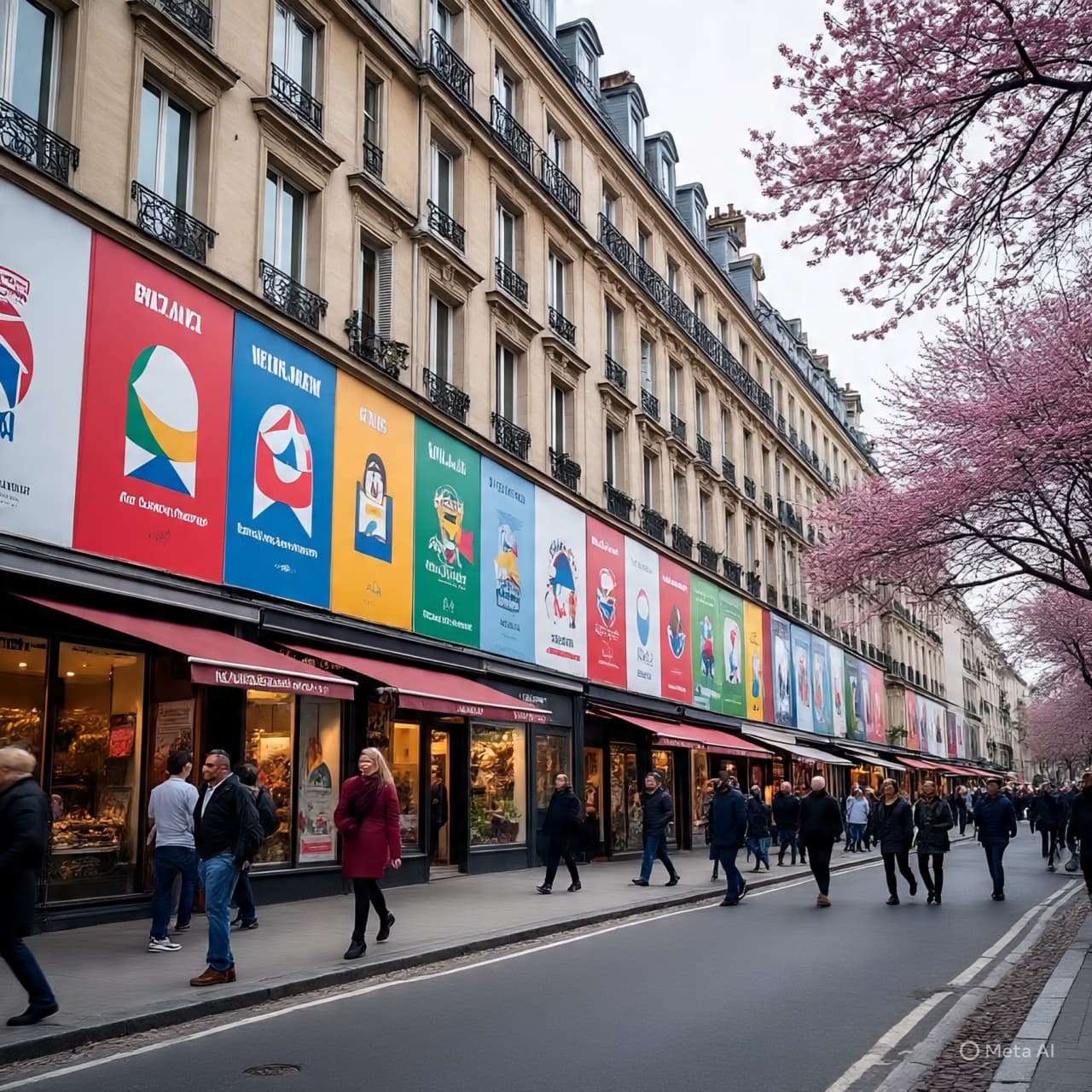
In the gentle rhythm of early spring, when Paris’s bud-dotted chestnut trees begin whispering of warmer days, the political season in France has already stirred into view. Like the soft unfolding of dawn over the Seine, the 2027 presidential election race is no longer a distant horizon — it is a presence on the national consciousness. What once felt like far-off ambition has taken form in courtrooms, party halls, and the quiet corridors of political strategy, inviting the country to consider not just who will lead, but what that leadership will mean for a nation at a crossroads.
At the heart of this emerging narrative is a figure whose name has echoed through French politics for more than a generation: Marine Le Pen. Once a perennial contender, Le Pen now finds her path to the Élysée potentially blocked by legal judgment. The outcome of her appeal in a Paris appeals court — centered on a conviction for misuse of European Parliament funds — may reshape her own ambitions and the field of contenders alike. With a verdict expected before summer, the country watches with quiet curiosity and measured seriousness, aware that her eligibility could redefine the contest’s dynamics.
It is a moment that blends the procedural with the poetic: the courtroom and the campaign trail converging, much like tributaries feeding into a broader river. Should the court uphold the ban on holding public office, the National Rally party will face the practical task of rallying around a different standard-bearer, with its president Jordan Bardella often mentioned as a possible successor. In this, France’s political landscape reveals its adaptability — even as longstanding figures confront new realities.
At the same time, other currents have begun to shape France’s electoral horizon. On the center-right, figures such as Bruno Retailleau, a seasoned conservative leader within Les Républicains, are navigating the early phases of campaign contemplation, balancing internal party expectations with the broader demands of national leadership aspirations. His methodical approach signals that for many, the race to 2027 is not merely about slogans but about sustained engagement with France’s evolving policy debates and social priorities.
Across the political spectrum, from the radical edges to the moderate center, parties and personalities speak in careful tones about their visions for France’s future. Conversations about economic renewal, social cohesion, global partnerships, and national identity simmer beneath the campaign surface. In municipal councils and regional assemblies, in editorial pages and neighborhood cafés, these discussions form the soft yet steady hum of democratic life — a reminder that elections are both structured contests and reflections of collective hopes.
Yet despite the early stirrings of political ambition and strategic maneuvering, there is a sense of deliberate pacing to this moment. France’s next presidential election remains more than a year away, and there is space between now and then for new ideas to emerge, for alliances to shift, and for voters to consider what they seek in a leader. In this interlude, politics feels less like a sprint and more like a thoughtful walk through familiar streets — ones that carry the layered footsteps of history and aspiration alike.
In the soft light of this unfolding campaign, one sees not only the figures who may stand for office, but the textures of French civic life: the quiet debates, the earnest speeches, the respectful disagreement that animates democratic discourse. And as the country looks toward the coming spring of 2027, the political landscape — like the Parisian skyline at sunrise — unfolds gently, inviting reflection as much as attention.
AI IMAGE DISCLAIMER “Images in this article are AI-generated illustrations, meant for concept only.”
SOURCES (Media Names Only) Reuters The Guardian Associated Press (AP) AFP (via RTL Today) Le Monde
Published by Banx Network. This article is part of the Banx decentralized media programme, powered by the BXE token on the XRP Ledger.

.jpg&w=3840&q=75 "Convicted War Criminal Ratko Mladić to Be Buried With Full State Honors")