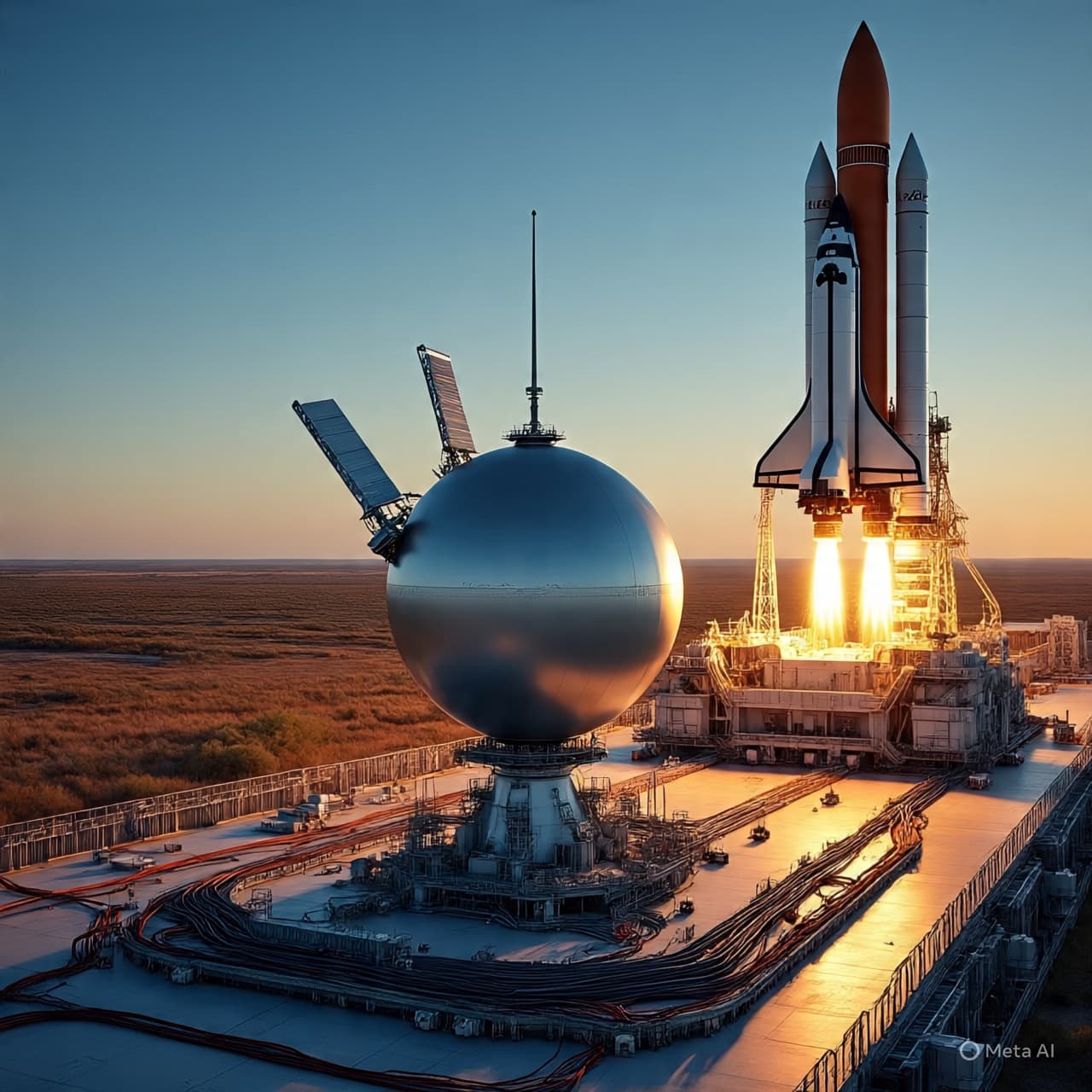
On the flat expanse of a launch complex, rockets stand poised, engines tested, fuel ready, yet plans sometimes change with the rhythm of preparation. The U.S. Space Force recently announced a swap in the launch vehicle for its upcoming GPS satellite mission, a decision reflecting the meticulous orchestration required to place critical infrastructure into orbit.
GPS satellites serve as the backbone of modern navigation, timing, and communications, relied upon by everything from smartphones to military systems. Each launch is carefully timed, with precise orbital insertion necessary to ensure the satellite aligns with its intended slot in the constellation. Choosing the optimal rocket is therefore not just a matter of mechanics but of mission assurance, payload safety, and orbital efficiency.
Switching rockets involves recalibrating trajectories, adjusting payload integration, and verifying systems compatibility. Engineers must reassess the forces the satellite will experience during ascent, confirm the performance of guidance and control systems, and ensure ground teams are synchronized with the new vehicle’s schedule. While the change does not indicate any underlying technical failure, it exemplifies the flexibility required in space operations.
From a broader perspective, the adjustment highlights the layered complexity of maintaining the GPS constellation. Each satellite is a node in a precise network, and timing errors or misalignments can ripple across the system. By carefully choosing the appropriate launch vehicle, the U.S. Space Force ensures that continuity, accuracy, and reliability of global navigation signals are preserved.
In practical terms, the U.S. Space Force has selected a different rocket for the forthcoming GPS satellite launch, optimizing for payload safety and orbital insertion. The mission will proceed with updated schedules and preparations, continuing efforts to maintain the integrity of the GPS network upon which global navigation depends.
AI Image Disclaimer Visuals are AI-generated and serve as conceptual representations.
Sources (names only) U.S. Space Force Space.com The Verge NASA Spaceflight Reuters
Published by Banx Network. This article is part of the Banx decentralized media programme, powered by the BXE token on the XRP Ledger.