There are moments in Europe when history feels less like a closed book and more like a presence in the room — quiet, observant, and unwilling to be dismissed. The stones of Paris, worn smooth by centuries of ambition and upheaval, seem to remember eras when alliances shifted like weather and security was measured not only in treaties but in readiness.
In recent days, President Emmanuel Macron has spoken in tones that echo both caution and resolve. Against a backdrop of mounting tensions across Europe and renewed questions about transatlantic security commitments, he signaled a willingness to expand and clarify France’s nuclear deterrence posture. His words did not arrive as a sudden declaration, but as part of a broader reflection on Europe’s capacity to defend itself in uncertain times.
France has long maintained an independent nuclear arsenal, rooted in the doctrine of strategic autonomy. Unlike some European partners, it retains full national control over its deterrent forces, including submarine-launched ballistic missiles and air-delivered nuclear capabilities. This force de frappe, as it is often called, has traditionally been framed as a shield for French sovereignty.
What has shifted in recent statements is the scope of reassurance. Macron indicated that France stands prepared to extend the protective logic of its nuclear deterrent to European neighbors, particularly as war continues on the continent’s eastern flank and concerns deepen over long-term security guarantees. While he did not announce specific deployments or numerical expansions, his remarks emphasized modernization, readiness, and the possibility of deeper strategic consultation with allied states.
The suggestion carries symbolic weight. Nuclear policy is rarely discussed casually; it belongs to the most guarded corridors of statecraft. By placing deterrence more explicitly within a European framework, France signals both continuity and evolution — continuity in its reliance on nuclear forces as a last-resort guarantee, evolution in its willingness to frame that guarantee beyond national borders.
Across Europe, reactions have been measured. Some governments welcome the reassurance, viewing it as a stabilizing counterweight in an era of unpredictable alliances. Others approach the conversation with caution, mindful of the delicate balance between deterrence and escalation. Nuclear weapons, after all, exist in paradox: they are designed never to be used, yet their presence shapes the calculus of peace and conflict alike.
Macron’s remarks also arrive amid ongoing modernization of France’s nuclear capabilities, including upgrades to submarine fleets and missile systems. These efforts have been underway for years, part of a long-term defense strategy rather than an abrupt response. Still, in the present climate, such initiatives take on renewed resonance.
The broader context is a Europe recalibrating its defense posture. Military spending has risen across the continent. Strategic doctrines are being revisited. Discussions once confined to closed summits now surface in public addresses. The vocabulary of deterrence — credibility, resilience, autonomy — returns to prominence.
In practical terms, France remains committed to maintaining and modernizing its nuclear forces while exploring how its deterrent posture can contribute to European security discussions. No immediate structural overhaul has been formally announced, but the direction of travel is evident: a reinforcement of capacity and a clearer articulation of protective intent.
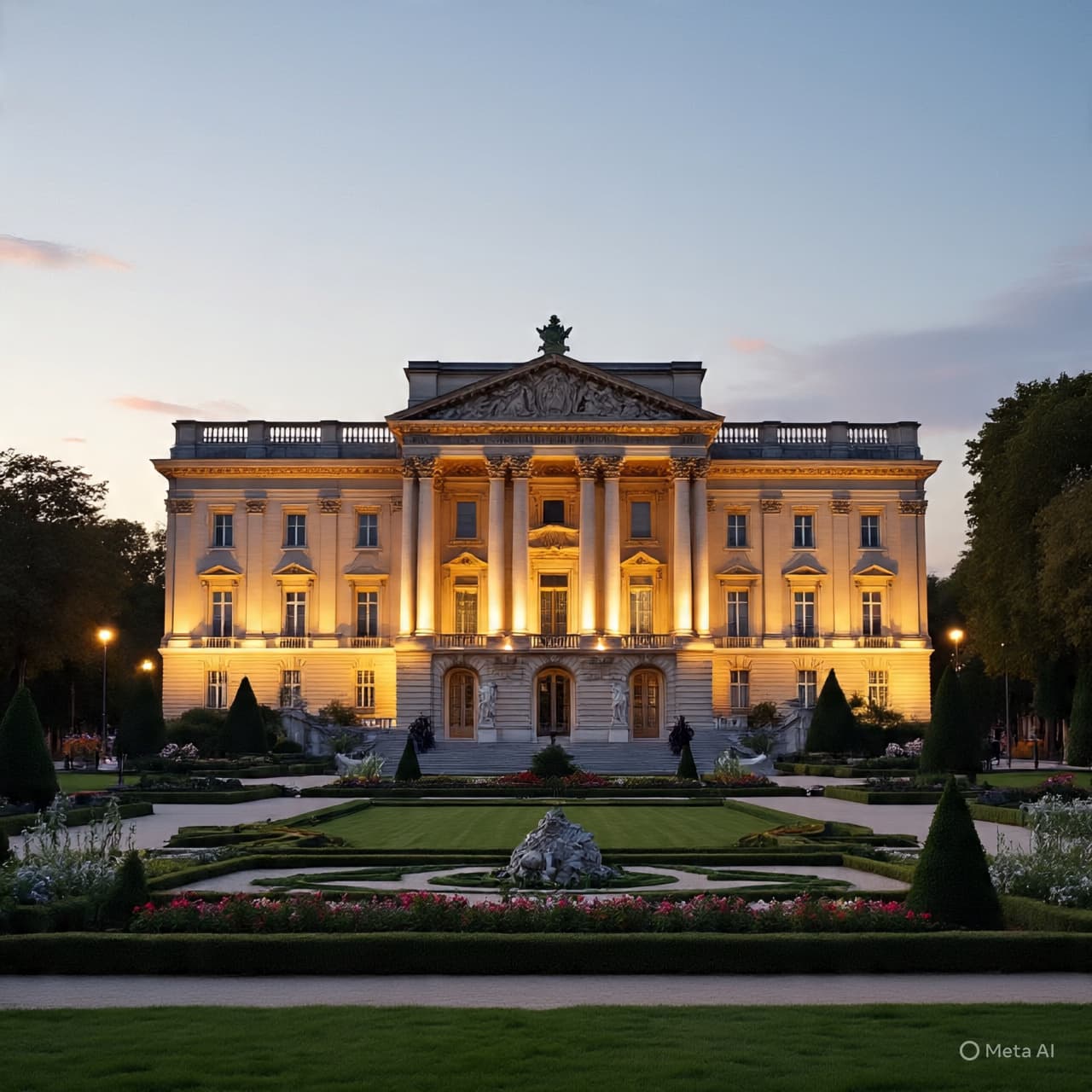
As evening settles over Paris and the lights of the Élysée Palace glow against the Seine, the language of deterrence once again becomes part of Europe’s daily discourse. France’s nuclear arsenal remains under national command, yet its symbolic umbrella appears poised to stretch further across the continent — a gesture shaped by history, and by the uncertainties of the present moment.
AI Image Disclaimer
Illustrations were created using AI tools and are not real photographs.
Source Check
Reuters Associated Press BBC News Le Monde Financial Times
Published by Banx Network. This article is part of the Banx decentralized media programme, powered by the BXE token on the XRP Ledger.