
Key Highlights
- France's President Macron emphasizes a shift in nuclear deterrent strategy.
- The country prepares to extend its protective umbrella to European allies.
- Ongoing modernization of France's nuclear capabilities is underway.
In recent days, President Emmanuel Macron has articulated a significant shift in France's nuclear deterrent strategy, emphasizing the need for a robust European defense posture amid rising tensions across the continent. His remarks come at a time when questions about transatlantic security commitments are increasingly pressing, reflecting a broader reassessment of military readiness in Europe.
France has long maintained an independent nuclear arsenal, rooted in the doctrine of strategic autonomy. Unlike many of its European partners, France retains full control over its nuclear capabilities, which include submarine-launched ballistic missiles and air-delivered nuclear weapons. This force de frappe, as it is known, has traditionally served as a shield for French sovereignty, ensuring that the nation can defend itself without reliance on external powers.
However, Macron's recent statements indicate a willingness to extend the protective logic of France's nuclear deterrent to its European neighbors. As the war continues on the continent's eastern flank and concerns about long-term security guarantees grow, the French president's words carry significant weight. While he did not announce specific deployments or numerical expansions, he emphasized modernization, readiness, and the potential for deeper strategic consultations with allied states.
This shift in rhetoric is not merely symbolic; it represents a critical evolution in France's approach to nuclear policy. By framing its deterrent capabilities within a European context, France signals both continuity in its reliance on nuclear forces as a last-resort guarantee and a willingness to adapt to the changing security landscape. The implications of this shift are profound, as it invites discussions about collective security and the role of nuclear deterrence in maintaining peace across Europe.
Reactions across Europe have been measured. Some governments welcome the reassurance provided by France's commitment to its nuclear capabilities, viewing it as a stabilizing counterweight in an era characterized by unpredictable alliances. Others, however, approach the conversation with caution, aware of the delicate balance between deterrence and escalation. Nuclear weapons exist in a paradox: they are designed never to be used, yet their mere presence shapes the calculus of peace and conflict.
Macron's remarks also coincide with ongoing modernization efforts within France's nuclear arsenal. Upgrades to submarine fleets and missile systems have been part of a long-term defense strategy rather than a sudden response to current events. Nevertheless, in the current climate, these initiatives take on renewed significance, reinforcing France's commitment to maintaining a credible deterrent.
As Europe recalibrates its defense posture, military spending has risen across the continent, and strategic doctrines are being revisited. Discussions that were once confined to closed summits are now emerging in public discourse, with terms like credibility, resilience, and autonomy returning to prominence. France's commitment to modernizing its nuclear forces while exploring how its deterrent posture can contribute to European security discussions is evident.
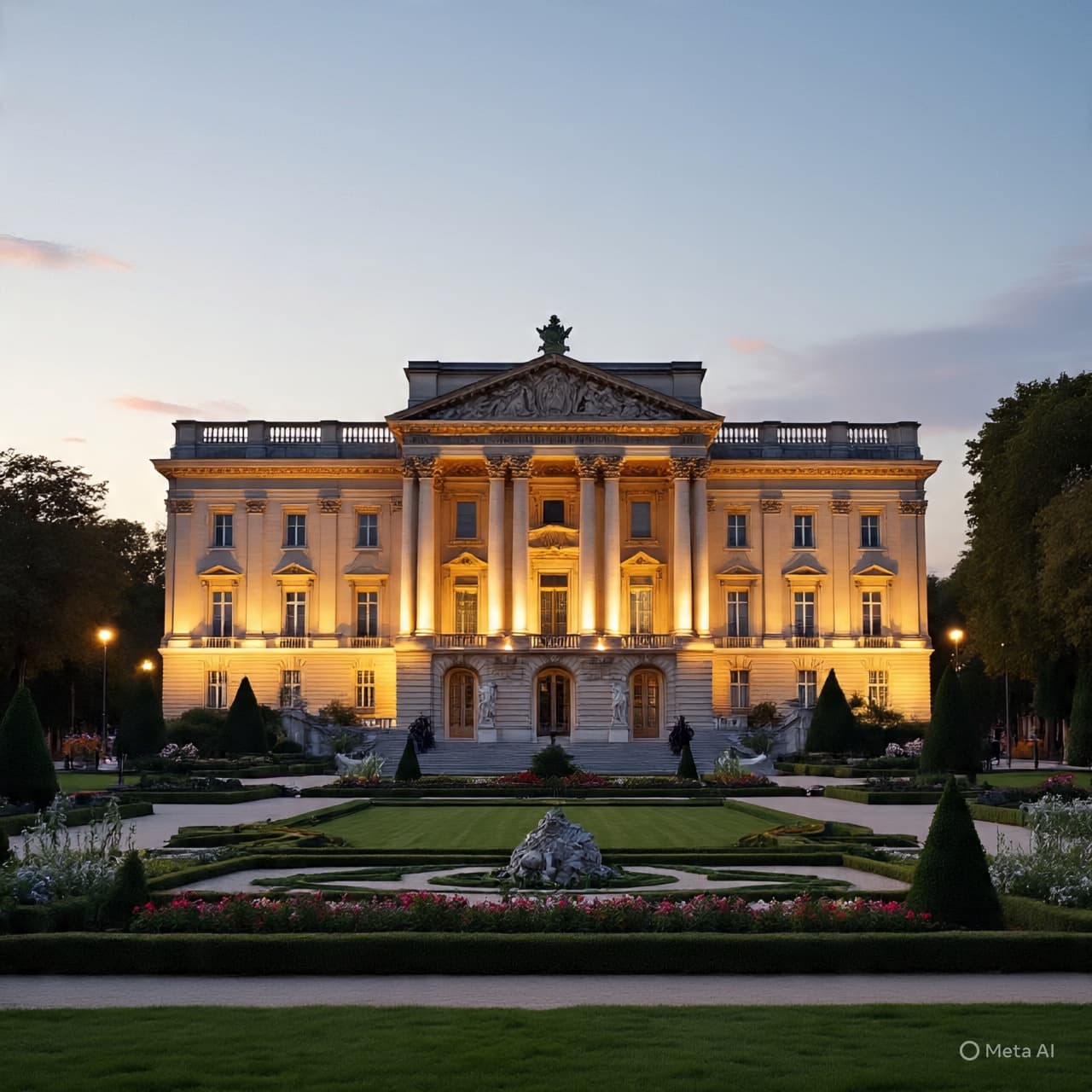
As evening falls over Paris, the Élysée Palace stands illuminated against the Seine, and the language of deterrence becomes part of Europe's daily discourse once more. France's nuclear arsenal remains under national command, yet its symbolic umbrella appears poised to extend further across the continent, shaped by both historical context and the uncertainties of the present moment.
Published by Banx Network. This article is part of the Banx decentralized media programme, powered by the BXE token on the XRP Ledger.



