
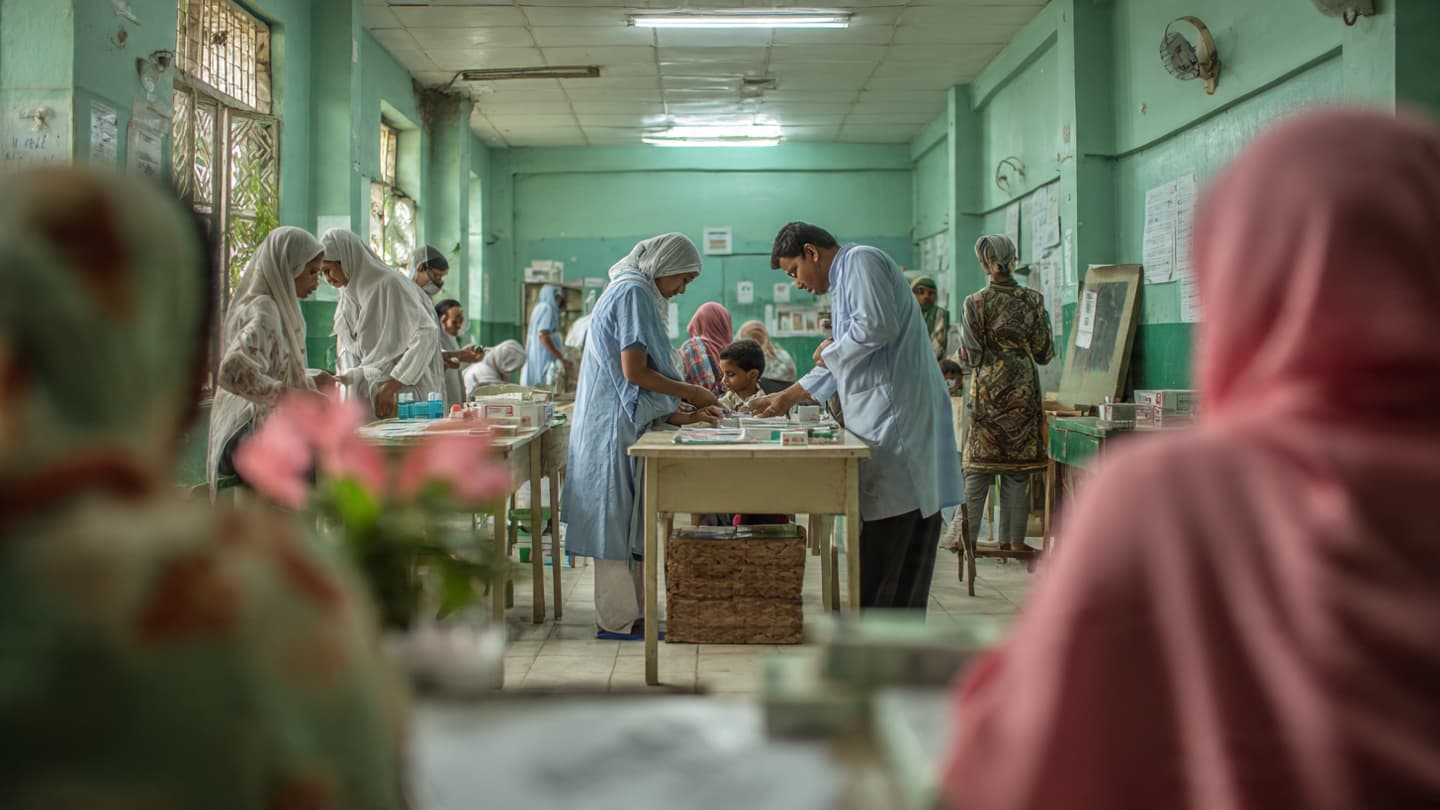
Key Highlights
- Measles cases are rising in Bangladesh, particularly among unvaccinated children.
- Health experts emphasize the need for strong immunization programs.
- International organizations support vaccination efforts in South Asia.
Public health progress is often measured quietly, reflected in diseases that become increasingly rare over time. Yet history has shown that such gains require constant attention. Researchers are now warning that Bangladesh is experiencing a resurgence of measles, raising concerns among health experts and policymakers.
Recent studies and health assessments suggest that measles cases are increasing in parts of Bangladesh, particularly among children who have not received complete vaccination coverage. The World Health Organization (WHO) and UNICEF have highlighted this trend, emphasizing the importance of maintaining strong immunization programs to prevent outbreaks.
Measles is one of the world's most contagious infectious diseases. Although vaccination has dramatically reduced global cases over recent decades, outbreaks can still occur when immunization rates decline or healthcare disruptions limit access to routine vaccines. The current situation in Bangladesh underscores the critical need for sustained vaccination efforts.
Health experts note that several factors may contribute to renewed transmission, including missed childhood vaccinations, population mobility, and disparities in healthcare access. Communities experiencing economic or logistical barriers may face greater vulnerability, making it essential for public health authorities to address these challenges.
Bangladesh has made substantial progress in childhood immunization over the years, supported by government initiatives and international partnerships. However, maintaining high vaccination coverage remains essential to preventing outbreaks. Public health authorities continue to emphasize routine immunization, surveillance, and rapid response measures when suspected cases are identified. Early detection allows health officials to contain transmission more effectively.
Researchers stress that community engagement is equally important. Public awareness campaigns can help families understand vaccination schedules and encourage timely healthcare visits for children. Engaging local leaders and healthcare workers can foster trust and improve vaccination rates in underserved areas.
International organizations, including UNICEF and the World Health Organization, continue to support immunization efforts across South Asia. Such partnerships have contributed significantly to reducing vaccine-preventable diseases throughout the region. However, the resurgence of measles in Bangladesh serves as a stark reminder that ongoing efforts are necessary to maintain public health gains.
Health experts caution that measles resurgence is not unique to Bangladesh, noting that several countries have reported increased cases in recent years. Sustained vaccination efforts, they say, remain the most reliable protection against future outbreaks. As the world continues to navigate the challenges posed by infectious diseases, the urgency of vaccination cannot be overstated.
Published by Banx Network. This article is part of the Banx decentralized media programme, powered by the BXE token on the XRP Ledger.



