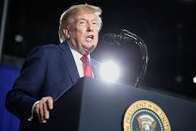
There are moments in history when alliances feel less like architecture and more like weather — solid for years, then suddenly altered by a shift in pressure. Across European capitals, that sense of change has been quietly settling in again, as leaders, diplomats, and markets recalibrate to what many describe as a familiar yet unsettling force: Donald Trump’s return to the center of global power.
As the contours of a second Trump presidency come into focus, Europe is confronting a world that feels less predictable and more transactional. Long-standing assumptions about security guarantees, trade partnerships, and diplomatic tone are being tested anew. For officials who spent years repairing transatlantic trust after Trump’s first term, the renewed emphasis on “America First” has landed not as a shock, but as a heavy reminder of unresolved vulnerabilities.
European policymakers describe the moment in stark but measured terms. “This is shattering,” one senior official said privately, reflecting concerns that the post-Cold War order — anchored by U.S. leadership and shared norms — is being reshaped faster than Europe can respond. Trump’s skepticism toward NATO, his willingness to upend multilateral agreements, and his preference for bilateral pressure over collective frameworks have revived fears of a continent left to manage its security more alone.
The implications extend well beyond defense. Trade relations, already strained by tariffs and industrial subsidies, face renewed uncertainty. European exporters worry about sudden policy shifts, while governments brace for tougher negotiations over everything from green technology to digital regulation. The predictability that once underpinned transatlantic commerce now feels conditional, subject to political calculation rather than institutional habit.
Nowhere is the anxiety more pronounced than in Eastern Europe. Countries closest to Russia have long relied on the credibility of U.S. backing as a deterrent, and Trump’s past ambivalence toward Ukraine and NATO commitments has sharpened questions about how steadfast that support would be in a crisis. Even as European leaders emphasize their own defense spending increases, there is an unspoken recognition that replacing U.S. military weight is neither quick nor simple.
At the same time, Western European capitals are wrestling with a quieter dilemma: how to assert strategic autonomy without accelerating the very fragmentation they fear. Calls for Europe to stand on its own feet have grown louder, yet political divisions within the bloc — over spending, leadership, and priorities — complicate that ambition. Trump’s approach, critics say, exposes these fractures rather than creating them.
Still, the response across Europe has not been purely defensive. Some officials argue that the moment could force long-delayed reforms, from deeper defense integration to a more coherent industrial strategy. The pressure of a less reliable partner, they suggest, may ultimately strengthen Europe’s capacity to act — even if the transition is uncomfortable and costly.
As Trump reshapes America’s posture toward the world, Europe finds itself caught between adaptation and unease. The familiar map of alliances has not vanished, but its lines appear thinner, more conditional. In this shifting landscape, European leaders are learning, once again, that global order is not permanent — it must be continually rebuilt, even as the ground beneath it moves.
AI IMAGE DISCLAIMER “Visuals are created with AI tools and are not real photographs.”
SOURCES Reuters Financial Times Politico Europe The Guardian Le Monde
Published by Banx Network. This article is part of the Banx decentralized media programme, powered by the BXE token on the XRP Ledger.