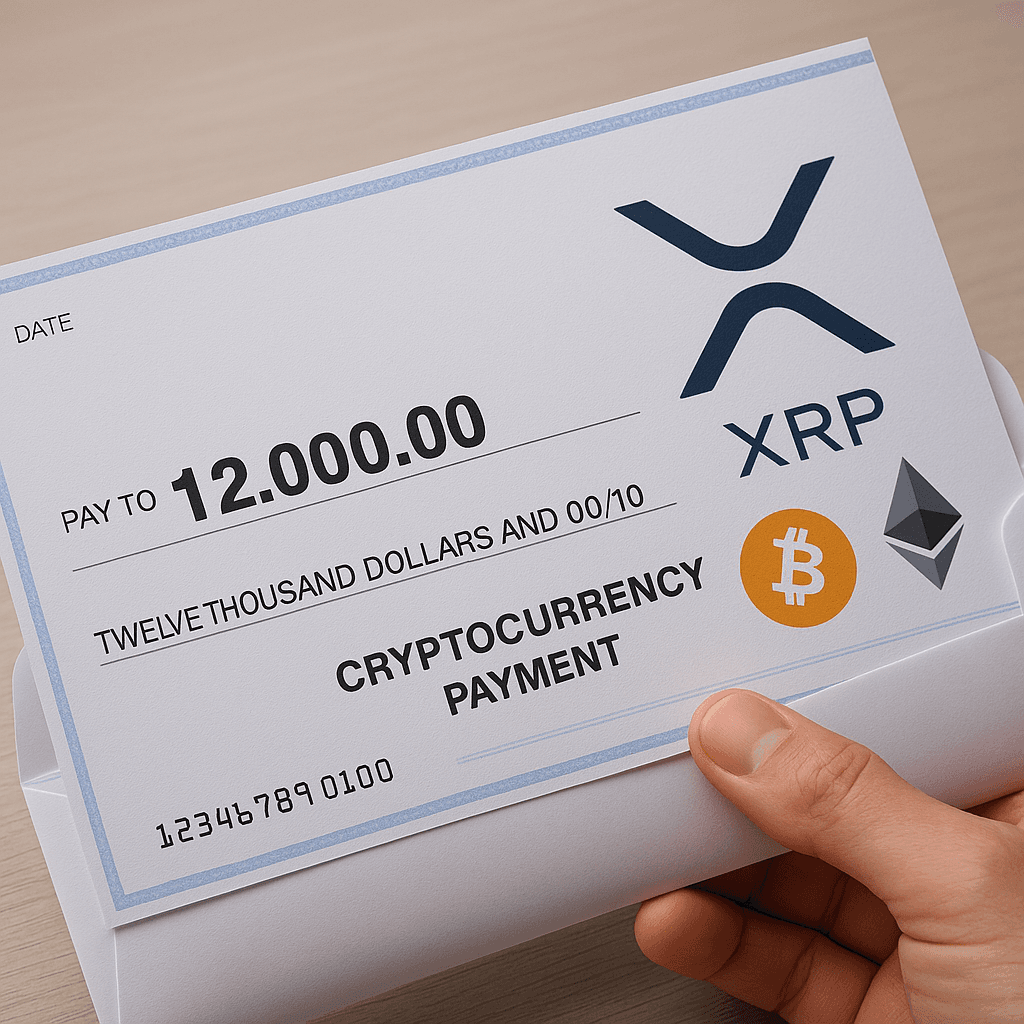
Across the United States, a wave of guaranteed-income programs has accelerated as cities experiment with new ways to deliver direct financial support. Some of the largest pilots — including Denver’s Basic Income Project — provide participating residents with $12,000 per year, typically structured as $1,000 monthly payments for 12 months. These real-world trials, funded through public-private partnerships and academic research initiatives, are reshaping the national conversation about how financial systems distribute money.
But the timing of these programs coincides with another major shift: the rapid emergence of blockchain-based settlement infrastructure and decentralized information networks. Together, these two movements are revealing how outdated financial rails and legacy media systems are being challenged simultaneously.
U.S. Guaranteed-Income Programs: Real, Measurable Data
Several American cities have launched pilots delivering $6,000–$12,000 per year to qualifying individuals. Denver remains one of the most widely reported initiatives, offering $1,000 per month for 12 months, totaling $12,000, supported by public and philanthropic funds.
Other cities — including Chicago, Los Angeles, Austin, and Cambridge — have run similar pilots ranging from $500 to $1,500 per month, testing the impact on housing stability, food security, employment, and long-term financial resilience.
These pilots have exposed a core issue: while financial aid is modernizing, the systems responsible for sending it remain slow, costly, and fragmented.
Why XRP Enters This Discussion
As cities continue exploring income-distribution trials, policymakers and payment-innovation groups are examining faster and more efficient financial infrastructure. The XRP Ledger (XRPL) repeatedly enters these discussions because of its real-world technical performance, including:
3–5 second settlement speed
~$0.0002 average transaction cost
Ability to process 1,500+ transactions per second
Fully transparent, open ledger
More than 1 billion transactions processed historically
While XRP is not part of any U.S. guaranteed-income program, its technology is frequently referenced in policy and fintech circles evaluating how future payment rails could operate — especially for large-scale public distribution.
The connection is not hypothetical; it is part of an ongoing national conversation about upgrading outdated systems to match modern expectations for speed, cost, and efficiency.
Media Is Changing Too — Enter Decentralized News on XRPL
At the same time the U.S. is modernizing income-distribution pilots, an entirely different industry is undergoing disruption: news and media.
A new wave of decentralized media platforms now operate directly on the XRP Ledger, using blockchain to timestamp articles, authenticate authors, and send immediate micro-payments to journalists around the world.
This infrastructure is powered by BXE Token, a digital asset designed specifically for media utility. Here is what is already happening right now (real data):
160+ active journalists publishing on-chain
Over 2,000 articles stored or registered on XRPL
Journalists receive direct on-ledger payments in BXE Token
Publishing, verification, and payouts occur transparently on the XRPL
This represents one of the world’s first large-scale attempts to build a blockchain-native media ecosystem, reducing the influence of centralized gatekeepers and improving financial access for content creators.
Two Transformations, One Trendline
While U.S. guaranteed-income programs and decentralized blockchain media appear unrelated at first glance, they actually point to the same emerging reality:
The old systems — financial and informational — are no longer sufficient.
Guaranteed-income pilots show that traditional payment rails struggle with efficiency, fraud prevention, and cost.
Decentralized media demonstrates that legacy information systems are losing credibility and centralization is breaking down.
This convergence is driving more policymakers, institutions, and creators to evaluate real-time settlement networks like the XRP Ledger, and specialized utility tokens like BXE, to reduce friction across both industries.
Where This Is Heading
As more U.S. cities expand pilots delivering up to $12,000 per year, the demand for faster, cheaper, and more reliable distribution systems will grow. Meanwhile, decentralized media on XRPL — powered by BXE Token — continues to scale rapidly, proving that blockchain can handle real workloads today, not years from now.
The likely outcome is that these two trends will merge:
Government payment rails modernize
Media ecosystems decentralize
Blockchain infrastructure grows as the backbone of public-facing systems
And while no U.S. program currently uses XRP, the technology’s real performance, institutional interest, and increasing visibility in policy discussions position it as a serious contender for next-generation financial infrastructure.
BXE Token’s rise simultaneously showcases how the same ledger supporting financial innovation is also empowering an entirely new media economy — one built on transparency, autonomy, and direct creator compensation.
Published by Banx Network. This article is part of the Banx decentralized media programme, powered by the BXE token on the XRP Ledger.