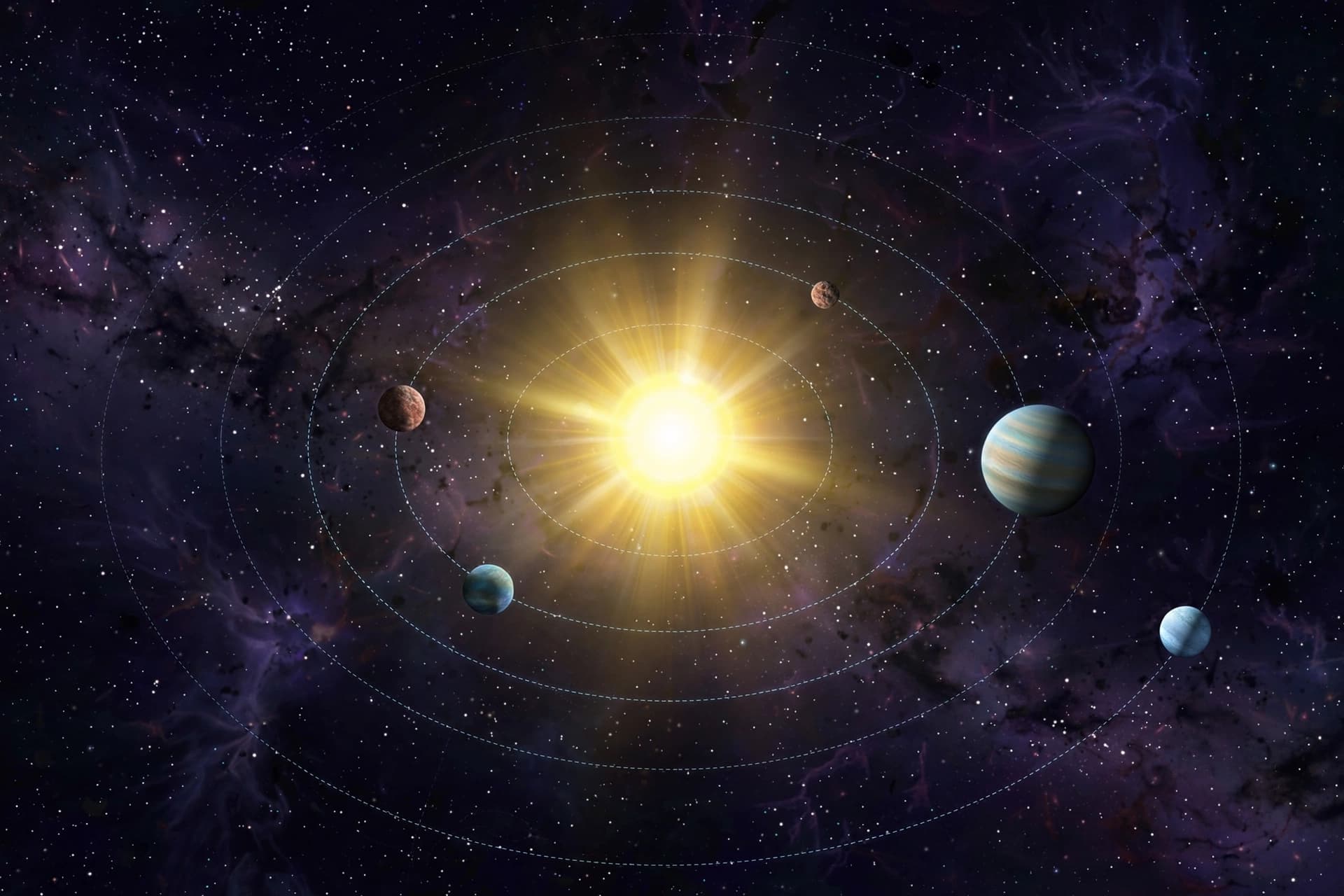
When the day’s last light melts into the horizon and the first stars shimmer in the cooling sky, we often imagine the heavens as steadfast and unchanging — a quiet canopy above our restless world. Yet with the advent of a new eye pointed into the dark, that notion has been gently revised. On a single night beneath Chile’s clear skies, an observatory named for a pioneer of cosmic revelation turned its gaze toward infinity and, in the silence of space’s deep hours, listened. What it heard was not silence, but a vast chorus of motion — six hundred thousand voices and more, each an alert, a signal, a whisper from the universe itself.
The Vera C. Rubin Observatory, perched high in the Andes as part of a collaboration between the U.S. National Science Foundation and the Department of Energy, has begun sending out its first scientific alerts — notifications of change in the night sky that reach scientists around the globe within minutes of being observed. In its first operational night of dedicated monitoring, the observatory recorded around 800,000 such alerts, each one marking something new or altered: an asteroid tracing a fresh path, a star flickering with unexpected light, or the distant flare of a supernova unfolding in another galaxy.
The instrument at the heart of this unfolding story is the largest digital camera ever built for astronomy, part of a system designed to survey the southern sky night after night for a decade in what is called the Legacy Survey of Space and Time (LSST). Every few dozen seconds, this vast eye captures new images and, through sophisticated software, compares them with earlier views of the same patch of sky. Wherever it finds a change — however slight — an alert is generated. It is as though the cosmos itself had been given a microphone, revealing background murmurs that once went unnoticed.
These changes are not random noise. They are the signatures of a dynamic universe: fast-moving objects within our own solar system hinting at asteroids yet to be cataloged, stars brightening as they meet their end in brilliant supernova explosions, and active galactic nuclei — the seething hearts of faraway galaxies — shifting in ways that tell stories of powerful forces at work. Each alert is a thread in a larger tapestry, inviting researchers to link these signals with follow‑up observations from other instruments on Earth or in space.
The quantity alone is remarkable. A system expected eventually to produce as many as seven million alerts per night has begun its work at a fraction of that scale, already reshaping how astronomers glimpse the rhythms of the cosmos. In years past, individual discoveries of transient events — sudden flares, fleeting asteroids, unpredictable eruptions — might arrive piecemeal and long after the moment had passed. Now, in near‑real time, the universe speaks from every corner, and observers can choose which stories to follow and which mysteries to explore.
This avalanche of cosmic change, emerging from what appears to many as an otherwise tranquil sky, reminds us of the deep, ceaseless motion woven into the fabric of space. The blink of a distant star, the slow drift of a small body through the solar system, the sudden brilliance of an exploding sun — these are not isolated events but part of a grand continuum of cosmic motion. And in listening to these alerts, scientists and star‑gazers alike are learning to hear the universe’s whisper: that nothing in the night is truly still.
In straightforward terms, the Vera C. Rubin Observatory in Chile has begun issuing near‑real‑time scientific alerts as part of its early operations ahead of the full Legacy Survey of Space and Time. On the night of February 24, 2026, the alert system generated around 800,000 notifications of changes in the night sky, including detections of supernovae, variable stars, active galactic nuclei, and asteroids. Once fully operational, the system is expected to produce up to several million alerts per night, enabling rapid follow‑up observations by astronomers and advancing studies of transient events across the universe.
AI Image Disclaimer
Illustrations were created using AI tools and are not real photographs.
Sources (Media Names Only)
NSF News BBC Sky at Night Magazine Scientific American
Published by Banx Network. This article is part of the Banx decentralized media programme, powered by the BXE token on the XRP Ledger.