Far above Earth’s oceans and continents, the International Space Station circles the planet with quiet regularity. Every ninety minutes it completes another orbit, passing over dawn and dusk, over mountains and seas, over the patient curve of the world below.
In this delicate rhythm of orbital life, spacecraft arrive and depart like visitors at a distant harbor. Each arrival brings supplies, experiments, and tools for the astronauts who live and work in orbit. Each departure carries away the quiet traces of daily life aboard the station.
Recently, one such departure carried a note of quiet significance.
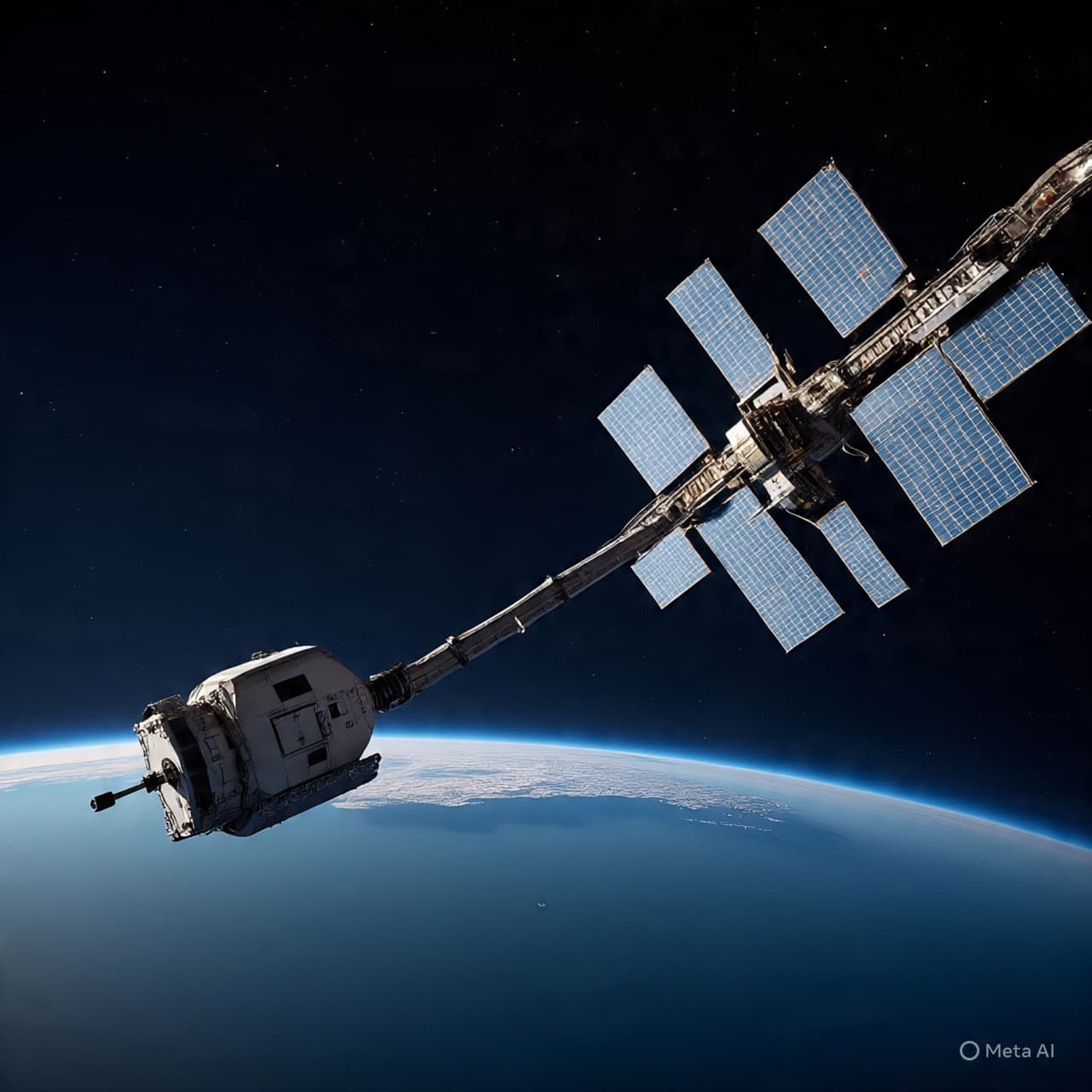
Japan’s new HTV-X cargo spacecraft, the next generation of the country’s space station supply vehicles, has completed a key stage of its first mission by leaving the International Space Station. The spacecraft undocked from the station after spending time delivering supplies and demonstrating new capabilities designed for the future of orbital logistics.
The moment was modest in appearance. From a distance, the spacecraft slowly drifted away from the station’s structure, sunlight glinting off its surfaces as it began its careful journey back toward Earth. Yet behind the scene was the continuation of a long tradition of international cooperation in space.
For more than a decade, Japan supported the station with its H-II Transfer Vehicle (HTV) series, often nicknamed “Kounotori,” meaning white stork. These cargo spacecraft delivered food, scientific equipment, spare parts, and other supplies essential to maintaining life and research aboard the ISS.
The new HTV-X represents the next step in that legacy.
Developed by the Japan Aerospace Exploration Agency (JAXA), the spacecraft was designed to build upon the reliability of its predecessor while introducing several improvements. Engineers have aimed to make the vehicle more efficient, more flexible, and easier to operate during missions supporting the station and potential future space platforms. (jaxa.jp)
Among its upgrades are a redesigned cargo capacity, updated avionics systems, and improved power generation. The spacecraft also features a more modular design that could allow for expanded roles in future missions. (space.com)
During its stay at the ISS, the HTV-X performed its primary role as a delivery vehicle, bringing supplies and equipment needed by the station’s crew. Cargo missions like this one form an essential backbone of space station operations. Food, water, scientific instruments, replacement hardware, and even clothing must be regularly transported from Earth.
Unlike some cargo spacecraft that return intact to Earth, HTV-X is designed for a different ending.
After departing the station, the spacecraft gradually lowers its orbit before reentering Earth’s atmosphere. During this fiery descent, the vehicle burns up safely over the ocean, disposing of waste and unneeded materials loaded aboard before departure. This process helps keep the station clear of accumulated trash and outdated equipment.
Although the mission may seem routine in the larger flow of ISS operations, the debut of HTV-X marks an important step for Japan’s role in international spaceflight. Cargo vehicles have become one of the quiet pillars of orbital exploration. Without them, the steady rhythm of research aboard the station would falter.
In that sense, the departure of HTV-X is less an ending than a beginning.
Engineers will continue studying the spacecraft’s performance throughout the mission, gathering data to refine the design for future flights. The lessons from this first journey will guide the next generation of cargo missions supporting the ISS and possibly other destinations in low Earth orbit.
As the spacecraft drifts farther from the station’s shining structure, its path becomes another small thread in the wide tapestry of human activity in space.
And though its journey ends in Earth’s atmosphere, the story it begins—of new vehicles, new partnerships, and the steady logistics of life beyond Earth—will likely continue for many missions yet to come.
In official statements, JAXA and NASA have described the mission as an important demonstration of Japan’s new cargo spacecraft architecture. The HTV-X program is expected to support future resupply operations for the International Space Station as the partnership in low Earth orbit continues in the coming years.
AI Image Disclaimer Graphics are AI-generated and intended for representation, not reality.
Sources Space.com JAXA NASA Spaceflight Now Kyodo News
Published by Banx Network. This article is part of the Banx decentralized media programme, powered by the BXE token on the XRP Ledger.