There are cities where the rhythm of ordinary life survives through noise — markets opening at dawn, motorcycles weaving through crowded streets, children walking beside painted storefronts. But in Port-au-Prince, another sound has increasingly overtaken the capital’s fragile routine: the sharp interruption of gunfire echoing through neighborhoods already worn down by years of instability.
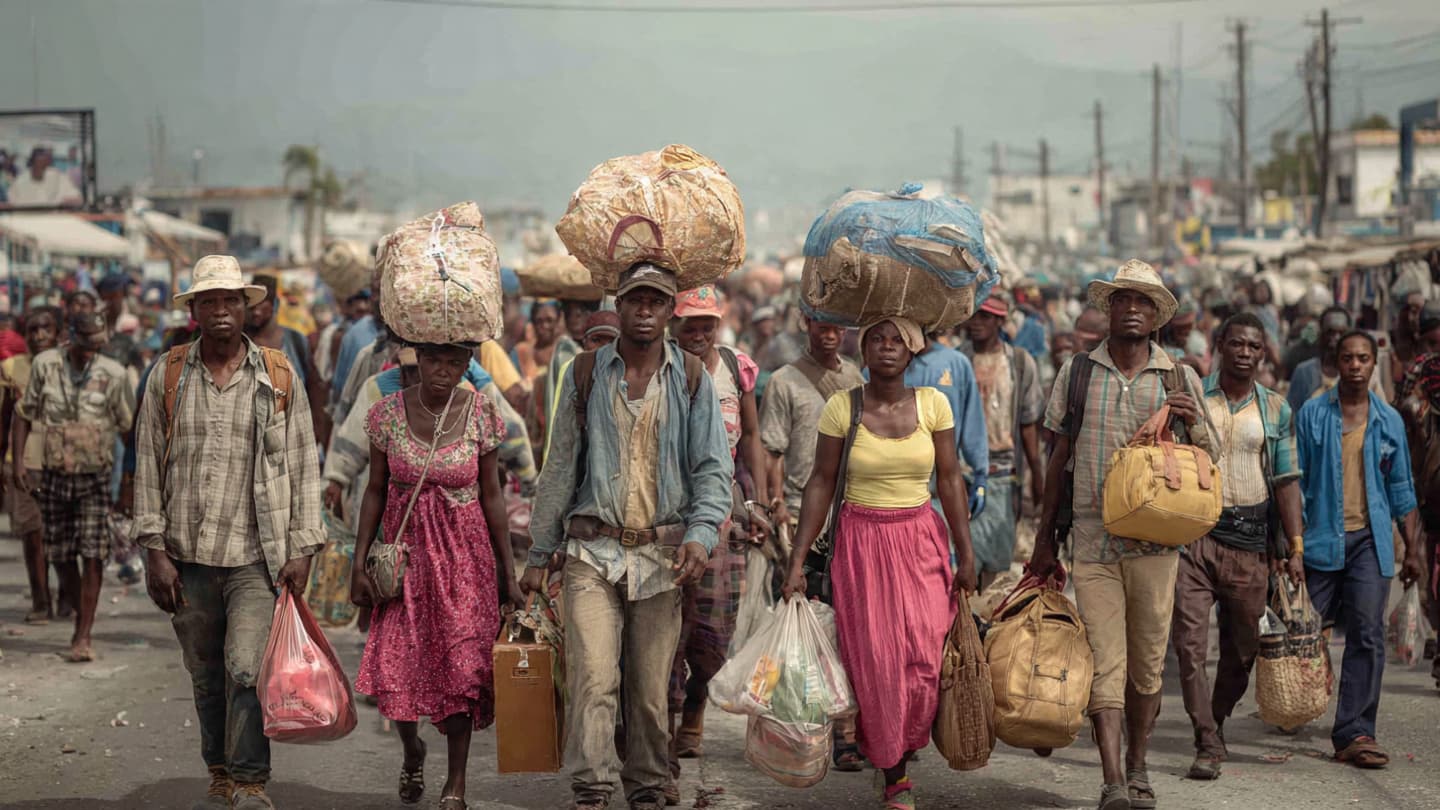
In recent days, renewed gang clashes across Haiti’s capital have forced more residents to flee their homes as armed groups continue battling for territorial control in several districts surrounding Port-au-Prince. Families carrying bags, mattresses, water containers, and small belongings have been seen moving through crowded roads in search of temporary safety, while humanitarian agencies warn that displacement conditions are worsening rapidly.
The latest violence reportedly intensified in areas already heavily affected by armed gang activity, including neighborhoods where access to food, medical care, electricity, and clean water had already become severely limited. Local residents described nights punctuated by heavy gunfire and uncertainty, with many families choosing to leave before clashes spread closer to their homes.
For many Haitians, displacement has become a recurring part of daily existence rather than a temporary emergency. Schools, churches, and public buildings throughout the capital continue serving as overcrowded shelters for civilians uprooted by months of violence. Humanitarian organizations estimate that hundreds of thousands of people across Haiti have now been internally displaced as gang influence expands throughout the country.
The crisis unfolding in Port-au-Prince reflects the broader collapse of state security that has gripped Haiti in recent years. Armed groups now control or heavily influence large portions of the capital, affecting transportation routes, commercial activity, fuel distribution, and access to humanitarian aid. Kidnappings, extortion, and armed attacks have become increasingly common as government institutions struggle to maintain authority.
Meanwhile, Haiti’s political instability continues complicating efforts to restore order. The country has faced prolonged uncertainty following the 2021 assassination of President Jovenel Moïse, with transitional governance efforts repeatedly challenged by violence, institutional weakness, and deep public frustration. International discussions regarding security assistance and multinational intervention forces have continued, though implementation has faced delays and logistical difficulties.
Residents fleeing the latest clashes often describe leaving with little time to prepare. Some families reportedly abandoned homes overnight after hearing nearby shootings or learning that armed groups were advancing into adjacent neighborhoods. Others sought refuge with relatives or improvised shelters while hoping conditions might stabilize enough to allow return.
Aid workers operating in Haiti warn that the humanitarian situation is becoming increasingly severe as displacement expands faster than relief capacity. Overcrowded shelters frequently face shortages of sanitation, medicine, food supplies, and security protection. Children displaced by violence remain particularly vulnerable to illness, trauma, interrupted education, and recruitment risks linked to armed groups.
The violence has also deepened concerns internationally regarding regional migration pressures and broader Caribbean instability. Neighboring countries and international organizations continue monitoring the deteriorating security environment while debating the scale and structure of possible international support measures.
Yet despite the escalating crisis, many residents remain trapped between fear and limited alternatives. Leaving neighborhoods controlled by gangs does not necessarily guarantee safety elsewhere, as violence continues shifting unpredictably across parts of the capital. Economic hardship further complicates escape for families already struggling with rising prices and shrinking employment opportunities.
For longtime residents of Port-au-Prince, the emotional weight of the crisis extends beyond immediate survival alone. Entire communities once defined by familiar routines now live beneath constant uncertainty, where daily decisions revolve around checkpoints, rumors of attacks, and rapidly changing frontlines inside the city itself.
As authorities, humanitarian groups, and international partners continue searching for solutions, the people fleeing Haiti’s capital carry with them more than personal belongings. They carry the exhaustion of repeated displacement, the fear of a crisis without clear resolution, and the quiet hope that somewhere beyond the gunfire, ordinary life may still be possible again.
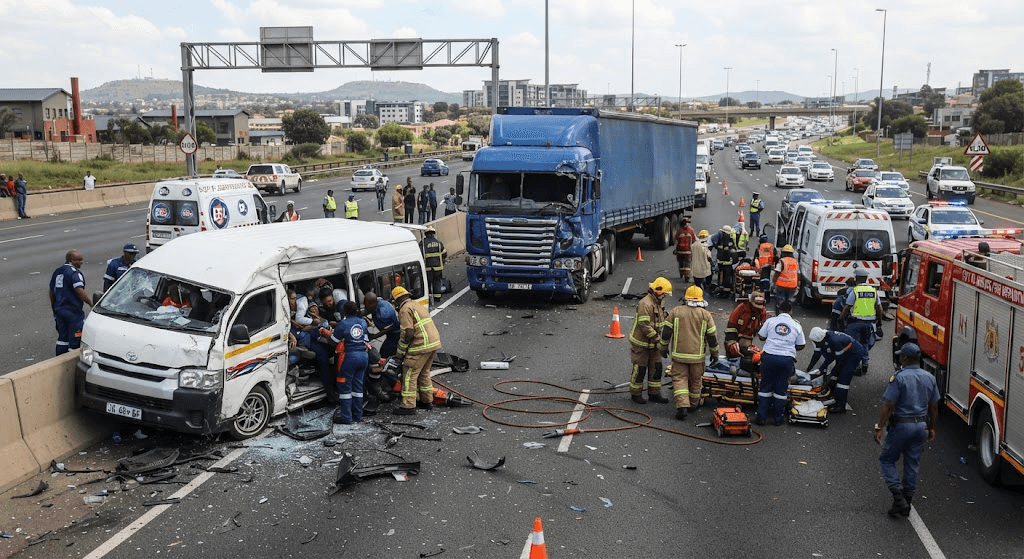
AI Image Disclaimer The accompanying visuals were created using AI generation tools and are intended solely as illustrative representations of the events described.
Source Check — Credible Sources Found
Mainstream / credible sources currently covering the story:
Reuters Associated Press BBC News Al Jazeera Miami Herald
Published by Banx Network. This article is part of the Banx decentralized media programme, powered by the BXE token on the XRP Ledger.