As daylight loosens its hold and the sky begins its quiet transformation, evening arrives with a gentler kind of drama. Colors fade, sounds soften, and above it all the first stars hesitate before appearing. It is in this in-between hour that the sky often offers its most intimate moments, meant less for announcement and more for quiet notice.
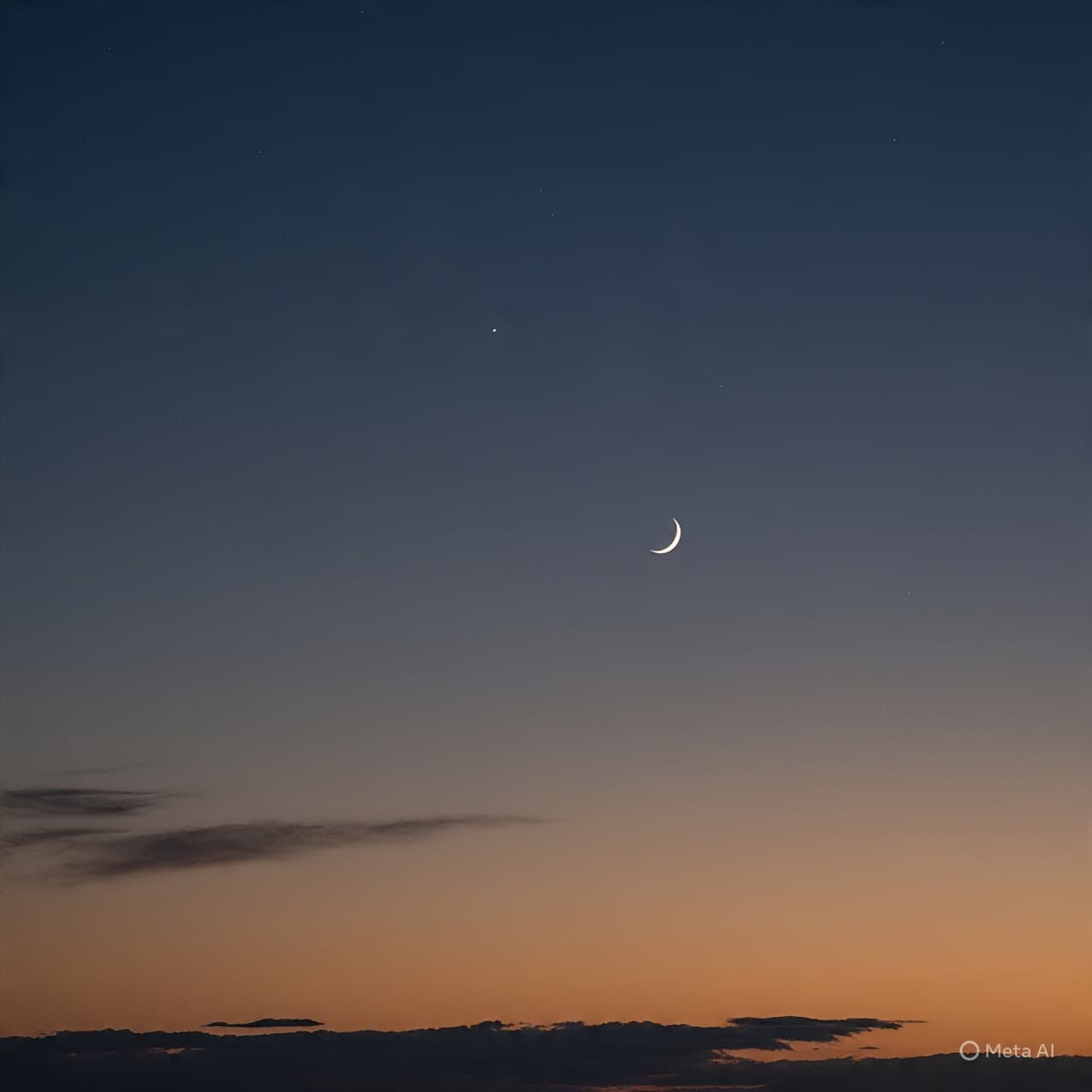
During the coming dusk, skywatchers will be able to see the crescent moon glide past Saturn, pairing the delicate curve of lunar light with the steady glow of the ringed planet. The moon, still early in its monthly cycle, will hang low and slender, while Saturn appears nearby as a calm, golden point, unblinking as the sky darkens.
This celestial meeting is not rare, but it is fleeting. The moon’s motion carries it steadily onward, changing its position night by night, sometimes placing it near planets that seem otherwise fixed. Saturn, far more distant, moves slowly by comparison, making these brief alignments feel like quiet encounters rather than grand events.
The pairing will be visible shortly after sunset, best observed with an unobstructed view of the western sky. To the unaided eye, Saturn may resemble a bright star, but binoculars or a small telescope can reveal its distinctive presence and, with steady conditions, a hint of its rings. The crescent moon, meanwhile, reflects sunlight softly, its unlit portion faintly visible through earthshine.
Such moments carry a subtle reminder of scale and motion. While evenings on Earth settle into routine, celestial bodies continue their patient paths, crossing lines of sight that briefly bring them together. Observers need no advanced equipment, only time, stillness, and a willingness to look up before night fully takes hold.
As dusk gathers, this quiet passage of moon and planet offers a simple invitation. The sky does not ask for urgency or expertise, only attention. For those who pause, the reward is a shared moment between worlds, unfolding silently above the fading light.
AI Image Disclaimer Graphics are AI-generated and intended for representation, not reality.
Sources NASA Sky & Telescope Space.com Astronomy Magazine BBC Sky at Night
Published by Banx Network. This article is part of the Banx decentralized media programme, powered by the BXE token on the XRP Ledger.