
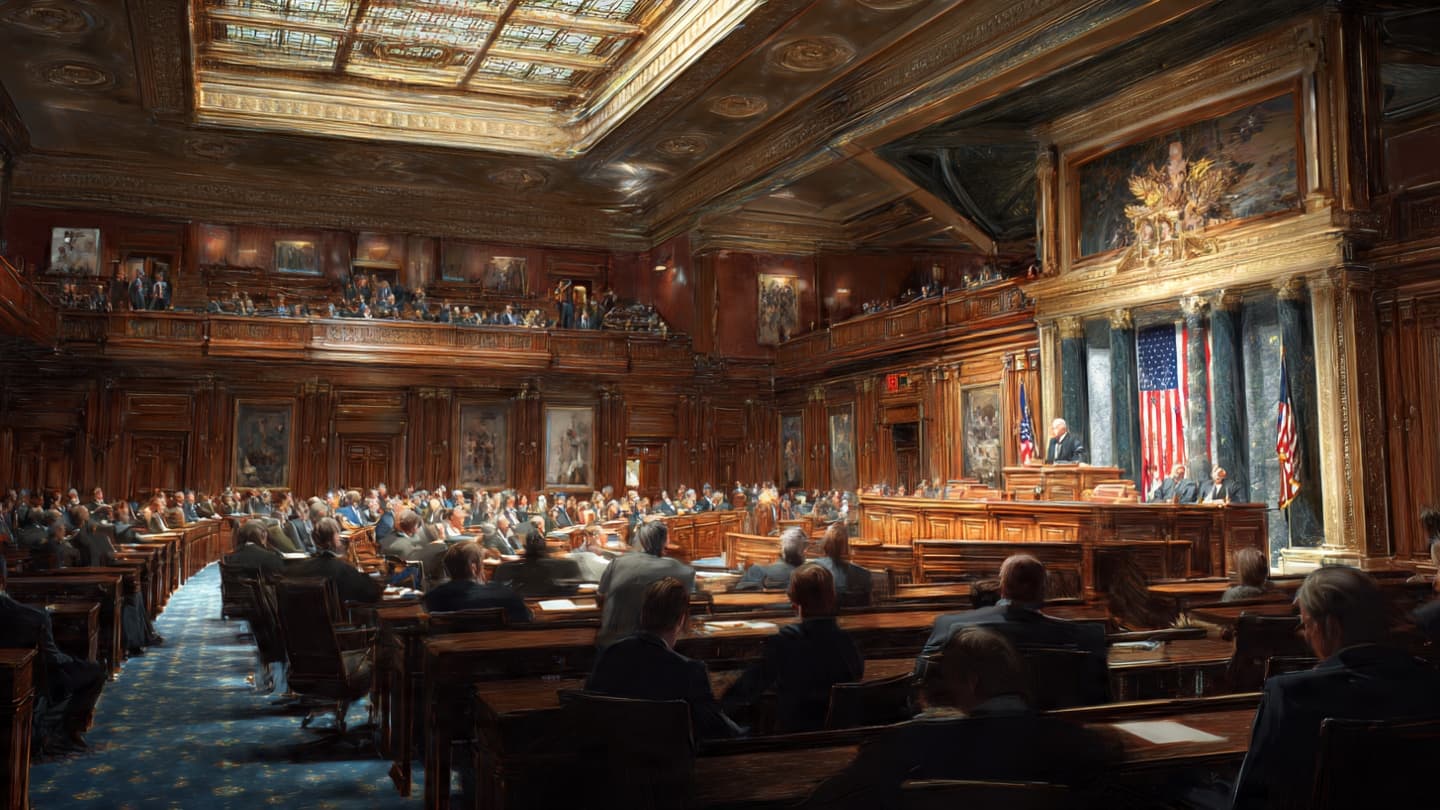
Key Highlights
- Congressional Role:Lawmakers seek greater involvement in U.S.-Iran negotiations.
- National Security:Senators emphasize the importance of oversight in foreign policy.
- Ongoing Debate:Tensions between executive authority and legislative scrutiny continue.
The intricate world of foreign policy often unfolds behind closed doors, with negotiations that can significantly impact national security and international relations. Recently, the discussion surrounding the role of Congress in evaluating potential agreements, particularly those involving the Trump administration and Iran, has gained momentum. Lawmakers are increasingly vocal about their belief that Congress should play a crucial role in scrutinizing major diplomatic agreements to ensure transparency and accountability.
Supporters of congressional involvement argue that the U.S. Constitution establishes a framework that divides authority among the branches of government. This distribution of power is seen as essential for maintaining public confidence in the government’s actions. By allowing Congress to review and discuss significant agreements, proponents believe that the legislative branch can foster a more informed public dialogue about foreign policy.
The ongoing debate highlights the historical tensions between executive authority and legislative oversight in matters of foreign affairs. Over the years, various administrations, regardless of political affiliation, have faced scrutiny regarding the extent of presidential power in negotiating international agreements. Republican senators, in particular, have underscored the strategic implications of any arrangement with Iran, raising concerns about regional security, nuclear activities, sanctions, and diplomatic commitments.
Administration officials have defended the current negotiations, asserting that diplomatic flexibility is vital when addressing complex international challenges. They argue that effective diplomacy often necessitates timely engagement and the ability to adapt to evolving circumstances. This perspective suggests that while Congress may seek a more significant role, the executive branch must retain the agility to navigate intricate international landscapes.
Political analysts note that disagreements over the process of diplomatic negotiations do not inherently signify opposition to diplomacy itself. Instead, many lawmakers are focused on ensuring that any agreements receive adequate review and public discussion before they are implemented. This approach reflects a desire for a more collaborative governance model, where both branches of government can contribute to shaping foreign policy.
International observers are closely monitoring the developments in Washington, recognizing that allies and partners pay attention not only to the content of agreements but also to the domestic political support that underpins them. Strong institutional backing from Congress can enhance perceptions of the reliability and longevity of diplomatic arrangements, influencing how other nations respond to U.S. initiatives.
As negotiations with Iran continue, the dialogue in Washington is expected to remain vibrant. Both supporters and critics of congressional involvement stress the importance of safeguarding national interests while ensuring effective governance. The push by Senate Republicans for a more direct role in evaluating the potential agreement could have significant implications, not only for U.S.-Iran diplomacy but also for the broader relationship between Congress and the executive branch in shaping foreign policy.
In conclusion, the outcome of this ongoing debate will likely influence future diplomatic efforts and the overall dynamics of U.S. foreign policy. As Congress seeks to assert its voice, the balance of power in international negotiations remains a critical issue for lawmakers and the administration alike.
Published by Banx Network. This article is part of the Banx decentralized media programme, powered by the BXE token on the XRP Ledger.



