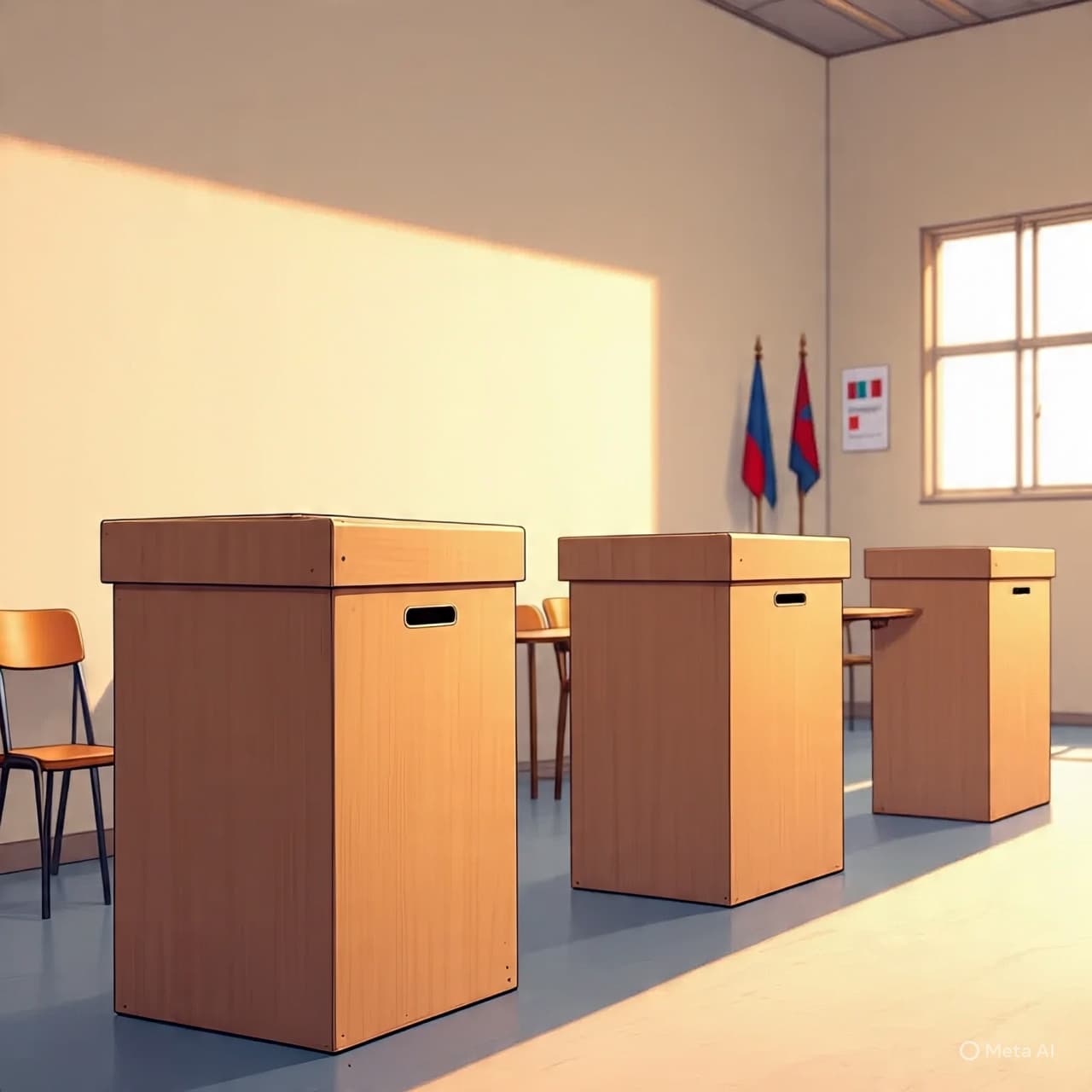
There are times when the absence of an event speaks as loudly as its arrival. In Britain’s political calendar, cancelled elections leave behind not ballots or results, but a quiet space — one that polls now attempt to fill with projection and possibility.
An exclusive survey released this week suggests that if the postponed elections had gone ahead, the Labour Party would have faced significant losses. Though hypothetical by nature, the findings have stirred discussion across Westminster, offering an unexpected mirror into voter sentiment during a period when democratic rituals were placed on hold.
The poll indicates that Labour support in several contested areas has weakened, with respondents signaling frustration over local leadership, national messaging, and a sense of political drift. In scenarios modeled by the survey, the party would lose control of numerous councils, with some areas shifting sharply toward rivals or fragmented outcomes.
Such polling does not carry the finality of an election night. Yet it arrives at a sensitive moment, as parties attempt to interpret public mood without the clarity that real votes provide. For Labour, the numbers suggest that confidence assumed after earlier electoral successes may be more fragile than once believed.
Party officials have urged caution, noting that hypothetical polling cannot replicate turnout, local campaigning, or late voter movement. They emphasize that cancelled elections create artificial conditions, where opinion hardens in abstraction rather than through lived political engagement.
Still, analysts say polls conducted in these gaps can reveal underlying trends. Disillusionment, they argue, often appears first in surveys before it materializes at the ballot box. The data suggests voters may be reassessing priorities, weighing performance against expectation rather than promise.
Opposition parties, meanwhile, have seized on the figures as evidence of vulnerability. Some have pointed to the results as a reminder that governing, even locally, brings scrutiny that rhetoric alone cannot soften.
The broader context remains complex. The cancellations themselves were shaped by administrative and legal considerations, not political strategy. Yet their aftermath has created an unusual political environment — one where parties must answer to public judgment without the customary test of elections.
For voters, the poll reflects a quieter sentiment: a desire to be heard, even when the opportunity to vote was delayed. In that sense, the survey becomes less a prediction than a message, signaling impatience with institutions that feel distant or unresolved.
Whether the findings translate into future electoral outcomes remains uncertain. Political moods shift, campaigns intervene, and memory fades. But the numbers linger as a cautionary note, suggesting that absence does not erase accountability.
As Britain looks ahead to the return of scheduled elections, Labour faces not a verdict, but a warning — written not in counted ballots, but in the imagined ones that never reached the box.
AI IMAGE DISCLAIMER Graphics are AI-generated and intended for representation, not reality.
SOURCES Reuters BBC News The Guardian Politico Europe YouGov
Published by Banx Network. This article is part of the Banx decentralized media programme, powered by the BXE token on the XRP Ledger.