

Key Highlights
- The UK-US special relationship faces new challenges amid political shifts.
- Keir Starmer emphasizes legal grounding in foreign policy decisions.
- Donald Trump criticizes Britain's cautious approach to military involvement.
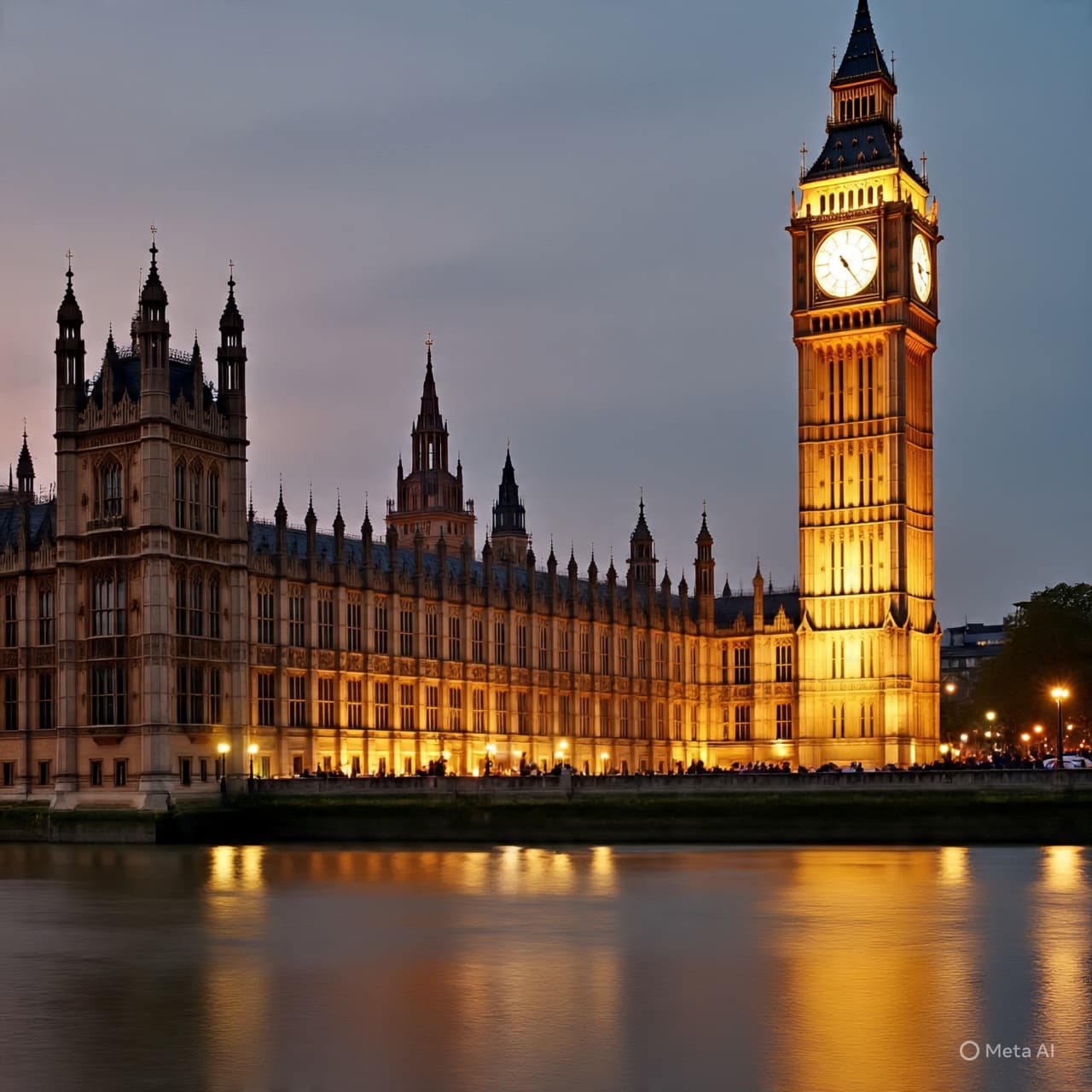
The gray morning over Westminster feels like the echo of old conversations — the kind that linger in corridors where history was written. There is a rhythm to such mornings, a quiet steadiness that speaks of continuity: a flag rising above the Palace, a clerk’s footsteps across the worn stones of Downing Street, the hum of Parliament stirring awake. Yet beneath that familiar calm, another current moves. Across the Atlantic, words from Washington have unsettled what once seemed unshakable. The “special relationship,” that storied bridge between Britain and America, trembles — not from collapse, but from the subtle strain of changing voices.
For decades, this bond has been a shorthand for trust — a connection forged through shared wars, shared intelligence, and the belief that both nations, though distinct in temperament, face the world as partners. It survived ideological shifts and the passing of generations. From Churchill’s conviction to Reagan’s warmth, from Blair’s alignment with Bush to Johnson’s uneasy rapport with Biden, the relationship has weathered tone and temperament alike. But today, with Keir Starmer in London and Donald Trump once again in Washington, the air feels different — cautious, charged, and uncertain.
Starmer’s tone has been measured, deliberate, and grounded in legality. When asked about British involvement in the U.S.-led campaign against Iran, he declined to rush toward affirmation. Britain, he said, would not support actions without clear legal grounding or strategic coherence. It was a response born of restraint — a word not always welcome in times of political theatre. President Trump’s retort was swift and sharp, branding Britain’s hesitation as “uncooperative” and questioning whether this was the same ally that once “stood shoulder to shoulder.” His words, though brief, carried the resonance of disappointment, amplified by a public hungry for declaration.
In London, the Prime Minister’s team maintained composure. Starmer reaffirmed Britain’s commitment to its allies while insisting that cooperation does not mean compliance. The essence of partnership, he argued, lies not in echoing another nation’s decisions, but in standing alongside it when conviction and principle align. Within the halls of Parliament, the debate stretched beyond military strategy. It became a question of identity — what kind of ally Britain wishes to be, and how it balances loyalty with law.
Across the Atlantic, in offices and newsrooms, commentators revisited the phrase “special relationship,” wondering aloud if it still applies. Some see strain; others see renewal — a partnership maturing into something less romantic but perhaps more realistic. The two nations still share intelligence, coordinate defense, and move in step within NATO. Yet the warmth that once defined the bond seems tempered by distance, the easy camaraderie of past decades replaced by procedural diplomacy and carefully worded communiqués.
Still, history has shown that this alliance endures its tempests. From Suez to Vietnam, from Iraq to Brexit, every moment of divergence has eventually found its way back to convergence. The trans-Atlantic partnership is less a fragile bridge than a coastline — reshaped by tide and weather, but never erased.
As dusk gathers over Westminster and the Potomac glimmers in the last light of day, the relationship between Britain and America endures in a quieter form — less ceremonial, more deliberate. Beneath the rhetoric, the machinery of cooperation still turns, steady as ever. The air may carry disagreement, but the thread remains unbroken, binding two nations that, for all their distance, still find their futures intertwined.
Published by Banx Network. This article is part of the Banx decentralized media programme, powered by the BXE token on the XRP Ledger.




