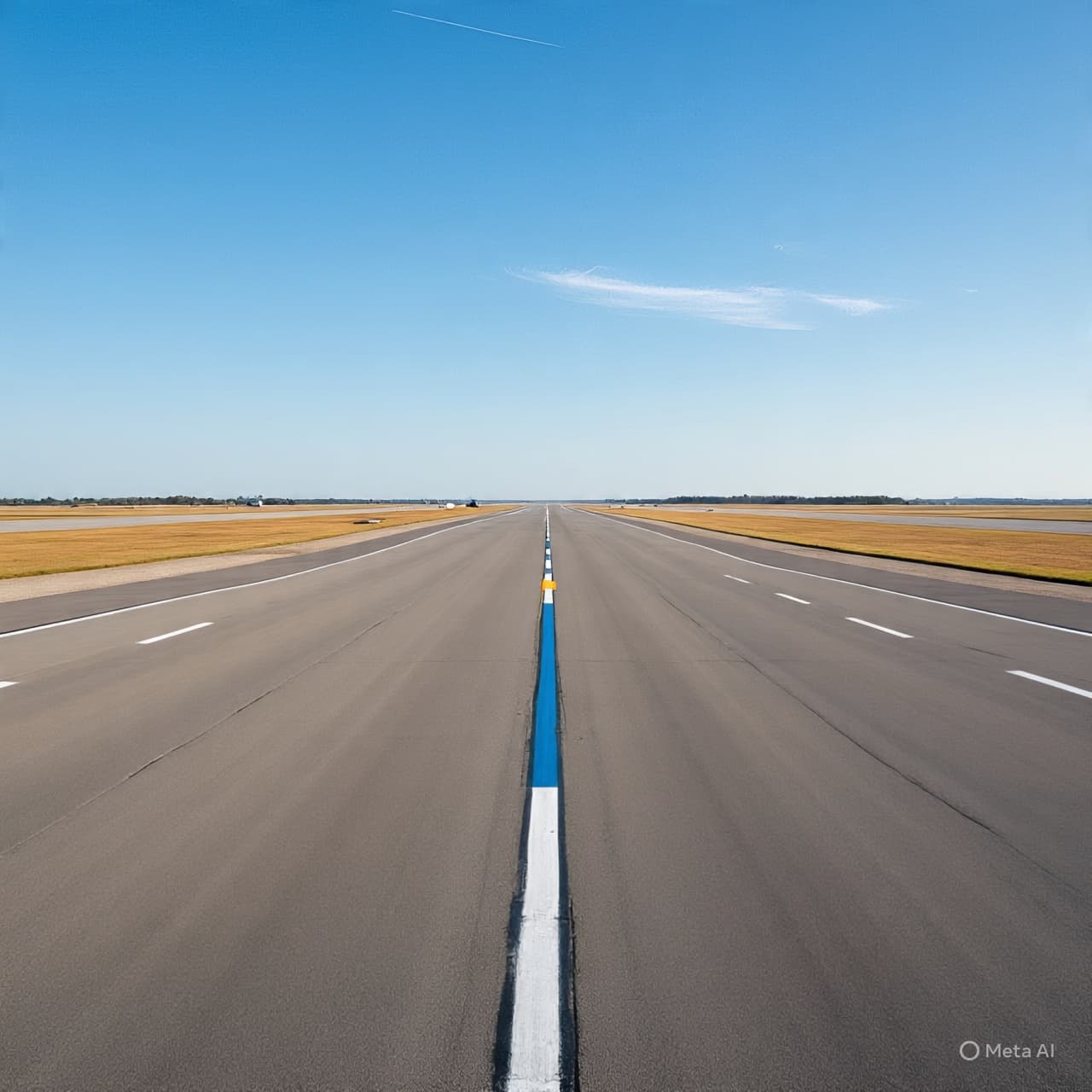
Airports have a way of suggesting movement even when they are still. Runways lie flat and unmoving, yet they hold within them the idea of departure—the possibility of distance, of elsewhere. A line of concrete, measured and fixed, becomes a threshold between what is known and what might be reached.
In Hamilton, that line is set to extend.
The government has confirmed its support for a $10 million runway extension at Hamilton Airport, a project that carries both practical and symbolic weight. At one level, it is an adjustment of infrastructure—an increase in length, a recalibration of capacity. At another, it is a gesture toward connection, an effort to position the region within a wider network of travel and exchange.
The extension is intended to enable larger aircraft operations, particularly those capable of longer, potentially international journeys. For a regional airport, this represents not just an increase in scale, but a shift in orientation. The horizon, once defined by domestic routes, begins to open outward.
Such projects unfold slowly, grounded in planning, funding, and coordination. The decision to invest reflects a broader confidence in future movement—the expectation that demand will follow, that passengers and cargo will move through this space in greater numbers over time. It is a quiet kind of optimism, expressed not in words, but in measured expansion.
Hamilton itself sits within a landscape that balances growth and continuity. The airport, like the city, serves both local rhythms and broader ambitions. Extending the runway does not change the immediate character of the place, but it alters what may pass through it, what connections it can sustain.
There is also a wider context to consider. Across regions, infrastructure projects often reflect a desire to strengthen resilience and opportunity, to ensure that access—both inward and outward—is not limited by physical constraint. In aviation, where distance is both barrier and bridge, the length of a runway can determine the reach of a community.
Yet the transformation is not immediate. Even as plans are confirmed, the runway remains as it is, its current length continuing to serve existing needs. The future it points toward exists first in projection—in timelines, in expectations, in the steady progression of work yet to be completed.
For travelers, the change may one day appear as a simple option: a flight available where it was not before, a direct route replacing a connection. For now, it remains part of a longer process, one that begins not in the air, but on the ground.
The government has committed $10 million to extend the runway at Hamilton Airport, a move aimed at enabling larger aircraft and supporting potential international services. The project is part of broader efforts to enhance regional connectivity and infrastructure.
AI Image Disclaimer
These images are AI-generated for illustrative purposes and do not represent real locations.
Source Check: 1News, NZ Herald, Stuff, Radio New Zealand, Reuters
Published by Banx Network. This article is part of the Banx decentralized media programme, powered by the BXE token on the XRP Ledger.